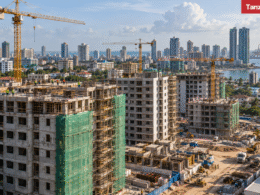

Construction of a new Tanzania cement plant has begun in Tanga, Tanzania.
According to a report by the Citizen, President Kikwete believes that the construction of the second cement factory in Tanga will not only increase Tanzania cement production capabilities, but will also increase the country’s competitiveness in the region, reduce imports, save on foreign exchange and increase the potential of the Tanzania construction sector to contribute to the overall GDP.
This new plant belongs to one of the largest cement producers in East Africa, Maweni Limestone Limited, a subsidiary of Kenya’s Athis River Mining (ARM).
The demand for cement in the East Africa region is anticipated to grow at a rate of approximately 5-6% in the next few years, which is twice the rate of projected economic growth.

With an expected production capacity of approximately 4,000 tons of cement per day and 1.5 million tons of cement per year, the new Tanzania cement plant will be the largest of its kind in the Eastern African zone and will be capable of addressing some of the growing demand for cement in the region.
President Kikwete has applauded the Kenya-based company for being the first private company to build a cement factory in Tanzania.
The construction of this new $120 million Tanzania cement plant is expected to be completed in 2010.
Currently, Tanzania cement plants include Mbeya Cement, Tanga Cement and Tanzania Portland Cement.
The total cement production from these three plants in 2005 was 1.5 million tons.

After the construction of the new ARM cement plant is completed, Tanzania will be the only country in the region to control four cement plants.
President Kikwete has said that, with the addition of this fourth plant, Tanzania cement production will double, to reach 3 million tons per year, which will allow Tanzania to begin selling their product to neighboring countries, where the demand for cement has also increased.
According to a Reuter’s report, ARM’s managing director Pradeep Paunrana said that “[GDP growth] could be much faster in Tanzania [and] we expect cement consumption in the whole country to double in the next five to seven years.”
In a report by the Citizen, President Kikwete said that cement production plays a crucial role in the development of the Tanzania construction sector.
The contribution of the Tanzania construction sector to the overall GDP of the country rose from 5.1% in 2001 to 6.5% in 2007.
According to President Kikwete, these statistics indicate that the Tanzania construction sector will continue to grow and to contribute more to the economic growth of the country.
Want to know more about Construction in Tanzania? Our free overview of the Tanzania Business and Investment Guide 2026 covers Construction, plus key sectors and investment opportunities. The complete 141-page edition includes policies, taxation, key regulations, full macroeconomic data, and sources, and is also available at no cost upon completion of a short form.
Download Free OverviewGet the Full Edition for Free