

Zambia
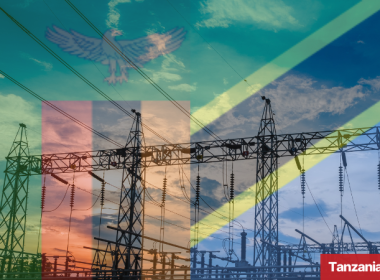
Tanzania is Zambia's principal maritime gateway, linked by the 1,860 km TAZARA railway and the 1,705 km TAZAMA crude oil pipeline running from Dar es Salaam to Ndola, with Tanzania holding a 33.3% sovereign stake in the pipeline company.[2]
The Tanzania-Zambia relationship is built on shared liberation history, joint cross-border infrastructure, and Zambia's structural dependence on Tanzanian ports for access to global shipping lanes.[2]
Bilateral engagement remains active at the highest level, with President Samia Suluhu Hassan received as guest of honour at the 59th anniversary of Zambian independence in Lusaka on 24 October 2023, following a three-day state visit that began on 23 October 2023.[1]
Contents
Bilateral Alliance and Regional Framework
Tanzania and Zambia are among the oldest regional allies in Southern Africa, having jointly formed the front line states that supported liberation movements across the sub-region.[2]
Both countries are members of the Southern African Development Community (SADC), the African Union, and the Non-Aligned Movement, providing a multilateral scaffolding for coordination on trade, transport, and security.[2]
Zambia shares a direct northeastern border with Tanzania, positioning Dar es Salaam as the closest deep-water port for the Copperbelt and Lusaka.[1]
Tanzania's diplomatic presence in Zambia is anchored by the High Commission in Lusaka, headed by H.E. Lt. Gen. Mathew E. Mkingule, who is also accredited to Angola and Sao Tome and Principe.[1]
Zambia's Trade Profile and the Tanzania Transit Angle
Zambia is a landlocked, copper-driven economy with total exports of USD 8,784 million and imports of USD 7,275 million, according to the most recently updated WITS trade summary.[2]
Copper cathodes alone account for USD 4,764 million of exports, with refined copper products adding another USD 1,175 million, meaning that intermediate goods make up 85.62% of the export basket.[2]
Zambia's top export partners are Switzerland (52.17%), China (17.32%), and South Africa (9.63%), while imports are led by South Africa (35.55%) and the Democratic Republic of Congo (18.32%).[2]
This concentration of bulk mineral exports flowing northward, combined with fuel and capital-goods imports representing 31.36% of the total, underpins Zambian demand for the Dar es Salaam corridor as an alternative to southern routes.[2]
The TAZARA Railway Corridor
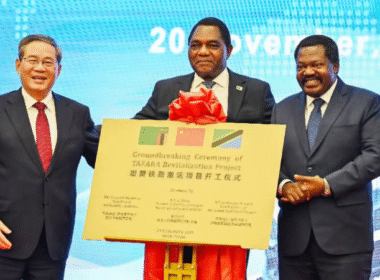
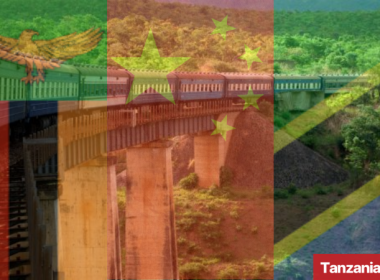
The TAZARA railway, built between 1970 and 1975 with financial support from the People's Republic of China, spans 1,860 km linking the Zambian Copperbelt to the port of Dar es Salaam.[2]
The corridor is the defining piece of bilateral infrastructure between Tanzania and Zambia, offering Zambian copper and cobalt exporters direct rail access to Indian Ocean shipping lanes.[2]
Given that copper ores and concentrates are also Zambia's largest single import at USD 1,019 million, TAZARA plays a role in inbound as well as outbound flows for the Zambian mining value chain.[2]
The TAZAMA Oil Pipeline
The TAZAMA pipeline, constructed in 1966, transports crude oil 1,705 km from Dar es Salaam to Ndola in Zambia.[2]
The name TAZAMA is derived from Tanzania, Zambia, and mafuta, the Swahili word for oil, and the pipeline company is jointly owned by the two governments.[2]
The Government of Zambia holds two-thirds of the shares, while the Government of Tanzania holds one-third, making TAZAMA one of the clearest examples of a shared sovereign asset in the region.[2]
Petroleum oils remain a significant Zambian import line at USD 373 million for crude and USD 148 million for refined products, which anchors the commercial rationale for the pipeline.[2]
Diplomatic Engagement and People-to-People Ties
High-level engagement continues to define the relationship, with President Samia Suluhu Hassan arriving in Lusaka on 23 October 2023 for a three-day state visit at the invitation of the Zambian government.[1]
During the visit, President Samia laid a wreath at the grave of Zambia's first President, Dr. Kenneth Kaunda, at Embassy Park in Lusaka, and was received as guest of honour at the 59th Zambian independence celebrations on 24 October 2023.[1]
Educational cooperation has also deepened, with the University of Dar es Salaam and the University of Zambia signing a memorandum of understanding covering academic collaboration and the formal teaching of Kiswahili in Zambia.[1]
Air Tanzania has established a Lusaka office presence, supporting Diaspora and business travel between the two capitals.[1]
Investment Opportunities Linked to the Zambia Corridor
The TAZARA corridor presents openings in freight services, rolling stock supply, terminal operations, and value-added logistics along the 1,860 km route connecting the Copperbelt to Dar es Salaam.[2]
The TAZAMA pipeline corridor supports investment in petroleum logistics, bulk storage, and downstream distribution serving landlocked Zambian demand, which is quantified by USD 521 million in combined petroleum imports.[2]
Port and transit services in Dar es Salaam benefit directly from Zambia's continued reliance on Tanzania as its northeastern gateway, given the country's USD 16 billion combined import and export flow.[2]
Cross-border trade in consumer and capital goods, which together make up 52.47% of Zambian imports, opens prospects for Tanzania-based manufacturers, agri-processors, and service providers targeting the Lusaka and Copperbelt markets.[2]
Agricultural inputs and processed food are a further avenue, given that Zambia cultivates less than 14% of its 42 million arable hectares and continues to import significant volumes of consumer goods worth USD 1,535 million.[5][2]
Last Update: July 2026
References
- Tanzania High Commission Lusaka, Zambia
- Zambia Trade Summary 2011 | WITS Data
- Spotlighting The World Factbook as We Bid a Fond Farewell - CIA
- https://documents1.worldbank.org/curated/en/431421468000590726/pdf/103870-PUB-PUBLIC-Education-Public-Expenditure-Review-in-Zambia.pdf
- Zambia - Agriculture
- https://hdr.undp.org/sites/default/files/Country-Profiles/MPI/ZMB.pdf