

Ports
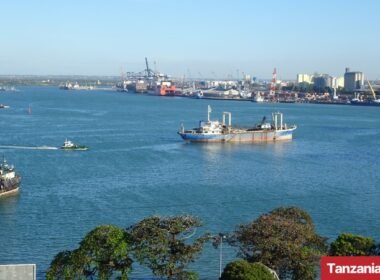
The Dar es Salaam Port handled a record cargo throughput of 27.7 million tonnes in the 2024/2025 financial year, a 17% year-on-year increase and the highest volume in its history.[1]
Tanzania's ports are the backbone of a trade corridor serving landlocked neighbours including Rwanda, Burundi, the Democratic Republic of the Congo, and Uganda.
The Government continues to invest in port infrastructure to stimulate development in agriculture, mining, and the production and distribution of goods, and has partnered with private sector operators to deliver a series of upgrades at the country's principal maritime and lake gateways.
Alongside Dar es Salaam, strategic investments span the port of Tanga on the Indian Ocean coast, the new Kwala Dry Port on the Standard Gauge Railway corridor, and Kigoma Port on Lake Tanganyika.
Contents
Dar es Salaam Port Performance in FY 2024/25
The Dar es Salaam Port handled a record cargo throughput of 27.7 million tonnes in the 2024/2025 financial year.[1]
This represented a 17% year-on-year increase and the highest annual volume in the port's history.[1]
The record throughput reflects the combined impact of infrastructure upgrades and stronger regional demand from neighbouring landlocked economies.
Capacity enhancement at the Dar es Salaam Port is one of the Government's flagship connectivity initiatives, alongside the Standard Gauge Railway, road network expansion, and the development of new airports.
Dar es Salaam Maritime Gateway Project (DMGP)
A key driver of the transformation at Dar es Salaam has been the Dar es Salaam Maritime Gateway Project (DMGP).
The project deepened and reinforced the harbor to 14.5 meters, allowing for larger, heavier vessels to call at the port.
The DMGP has been delivered in collaboration with the private sector as part of the wider port modernization program.
Deeper draft and reinforced berths position Dar es Salaam to compete more effectively with other regional gateways on the East African seaboard.
Kwala Dry Port and SGR Freight Integration
In 2025, the Kwala Dry Port was launched to decongest Dar es Salaam Port and strengthen Tanzania's role as a regional trade hub.
Kwala features the Standard Gauge Railway electric freight service, providing a direct rail link between the maritime port and inland cargo handling.
The dry port also incorporates a 1,000-hectare industrial park, designed to attract logistics, warehousing, and light manufacturing operators alongside cargo consolidation activity.
The SGR itself is designed to connect the Port of Dar es Salaam with the interior and onward to Rwanda, Burundi, the Democratic Republic of the Congo, and Uganda, with the first phase from Dar es Salaam to Dodoma already operational.
Once the network is completed, the corridor will link the Dar es Salaam port to Mwanza on Lake Victoria, extending the port's hinterland deeper into the Great Lakes region.
Tanga Port and the East African Crude Oil Pipeline
The port of Tanga is being positioned as a critical link in the regional energy supply chain through the East African Crude Oil Pipeline (EACOP).
EACOP is a 1,433 km pipeline transporting crude oil from Uganda's Lake Albert oilfields to Tanga for global export, with 80% of its length within Tanzania.
The pipeline will have a peak capacity of 246,000 barrels per day and represents a USD 5 billion investment aimed at enhancing Government revenue, improving logistics, facilitating skills and technology transfer, and strengthening the Uganda, Tanzania trade corridor.
Shareholders in EACOP are TotalEnergies (62%), Uganda National Oil Company Limited (15%), Tanzania Petroleum Development Corporation (15%), and China's CNOOC (8%).
The project is expected to be completed by July 2026, at which point Tanga will host one of the largest crude oil export terminals in the region.
Great Lakes Ports and Kigoma Upgrade
The Government is extending its port modernization program to the inland Great Lakes waterways.
In 2025, a contract was signed for the upgrading of Kigoma Port on Lake Tanganyika.
The Kigoma investment is part of ongoing improvements to ports in the Great Lakes region and is designed to expand cross-border trade with the Democratic Republic of the Congo, Burundi, and Zambia via the lake.
Lake port upgrades complement the Great Lakes Smart Industrial and Blue Economy Mega Hub, a flagship project identified as a regional center for mineral processing, agro-pharmaceuticals, blue economy industries, and cross-border trade facilitation.
Policy Framework and Long-Term Alignment
National Development Vision 2050 Accelerators
Ports are embedded in Accelerator 1 of the Vision 2050 framework, Integrated Transport Infrastructure, which calls for expanding intermodal networks of rail, roads, ports, and air transport to enhance connectivity and trade logistics.
The accelerator also prioritizes the development of strategic corridors, including the Central and Southern Corridors, that feed the national port system.
Blue Economy Sector Priority
Under the Vision 2050 Priority Transformation Sectors, the Blue Economy is dedicated to sustainably exploiting marine and freshwater resources, promoting aquaculture, and expanding port infrastructure.
National Development Plan 2025/26 Pillar
The National Development Plan 2025/26 identifies Infrastructure and Digital Transformation as a core pillar, with investment in integrated transport systems covering railways, ports, airports, and roads.
Investment Opportunities in Ports
The Bagamoyo Eco-Maritime City and Intermodal Transport project is a flagship deep-sea port-anchored industrial, logistics, and tourism hub powered by modern Special Economic Zone frameworks and connected via multimodal transport infrastructure.
Logistics, warehousing, and freight services present significant opportunities to support the country's expanding role in the regional supply chain, anchored by capacity enhancement at the Dar es Salaam Port.
The 1,000-hectare industrial park at Kwala Dry Port offers plots for manufacturing, agro-processing, and distribution operators seeking direct SGR rail access to the maritime gateway.
Crude oil export terminal services, marine logistics, and bunkering opportunities are opening up at Tanga in connection with the completion of EACOP by July 2026.
Upgrades at Kigoma and other Great Lakes ports create openings in inland shipping, cross-border cargo handling, and lake-based blue economy value chains.
Port-linked industrial and beneficiation platforms, including the Great Lakes Smart Industrial and Blue Economy Mega Hub, provide integrated sites for mineral processing, agro-pharmaceuticals, and cross-border trade facilitation.
Last Update: May 2026
References
Want to know more about Ports in Tanzania? Our free overview of the Tanzania Business and Investment Guide 2026 covers Ports, plus key sectors and investment opportunities. The complete 141-page edition includes policies, taxation, key regulations, full macroeconomic data, and sources, and is also available at no cost upon completion of a short form.
Download Free OverviewGet the Full Edition for Free