
SGR
Tanzania is building a 2,800 km Standard Gauge Railway (SGR) at an estimated cost of USD 7 billion, deploying electric locomotives capable of speeds up to 160 km/h to connect the Port of Dar es Salaam with the interior and neighboring landlocked economies.
The SGR is one of Tanzania's most ambitious infrastructure projects, with construction ongoing since 2017.
The railway is designed to cut transport costs for businesses and the public, linking the Dar es Salaam port to Mwanza on Lake Victoria and providing a direct connection to Rwanda, Burundi, and the DRC.
Once completed, the network will strengthen Tanzania's position as a regional trade and transport hub by providing a faster, lower-cost alternative to road freight.
Contents
Project Scope and Route
The SGR spans 2,800 km and is designed to connect the Port of Dar es Salaam with the interior and onward to Rwanda, Burundi, DRC, and Uganda.
The railway will link the Dar es Salaam port to Mwanza on Lake Victoria, providing direct access to the Great Lakes region.
By offering a faster, lower-cost alternative to road freight, the SGR is positioned as a strategic corridor for regional trade integration across East and Central Africa.
The project uses electric locomotives capable of speeds up to 160 km/h, aimed at reducing transport costs for both businesses and the public.
Construction Progress and Operational Phases
Construction of the SGR has been ongoing since 2017 at an estimated cost of USD 7 billion.
The first section of the SGR, from Dar es Salaam to Morogoro, officially commenced operations in June 2024.
The first phase from Dar es Salaam to Dodoma is already operational, with subsequent phases under construction.
Onward phases are advancing toward Mwanza on Lake Victoria, completing the corridor to the Great Lakes and unlocking cross-border connections to Rwanda, Burundi, and the DRC.
Integration with Ports and Logistics Infrastructure
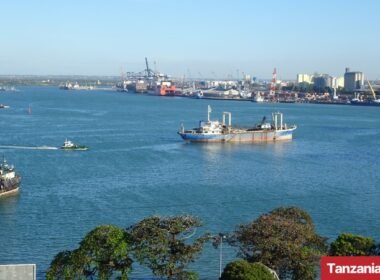
The SGR is being developed in tandem with major upgrades to Tanzania's port network, most notably the Dar es Salaam Port, which handled cargo throughput of 27.7 million tonnes in the 2024/2025 financial year, a 17% year-on-year increase and the highest volume in its history[1].
A key driver of this transformation has been the Dar es Salaam Maritime Gateway Project (DMGP), which included deepening and reinforcing the harbor to 14.5 meters, allowing for larger, heavier vessels.
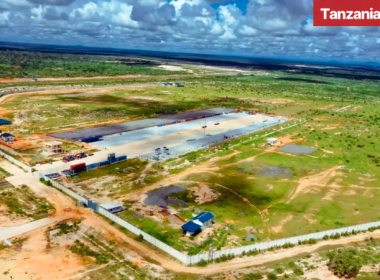
In 2025, the Kwala Dry Port was launched, featuring the SGR electric freight service and a 1,000-hectare industrial park, to decongest Dar es Salaam Port and strengthen Tanzania's role as a regional trade hub.
This integrated setup positions the SGR as the inland extension of Tanzania's maritime gateway, moving containers efficiently from ship to interior markets.
Political Continuity and Strategic Priority
The SGR was among the flagship infrastructure projects prioritized under President John Magufuli (2015 to 2021), alongside the Julius Nyerere Hydropower Plant and the expansion of the Dar es Salaam Port.
Under President Samia Suluhu Hassan, re-elected in 2025, the administration has maintained momentum on infrastructure projects and the industrialization agenda while restoring investor confidence and promoting FDI through regulatory reforms.
This continuity across administrations has reinforced the SGR's status as a national strategic priority.
Macroeconomic and Sovereign Credit Impact
Fitch expects Tanzania's real GDP growth to remain strong at 6% in 2026 and 2027, above the projected 4.5% for the 'B' median over the same period.
The growth will be supported by increased agriculture and mining activity as well as strong infrastructure investment in flagship projects such as the SGR railway and the EACOP pipeline.
Government debt is expected to decrease to 47% of GDP in FY27, from 50% in the financial year 2025/2026, driven by narrow fiscal deficits and strong nominal GDP growth, with the high share of concessional debt supporting Tanzania's debt sustainability.
Policy Framework and National Plan Alignment
The SGR is embedded in Tanzania's national development architecture as one of the flagship infrastructure investments reinforcing the country's economic transformation.
Ongoing investments in energy, water, ports, roads, the SGR, and ICT backbone systems ensure that Tanzania's economic transformation is spatially coordinated and sustainably anchored while effectively integrating regional and domestic value chains.
Energy Supply Commitments
National energy planning explicitly targets a reliable power supply to strategic projects such as the SGR, EACOP, and LNG, recognizing that the SGR's electric traction requires firm generation capacity.
This commitment ties the SGR directly to Tanzania's targets of 100% accessibility and 75% connectivity to electricity services by 2030, and to the renewable energy generation mix rising to 75% by 2030[2].
Investment Opportunities
The SGR creates significant opportunities in logistics, warehousing, and freight services to support Tanzania's expanding role in the regional supply chain.
The Kwala Dry Port, with its 1,000-hectare industrial park and SGR electric freight service, opens direct investment prospects in agro-processing, light manufacturing, and distribution facilities co-located with rail freight nodes.
Cross-border freight flows to Rwanda, Burundi, DRC, and Uganda create demand for bonded warehousing, transit logistics, cold chain, and container handling services along the corridor.
By providing a faster, lower-cost alternative to road freight, the SGR improves the competitiveness of export-oriented manufacturing in textiles, cement, steel, food processing, and pharmaceuticals.
Ancillary opportunities extend to rolling stock maintenance, station commercial real estate, ICT and signaling systems, and power supply infrastructure supporting the electric traction network.
Last Update: May 2026
References
- https://www.thecitizen.co.tz/tanzania/news/national/tanzania-targets-over-30-million-tonnes-annually-at-dar-port-as-capacity-expands-5332946 (Guide reference #30)
- https://www.nishati.go.tz/uploads/documents/en-1754049550-National%20Renewable%20Energy%20Strategy%202024%E2%80%932034.pdf (Guide reference #102)
Want to know more about SGR in Tanzania? Our free overview of the Tanzania Business and Investment Guide 2026 covers SGR, plus key sectors and investment opportunities. The complete 141-page edition includes policies, taxation, key regulations, full macroeconomic data, and sources, and is also available at no cost upon completion of a short form.
Download Free OverviewGet the Full Edition for Free