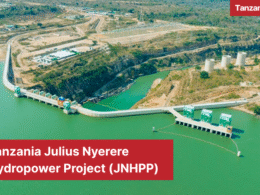


During the Global Gateway Forum that took place in Brussels on 25-26th October 2023, the Agence Française de Développement (AFD) signed a contract to jointly finance the construction of the Kakono hydropower plant in Tanzania.
The European Union (EU) and AFD have committed to contribute a total of EUR 146 million, representing approximately half of the EUR 296 million project cost.
The EU Commissioner for International Partnerships, Jutta Urpilainen, expressed her satisfaction with the agreement, stating, “The recent Tanzania-EU Business Forum announced investments totaling EUR 1 billion, with the Kakono hydropower project being a significant part of this. I am pleased to follow up with today’s signature, with the EU contributing to Tanzania’s efforts to diversify its energy sources and introduce green energy, aligning with the Global Gateway Investment Package for Africa.”

The collaboration between the EU and Tanzania has a long-standing focus on three priority areas: green deals, human capital and employment, and governance.
Hard Infrastructure for a Green Economy
The EU will provide EUR 36 million in grants for the construction of the Kakono hydropower plant, located at the Kakono dam on the Kagera River.
The project is a joint effort involving the French Development Agency (AFD) and the African Development Bank (AfDB), worth a total of EUR 296 million.
The hydropower plant is intended to address the increasing demand for electricity generation in northern Tanzania.

It will ensure a stable power supply in the Lake Victoria Zone and throughout the country, adding 87.8 MW to Tanzania’s national grid and reducing greenhouse gas emissions by 213,810 tons per year. This development will contribute significantly to economic growth and climate change adaptation.
The Global Gateway Forum
The Global Gateway Forum serves as a platform for government representatives from the European Union and around the world to meet with key stakeholders from the private sector, civil society, thought leaders, financial institutions, and international organizations. The primary objective is to promote global investment in infrastructure.
During this event, various strategic investment announcements and agreements with partner countries are presented, marking a significant step towards the realization of the Global Gateway strategy. These announcements underscore the tangible global impact of Global Gateway and facilitate critical discussions between governments and businesses regarding its priorities.
The Global Gateway Forum reflects a collective commitment to fostering sustainable growth and resilience worldwide through a Team Europe approach.
Global Gateway
Global Gateway is an initiative by the European Union to reduce worldwide investment disparities, enhance smart, clean, and secure connections in digital, energy, and transport sectors, and strengthen health, education, and research systems. This program provides sustainable investment opportunities to improve the prosperity and security of both global partners and Europe.
The Global Gateway strategy embodies a collaborative approach that brings together the European Union, EU Member States, and European development finance institutions. Their aim is to mobilize up to EUR 300 billion in public and private investments from 2021 to 2027, closing the global investment gap and creating essential links rather than dependencies.
Team Europe offers a comprehensive proposition to democratic partner nations, focusing on sustainability across social, environmental, and financial aspects, promoting long-term drivers of growth through a 360-degree approach, encompassing both hard and soft infrastructure, and reinforcing the resilience of nations seeking strategic autonomy.
Want to know more about Energy in Tanzania? Our free overview of the Tanzania Business and Investment Guide 2026 covers Energy, plus key sectors and investment opportunities. The complete 141-page edition includes policies, taxation, key regulations, full macroeconomic data, and sources, and is also available at no cost upon completion of a short form.
Download Free OverviewGet the Full Edition for Free