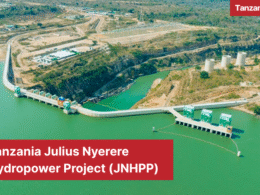



The Tanzania Electric Supply Company (TANESCO) announced the activation of additional turbines at the Julius Nyerere Hydropower Project (JNHPP), contributing a total of 705 megawatts (MW) to the national grid.
In a recent press release, TANESCO confirmed the successful completion of unit number 8 at JNHPP, which adds 470 MW to the grid.
During a visit to the site on June 19, the Vice Chairman of TANESCO’s Board, Zuhura Bundala, praised the project managers for their efforts. Bundala highlighted that the project is now 98.01% complete.

The acting Executive Director for Distribution, Abubakar Issa, stated that the surplus in electricity generation has ended power rationing in Tanzania. “By the end of this month, we expect to activate turbine number seven, which will add another 235 MW, bringing the total capacity of the station to 705 MW,” Issa explained.
This increase ensures that the Tanzanian current national demand power of 1,707 MW is met, with a total generation capacity of 2,405 MW.
The board members acknowledged the substantial progress made. Dr. Mary Mboma, a board member, noted the project’s impact, stating, “For a long time, Tanzanians have awaited a solution to our electricity needs. This project has made that dream a reality.”
The completion of the JNHPP is expected to support Tanzania’s industrial capabilities by providing reliable energy for production and domestic use. The board’s visit emphasized the project’s significance and the government’s role in its development.
Want to know more about Energy in Tanzania? Our free overview of the Tanzania Business and Investment Guide 2026 covers Energy, plus key sectors and investment opportunities. The complete 141-page edition includes policies, taxation, key regulations, full macroeconomic data, and sources, and is also available at no cost upon completion of a short form.
Download Free OverviewGet the Full Edition for Free