

The Coca-Cola system is investing USD 1.94 million to support the restoration of the Ruvu Basin, a critical water source serving Dar es Salaam’s approximately 9 million residents and supporting communities, agriculture, and businesses across eastern Tanzania.
The initiative focuses on improving water replenishment through nature-based solutions, restoring catchment areas, and strengthening sustainable water management practices in the Ngerengere catchment of the Ruvu sub-basin.
It also aims to build capacity for watershed management, rehabilitate degraded catchment areas, and promote water stewardship among local stakeholders.

The project is led by the Global Water Challenge (GWC) and implemented by the International Union for Conservation of Nature (IUCN), in partnership with the Wami-Ruvu Basin Water Board (WRBWB).
Planned interventions include tree planting and the promotion of climate-resilient livelihood practices, with at least 2,000 farmers expected to benefit.
The investment forms part of the Coca-Cola system’s Africa Water Stewardship Initiative, launched in 2024, which represents a nearly USD 25 million commitment to address water-related challenges in 20 African countries by 2030.
Alfred Olajide, Vice President, Franchise Operations, East and Central Africa at Coca-Cola, said that increasing water insecurity is evident through rising scarcity, with demand for safe and usable water exceeding supply in some areas and expected to worsen in the future.
He stated that the Coca-Cola system will continue to focus on promoting water stewardship, improving water use efficiency, and treating and returning safe water to communities.

David Chait, Managing Director of Coca-Cola Kwanza, said that as part of the Coca-Cola Beverages Africa group, the company has a responsibility to support communities facing water scarcity and to protect local water resources where it operates, particularly in areas with significant challenges.
He added that the Africa Water Stewardship Initiative is designed to protect and enhance watershed health while improving access to water and sanitation services in local communities.
Charles Oluchina, Country Representative of IUCN Tanzania, said the organization is implementing the project alongside WRBWB to support the protection and restoration of the Ruvu sub-basin, with a focus on the Ngerengere catchment through nature-based solutions.
He added that the initiative aims to improve water security and livelihoods for local communities.
Olajide noted that partnerships with governments, businesses, and civil society organizations are central to designing and implementing interventions under the initiative.
Ruvu Basin and Water Supply in Eastern Tanzania
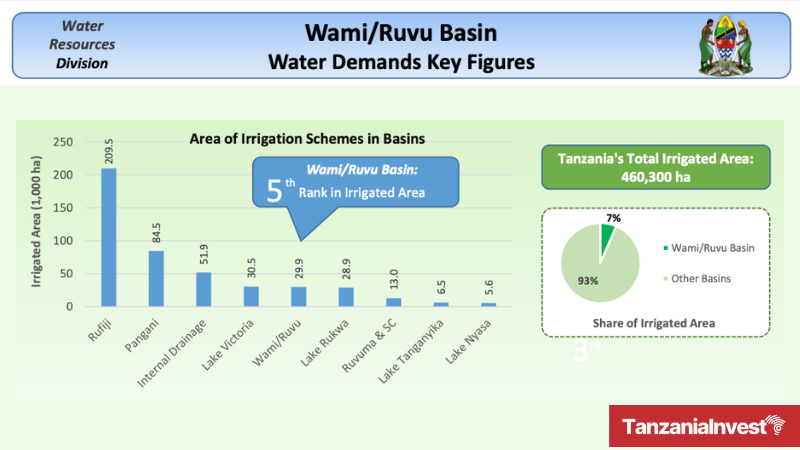
The Ruvu Basin is one of the primary sources of water for Dar es Salaam and the surrounding regions, playing a key role in domestic supply, agriculture, and industrial activities.
The Ngerengere catchment forms part of the wider Wami-Ruvu Basin, which has faced increasing pressure from population growth, land degradation, and climate variability.
Efforts to restore catchment areas and improve water management are critical to ensuring long-term water availability and resilience for Tanzania’s commercial capital and its surrounding economic zones.
Want to know more about Construction in Tanzania? Our free overview of the Tanzania Business and Investment Guide 2026 covers Construction, plus key sectors and investment opportunities. The complete 141-page edition includes policies, taxation, key regulations, full macroeconomic data, and sources, and is also available at no cost upon completion of a short form.
Download Free OverviewGet the Full Edition for Free