

Tanzania to Drill 67,000 Irrigation Boreholes, Create Up to 4,000 Youth Jobs

Tanzania’s National Irrigation Commission (NIRC) is drilling 67,000 boreholes nationwide to provide smallholder farmers with year-round water, a programme expected to create between 2,000 and 4,000 jobs for youth. So far, 415 boreholes have been drilled across 15 regions, benefiting 15,022 farmers in 769 groups, with 13,518.75 acres set for irrigation.
Tanzania boreholes drilling program

The National Irrigation Commission (NIRC) is drilling 67,000 boreholes across Tanzania under a smallholder irrigation program expected to create between 2,000 and 4,000 youth jobs while boosting national food security.

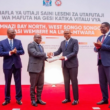
The Director General of NIRC, Raymond Mndolwa, presented the programme at the 10th Public Procurement Conference 2026 in Arusha, which took place from July 29th to 31st.

Mndolwa said the drive implements a directive issued by President Dr. Samia Suluhu Hassan when she launched the smallholder borehole project at the Nanenane agricultural exhibition in Mbeya in 2023.

Tanzania Investment Guide 2026 Free Edition

He explained that the main objective is to give smallholder farmers reliable water for year-round production, noting that the programme targets farmer groups outside the formal irrigation-scheme system, a step meant to raise production, employment and incomes for farmers and the country.

Through the drilling of boreholes and the distribution of pumps, the Commission expects to create between 2,000 and 4,000 jobs for young people.

The Government provides subsidies at two key stages, borehole drilling and the purchase of water pumps, and Installation of the systems will involve young people studying related technical fields.

Each borehole can serve about 16 farmers and irrigate up to 40 acres, with beneficiary areas identified jointly by NIRC and the District Councils.

To date, 415 boreholes have already been drilled across 15 regions.

TanzaniaInvest Capital Markets Report Banner

The Government has also purchased a total of 2,000 pumps, of which 1,000 have been received and distributed to the Mwanza, Mara, Kagera, Kigoma, Simiyu, Geita and Katavi regions.

Beyond the 2,000 pumps already procured, NIRC is procuring a further 500 pumps for the boreholes, of which 100 have been received, another 100 are in transit and the remaining 300 are under procurement.

The Commission also plans to supply an additional 1,000 solar-powered irrigation pumps to areas facing electricity shortages.

So far, 15,022 farmers have benefited, comprising 6,335 women and 8,702 men from 769 groups. The area expected to be irrigated in the initial phase totals 13,518.75 acres.

NIRC is also running 146 construction projects and 634 feasibility-study and detailed-design projects for irrigation schemes and dams nationwide.

Want to know more about Agriculture in Tanzania? Our free overview of the Tanzania Business and Investment Guide 2026 covers Agriculture, plus key sectors and investment opportunities. The complete 141-page edition includes policies, taxation, key regulations, full macroeconomic data, and sources, and is also available at no cost upon completion of a short form.

Download Free OverviewGet the Full Edition for Free
Free Newsletter

Get our monthly update on business and investment in Tanzania.

Related Posts
Tanzania fisheries value chain
Read More

FSDT Outlines Steps to Unlock Fisheries Value Chain Finance as 47% of Tanzanian Operators Have Never Borrowed

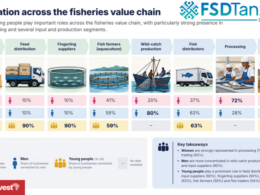
Tanzania’s FSDT outlined steps to unlock finance for the fisheries value chain, noting that 47% of surveyed operators have never borrowed, while 91% save and 97% have mobile phones. The steps include better data, credit guarantees, alternative credit scoring, digital payments, and bundled insurance, alongside the Secured Transactions (Movable Property) Act 2026, which lets boats and cages serve as collateral through a Bank of Tanzania registry.
Tanzania Khamis Mussa Omar World Bank Anna Bjerde
Read More

Tanzania and World Bank Map Central Corridor Investment Opportunities in Agriculture, Logistics, Mining, and Tourism

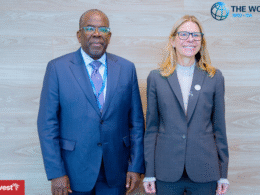
Tanzania and the World Bank are mapping Central Corridor investment opportunities in agriculture, mining, tourism, transport, and logistics, with a possible extension to Rwanda, while UNDP prepares investor-ready projects for a June 2027 investment conference and seeks Asian Infrastructure Investment Bank financing. The World Bank named job creation its top priority and discussed shifting small business lending from collateral to cash-flow assessment, while Tanzania pursues a 40% value addition target through agriculture, livestock, and minerals.
EU-Tanzania Investment & Business Forum 2026-2027 Helsinki day 1
Read More

Tanzania Pitched a 68-Project, USD 30.1 Billion Pipeline at the EU–Tanzania Roadshow in Finland, Italy, the Netherlands and Belgium Ahead of the Early 2027 Dar es Salaam Forum

The EU-Tanzania roadshow 2026 took Tanzanian ministers and agencies to Helsinki, Cesena, The Hague, Rotterdam, and Antwerp between 28 September and 6 October, pitching critical minerals, agribusiness, renewable energy, digital, and port and rail projects from a 68-project, USD 30.1 billion pipeline. The roadshow leads to a high-level EU-Tanzania Investment and Business Forum in Dar es Salaam planned for early 2027.
EU-Tanzania Roadshow 2026 APM Terminals at Maasvlakte Rotterdam
Read More

EU–Tanzania Roadshow Ends With Rotterdam and Antwerp Port Visits as Tanzania Pitches Port, Rail and Logistics Opportunities to European Companies

The EU-Tanzania roadshow ended in Antwerp on 6 October 2026 after port visits in Rotterdam, with Tanzania's port and rail authorities pitching openings for terminal operators, EPC contractors, private rail operators and digital rolling stock tracking, while rail operator Vecturis, minerals logistics group Polytra, heavy lifting company Sarens and marine data company GEOxyz outlined their plans in Tanzania. The EU said it will join the World Bank and the EIB, which has a formal financing request, in supporting the Dar es Salaam port expansion, and offered Global Gateway guarantees, equity and feasibility funding for company projects screened by member states.