

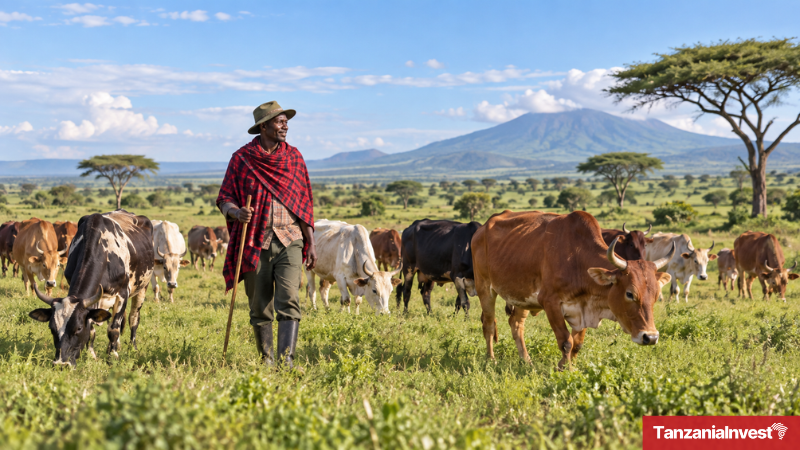
The Government of Tanzania plans to set aside, survey, and title six million hectares of grazing land nationwide by 2030 to improve land use and resolve conflicts between farmers and pastoralists.
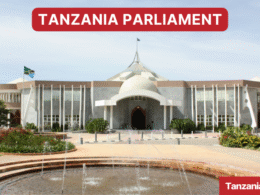
The target was stated in Parliament in Dodoma on 4 September 2026 by the Deputy Minister for Lands, Housing and Human Settlements Development, Kaspar Mmuya.
Mmuya was responding to a question from the Member of Parliament for Mbogwe, Fagason Aron Nkingwa, who asked when the government would fulfil its pledge to allocate and title land for livestock keepers.

He explained that, up to 2025/26, the Ministry of Lands, Housing and Human Settlements Development, working with the Ministry of Livestock and Fisheries, prepared land use plans that allocated more than 3.6 million hectares for livestock activities.
Mmuya added that, in 2025/26, more than 1.3 million hectares across 365 villages were surveyed and formally gazetted through Government Notices No. 597 and No. 718.
He noted that the land use plans covered 53 areas totalling 790,865.54 hectares, where residents were issued Certificates of Customary Right of Occupancy to strengthen ownership and expand access to grazing areas.
The Deputy Minister stated that the government will continue to allocate, survey and title grazing areas for livestock use based on the needs of each part of the country.
Tanzania Grazing Land Allocation Programme
The six-million-hectare target for 2030 originates from the ruling party’s election manifesto commitments on land allocation for livestock keepers.

President Samia Suluhu Hassan has publicly referenced the same target, noting that the government has allocated ample grazing land with the manifesto targeting six million hectares by 2030, while flagging continuing tensions in some areas.
Government officials and politicians have long cited the lack of land use plans as one of the main sources of growing violent conflicts between pastoralists and farmers in Tanzania.
The stakes are significant given the scale of the livestock sector, as Tanzania has approximately 21 million head of cattle, the largest number in Africa after Ethiopia and Sudan.
Of the country’s 94.5 million hectares, only half, 44 million hectares, is arable land, intensifying competition between farming and grazing uses.
Want to know more about Agriculture in Tanzania? Our free overview of the Tanzania Business and Investment Guide 2026 covers Agriculture, plus key sectors and investment opportunities. The complete 141-page edition includes policies, taxation, key regulations, full macroeconomic data, and sources, and is also available at no cost upon completion of a short form.
Download Free OverviewGet the Full Edition for Free