On 20 May 2025, Tanzania’s Parliament approved a TZS 359.98 billion tourism budget for the 2025/26 fiscal year.
The funds will be allocated to ten priority areas set by the Ministry of Natural Resources and Tourism, including international promotion, tourism product development, and conservation infrastructure.
The first priority area is to continue promoting tourism domestically and internationally through advertisements in major global sports leagues, international competitions, airlines, tourism promotional caravans, major international festivals, various international networks, and media outlets.

The second priority area is to develop and enhance strategic tourism products, including heritage sites as well as beach tourism, meetings and events, cruise ships, sports, medical tourism, and culture.
The third priority area is to improve tourism and conservation infrastructure, including roads, airports, and tourism services.
The fourth priority area is to strengthen the use of modern technologies in the management of conservation and resources, monitoring, promotion, and operation of tourism activities.
The fifth priority area is to enhance the protection and conservation of wildlife resources, forests, bees, and heritage sites.
The sixth priority area is to increase the production and value addition of forest and bee products.

The seventh priority area is to continue strengthening systems for access to various statistics, conducting strategic research, and providing advisory services related to the sustainable conservation of wildlife, forests, bees, heritage sites, and tourism development.
The eighth priority area is to educate and sensitize communities about the conservation and sustainable use of wildlife resources, heritage sites, forests, and beekeeping.
The ninth priority area is to strengthen management of revenue collection systems generated from tourism and conservation activities.
The tenth priority area is to prepare and conduct reviews of policies, laws, regulations, and various guidelines to manage and develop the Natural Resources and Tourism Sector.
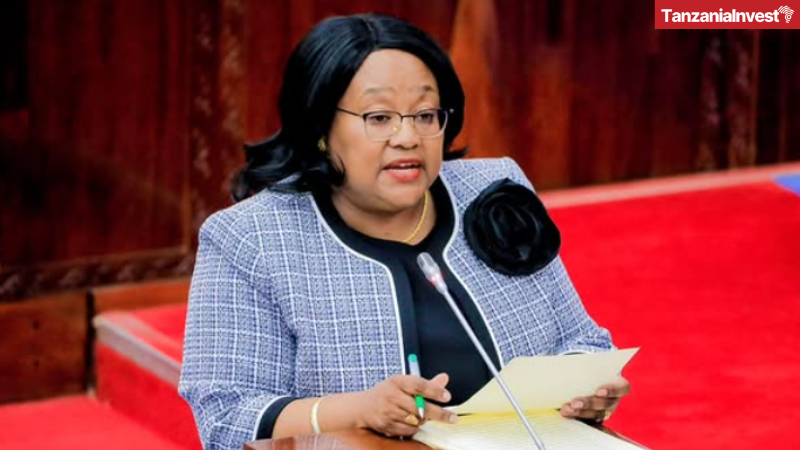
Speaking during the parliamentary session, the Speaker of Tanzania’s Parliament, Hon. Tulia Ackson, urged the Ministry to ensure the budget is used as intended and in line with the recommendations of the Parliamentary Standing Committee on Land, Natural Resources, and Tourism.
On her part, Tanzania’s Minister of Natural Resources and Tourism, Dr. Pindi Chana, announced government plans to allow two major conservation agencies—the Tanzania National Parks Authority (TANAPA) and the Ngorongoro Conservation Area Authority (NCAA)—to retain and use their revenue collections.
She emphasized the need for financial retention to support essential infrastructure maintenance, such as bridge repairs, in key tourist areas.
On his part, the Chair of the Parliamentary Committee on Land, Natural Resources, and Tourism, Timotheo Mnzava, supported the retention proposal, noting operational challenges faced by TANAPA and NCAA due to a lack of funds.
Tanzania’s Tourism Arrivals
The number of international tourists visiting Tanzania has increased by 132.1%, rising from 922,692 tourists in 2021 to 2,141,895 in 2024.
Also, the number of domestic tourists visiting various tourist attractions has surged by 307.9%, growing from 788,933 visitors in 2021 to 3,218,352 in 2024.
These increases have resulted in a total tourist count of 5,360,247, achieving 107.2% of the national target of 5,000,000 tourists.
The UN World Tourism Organization (UN Tourism) named Tanzania Africa’s top performer in 2024 for post-COVID-19 tourism recovery, with a 48% increase in tourist arrivals, higher than Ethiopia (40%), Morocco (35%), Kenya (11%), and Tunisia (9%).
Want to know more about Tourism in Tanzania? Our free overview of the Tanzania Business and Investment Guide 2026 covers Tourism, plus key sectors and investment opportunities. The complete 141-page edition includes policies, taxation, key regulations, full macroeconomic data, and sources, and is also available at no cost upon completion of a short form.
Download Free OverviewGet the Full Edition for Free