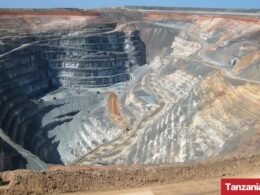


Acacia Mining (LSE: ACA, DSE: ACA), Tanzania’s largest gold miner, has recently published its unaudited results for the six months ended 30 June 2018, indicating a gold production of 254,759 ounces, 41% lower than H1 2017.
In Q3 2017, Acacia took to the decision to place its Bulyanhulu gold mine on reduced operations due to the unsustainable losses experienced at the mine due to the inability to export concentrate. This process was completed in Q4 2017.
However, despite the continuation of the challenging operating environment and the on-going disputes with the Government of Tanzania, the group has delivered a strong operational performance in H1 2018.

“In achieving first half production of 254,759 ounces we are on track to achieve the top end of our guidance range of 435,000-475,000 ounces for 2018 and continue to demonstrate the resilience that we have built within our business. All gold produced in 2018 is expected to be in doré form and will not, therefore, be impacted by the current GoT export ban on concentrate,”, the company’s press release report reads.
Peter Geleta, Interim CEO of Acacia commented; “The changes we made to the business in late 2017 have delivered the desired results, helping to return the group to free cash generation for the first time since Q4 2016 and we are on track to achieve the top end of our production guidance range of 435,000-475,000 ounces for 2018 at an AISC of US$935-985 per ounce. Following the stability we have brought to the business during the last six months, our priority remains on optimising performance across all areas of our operations as we manage through the current uncertainty in the operating environment and the on-going disputes with the Government of Tanzania. By continuing to be resilient, managing our costs and working to our mine plans, we are addressing what we can control and will look to deliver value for all of our stakeholders.”
Acacia is currently on a raw with the Tanzanian government after a presidential committee found in May 2017 that the company allegedly under-declared its exports and eventually presented it with a demand for USD 190 billion in unpaid taxes.
The gold producer has always refuted the accusation and has been since in talks with the Government of Tanzania for a resolution.
Want to know more about Mining in Tanzania? Our free overview of the Tanzania Business and Investment Guide 2026 covers Mining, plus key sectors and investment opportunities. The complete 141-page edition includes policies, taxation, key regulations, full macroeconomic data, and sources, and is also available at no cost upon completion of a short form.
Download Free OverviewGet the Full Edition for Free