
Tanzania Seed Sector Get Boost with International Accreditation

Tanzania seed sector international accreditation ISTA

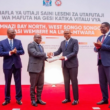
The Tanzanian seed sector’s ability to trade seeds abroad received a major boost with the accreditation of the Tanzania Official Seed Certification Institute (TOSCI) National Laboratory by the International Seed Testing Association (ISTA).

TOSCI is the government institute under the Ministry of Agriculture (MoA) responsible for regulating seed in Tanzania.

ISTA is an internationally recognized seed testing association that produces internationally agreed rules for seed sampling and testing.

Tanzania Investment Guide 2026 Free Edition

Accreditation to ISTA will enhance the availability of quality seed in Tanzania and increase the seed sector’s confidence in TOSCI’s seed certification, boosting Tanzania’s seed trade with East African Community (EAC) countries and beyond.

Unveiling Tanzania’s accreditation to ISTA, Hon. Eng. Charles Tizeba, Tanzania’s Minister for Agriculture, said, “Good quality seed is fundamental for agricultural productivity. It’s the government’s responsibility to ensure the agricultural supply chains are working well.”

Hon. Eng. Tizeba also stated that “the ISTA accreditation of laboratories will make Tanzanian seeds easily acceptable to other countries.”

Tanzania is an important seed producer and agricultural trading country in the EAC region. However, disparate seed legislation and regulations represent a major barrier to the local breeding, production, distribution, and sale of improved seed varieties.

Tanzania Seed Sector
According to the Tanzania Brief 2017 of The African Seed Access Index (TASAI), the seed industry in Tanzania consists of two systems: the informal sector and the formal sector.

TanzaniaInvest Capital Markets Report Banner

The informal sector is the system where farmers produce, obtain, maintain, and distribute seed resources, from one growing season to the next.

Due to factors such as limited knowledge, lack of a wide variety of seeds, limited resources to purchase seed, and poor access to agro‐dealers, most small‐holder farmers in Tanzania still rely on the informal system, especially for legumes.

The formal sector focuses on breeding and evaluating improved varieties, and producing and selling seed of these varieties that are certified by TOSCI.

Tanzania currently has 46 active breeders for the four priority crops: maize, beans, soya bean, and pigeon pea.

Maize is clearly the most prominent crop in Tanzania. Since 2000, 124 varieties of maize have been released, compared to 15 for beans, 4 for soya bean, and 7 for pigeon pea.

Want to know more about Agriculture in Tanzania? Our free overview of the Tanzania Business and Investment Guide 2026 covers Agriculture, plus key sectors and investment opportunities. The complete 141-page edition includes policies, taxation, key regulations, full macroeconomic data, and sources, and is also available at no cost upon completion of a short form.

Download Free OverviewGet the Full Edition for Free
Free Newsletter

Get our monthly update on business and investment in Tanzania.

Related Posts
Tanzania fisheries value chain
Read More

FSDT Outlines Steps to Unlock Fisheries Value Chain Finance as 47% of Tanzanian Operators Have Never Borrowed

Tanzania’s FSDT outlined steps to unlock finance for the fisheries value chain, noting that 47% of surveyed operators have never borrowed, while 91% save and 97% have mobile phones. The steps include better data, credit guarantees, alternative credit scoring, digital payments, and bundled insurance, alongside the Secured Transactions (Movable Property) Act 2026, which lets boats and cages serve as collateral through a Bank of Tanzania registry.
Tanzania Khamis Mussa Omar World Bank Anna Bjerde
Read More

Tanzania and World Bank Map Central Corridor Investment Opportunities in Agriculture, Logistics, Mining, and Tourism

Tanzania and the World Bank are mapping Central Corridor investment opportunities in agriculture, mining, tourism, transport, and logistics, with a possible extension to Rwanda, while UNDP prepares investor-ready projects for a June 2027 investment conference and seeks Asian Infrastructure Investment Bank financing. The World Bank named job creation its top priority and discussed shifting small business lending from collateral to cash-flow assessment, while Tanzania pursues a 40% value addition target through agriculture, livestock, and minerals.
EU-Tanzania Investment & Business Forum 2026-2027 Helsinki day 1
Read More

Tanzania Pitched a 68-Project, USD 30.1 Billion Pipeline at the EU–Tanzania Roadshow in Finland, Italy, the Netherlands and Belgium Ahead of the Early 2027 Dar es Salaam Forum

The EU-Tanzania roadshow 2026 took Tanzanian ministers and agencies to Helsinki, Cesena, The Hague, Rotterdam, and Antwerp between 28 September and 6 October, pitching critical minerals, agribusiness, renewable energy, digital, and port and rail projects from a 68-project, USD 30.1 billion pipeline. The roadshow leads to a high-level EU-Tanzania Investment and Business Forum in Dar es Salaam planned for early 2027.
EU-Tanzania Roadshow 2026 APM Terminals at Maasvlakte Rotterdam
Read More

EU–Tanzania Roadshow Ends With Rotterdam and Antwerp Port Visits as Tanzania Pitches Port, Rail and Logistics Opportunities to European Companies

The EU-Tanzania roadshow ended in Antwerp on 6 October 2026 after port visits in Rotterdam, with Tanzania's port and rail authorities pitching openings for terminal operators, EPC contractors, private rail operators and digital rolling stock tracking, while rail operator Vecturis, minerals logistics group Polytra, heavy lifting company Sarens and marine data company GEOxyz outlined their plans in Tanzania. The EU said it will join the World Bank and the EIB, which has a formal financing request, in supporting the Dar es Salaam port expansion, and offered Global Gateway guarantees, equity and feasibility funding for company projects screened by member states.