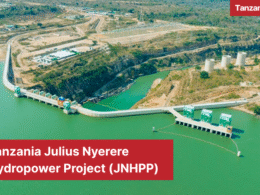


The African Development Bank (AfDB) hase approved a USD 120 million loan to fund the construction of a 50 MW hydropower plant in Western Tanzania.
The hydropower plant will provide reliable renewable energy to households, schools, clinics, and small and medium-sized enterprises in the Kigoma Region.
Its expected average annual output of 181 GWh will meet the electricity needs of as many as 133,649 Kigoma households, bringing the region’s electrification rate more closely in line with the rest of the country.

The Malagarasi project has several components: a run-of-the-river hydropower plant facility; a 54- km, 132 kV transmission line that will connect to Tanzania’s national grid; a distribution network expansion operation that includes rural electrification and last-mile connections; project management and contract administration support; and compensation and resettlement of affected persons.
The President of AfDB Adesina Akinwumi noted that the approval of the project “is a reflection of the Bank’s commitment to assist the Government of Tanzania to accelerate its transition to more inclusive and sustainable growth through the production of clean, reliable and affordable electricity.”
The project’s overall project cost is estimated at USD 144.14 million. The bulk of the funding (USD 120 million) will be sourced from the Bank Group’s sovereign window, with an additional USD 20 million contributed by the Africa Growing Together Fund– a co-financing fund with resources from the government of China that is administered by the Bank. The Government of Tanzania will provide the remaining USD 4.14 million.
The project is expected to create about 700 jobs during construction, cut the region’s electricity generation costs to approximately USD 0.04/kWh from the current USD 0.33/kWh, and also reduce reliance on greenhouse gas-emitting fossil fuels. The cost of doing business will also fall because the industry will no longer need to maintain costly backup generators.
The project aligns with Tanzania’s national Development Vision 2025 and its Second Five-Year Development Plan (2016/17 – 2020/21) and complements other regional initiatives, including the North West Grid 400 kV Nyakanazi-Kigoma transmission line project, which the Bank is financing in parallel with the South Korea Economic Development Co-operation Fund.

The Malagarasi Project will also directly contribute to the Bank’s Light Up & Power Africa High-5 development priority, which is being implemented through the institution’s New Deal on Energy for Africa strategy.
Commenting on the Board’s approval, Henry Batchi Baldeh, Director of the Bank’s Power Systems Development Department noted that the project is “one of the flagship physical infrastructure investments in the Government of the Tanzania’s Development Vision 2025 and Tanzania’s current Five-Year Development Plan, and that it will increase the share of renewable energy in Tanzania’s energy mix.”
Tanzania Hydropower
Hydropower accounts for 31% of Tanzania’s energy mix with 562 MW installed capacity, while estimates of potential additional capacity are as high as 4.7 GW. However, weak transmission infrastructure is considered a significant short-term barrier.
The Tanzanian hydropower capacity relies on the country’s vast water resources, which include lakes such as Lake Victoria, Tanganyika, Nyasa, Rukwa, Manyara, Eyasi, and Natroni, as well as rivers and basins across the country.
Want to know more about Energy in Tanzania? Our free overview of the Tanzania Business and Investment Guide 2026 covers Energy, plus key sectors and investment opportunities. The complete 141-page edition includes policies, taxation, key regulations, full macroeconomic data, and sources, and is also available at no cost upon completion of a short form.
Download Free OverviewGet the Full Edition for Free