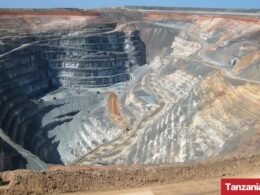
Recent reports have indicated that the Tanzania mining sector is anticipating major legislative reforms following several amendments to the country’s Mining Act.
Discussions revolving around changes to the Mining Act have gained momentum since July 2008, following recommendations by a presidential select committee on mining contracts that the government should own a 10 percent stake in all mining companies that operate within the country.
The 12-member presidential review committee officially began its assessment of the country’s mining sector in November 2007 and the National Assembly began its discussions on the Committee’s report in October 2008, quickly followed by the request that the government discontinue the sale of its shares in mining companies, indicating a position that no mine should be entirely foreign-owned and that the government shares should be supervised by the State Mining Corporation (STAMICO).
Further findings by the Mining Contract Review Committee indicated that mining royalties on metals should be increased from 3 percent to 5 percent; tax relief on fuel imports for gold mines should be stopped; royalties on rough diamonds and gemstones, such as tanzanite, should increase from 5 percent to 7 percent while, at the same time, royalties for cut and polished stones should rise from zero to 3 percent; mining companies should be charged a fuel tax, the profits of which would be spent on road building; and royalties from the mining sector should be calculated on gross value, rather than a net back value.

The country’s mining industry currently contributes approximately 2.3 percent to the country’s annual GDP, a figure that the government is looking to expand to 10 percent by 2025.
The production of gold and diamonds has traditionally been the foundation of the industry as represented by the fact that the country is the third-largest gold producer in Africa behind South Africa and Ghana, and is also among the top producers of diamonds in the world.
In spite of the lack of a good infrastructural system, poor adherence to safety and environmental standards, and numerous procedural delays, the government is currently attempting to update the management of resources in the country.
In addition, the discovery of substantial uranium deposits in the country has helped bring international attention to the country, which could help to stimulate an increase in the capital inflow to the country.
At the same time, the country’s government is also in the process of reviewing and amending its mining laws in order to bring the system in line with the needs of local communities.

In order to accomplish this goal, the government has launched the Mining Cadastral Information Management System, which was designed to restore and update the contract allocation process as well as to track both exploration and mining license holders.
Want to know more about Mining in Tanzania? Our free overview of the Tanzania Business and Investment Guide 2026 covers Mining, plus key sectors and investment opportunities. The complete 141-page edition includes policies, taxation, key regulations, full macroeconomic data, and sources, and is also available at no cost upon completion of a short form.
Download Free OverviewGet the Full Edition for Free