Tanzania Renews North Mara Mining Licenses for 15 Years

Tanzania has renewed the Special Mining Licenses for Barrick’s North Mara Gold Mine for 15 years. The mine combines open-pit and underground operations and processes an average of 8,000 tonnes of ore daily.
Tarime Orders Halt to Land Development for North Mara Mine TSF Dam
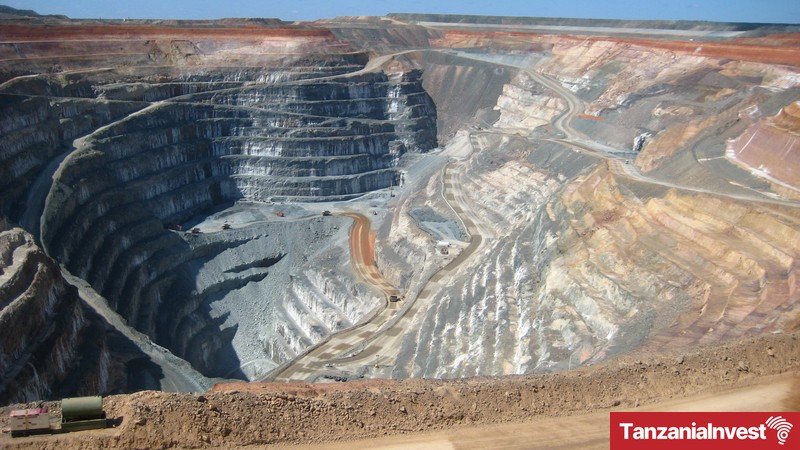
Image: Calistemon via Wikimedia Commons, CC BY-SA 4.0

The Government of Tanzania has renewed the Special Mining Licenses for Barrick’s North Mara Gold Mine for a further 15 years.

Barrick said the renewal will allow continued investment in the mine, its employees and surrounding communities.

The company said it has contributed approximately US$5.3 billion to Tanzania’s economy since 2019, including US$1.2 billion in 2025 through taxes, royalties, salaries, dividends and local procurement.

Tanzania Investment Guide 2026 Free Edition

More than 90% of Barrick’s procurement is sourced from companies registered in Tanzania, most of them indigenous businesses, according to the company.

In 2025, the Government of Tanzania recognized Barrick as the country’s top dividend payer and highest contributor to government revenue.

“This is an important milestone for North Mara and for our partnership with Tanzania,” said Seb Bock, Chief Executive Officer of Barrick’s Rest of World business.

“Since 2019, we’ve worked with the Government of Tanzania and local communities to build a stronger partnership and to create more opportunities for all Tanzanians.”

“At the core of our business is building partnerships of real depth and trust with all stakeholders, and this renewal reflects that commitment,” Bock said.

TanzaniaInvest Capital Markets Report Banner

Tarime District Commissioner Major Edward Gowele said relations at North Mara had strengthened since Barrick took over.

“Residents now really view the mine as a community partner,” he said.

The North Mara Gold Mine

North Mara is in Tarime District, Mara Region, in north-western Tanzania, about 100 kilometres east of Lake Victoria and 20 kilometres south of the Kenyan border.

The mine began commercial production in 2002.

In September 2019, after completing its buyout of Acacia Mining’s minority shareholders, Barrick took operational control of North Mara.

That year, Barrick and the Government of Tanzania established Twiga Minerals to operate North Mara and Bulyanhulu.

The Government holds a 16% interest in each mine, while the partners share the economic benefits equally.

North Mara combines the Nyabirama open pit with the Gokona underground mine.

Its processing plant has capacity for an average of 8,000 tonnes of ore per day.

Barrick reported 3.2 million ounces of gold reserves for its 84% share of North Mara as of December 31, 2025.

Barrick reported a Tanzania workforce of approximately 3,000 people, 96% of them Tanzanian nationals, with 47% drawn from communities surrounding its mines.

Source: Barrick

Want to know more about Mining in Tanzania? Our free overview of the Tanzania Business and Investment Guide 2026 covers Mining, plus key sectors and investment opportunities. The complete 141-page edition includes policies, taxation, key regulations, full macroeconomic data, and sources, and is also available at no cost upon completion of a short form.

Download Free OverviewGet the Full Edition for Free

Free Newsletter

Get our monthly update on business and investment in Tanzania.

Related Posts
Tanzania Khamis Mussa Omar World Bank Anna Bjerde
Read More

Tanzania and World Bank Map Central Corridor Investment Opportunities in Agriculture, Logistics, Mining, and Tourism

Tanzania and the World Bank are mapping Central Corridor investment opportunities in agriculture, mining, tourism, transport, and logistics, with a possible extension to Rwanda, while UNDP prepares investor-ready projects for a June 2027 investment conference and seeks Asian Infrastructure Investment Bank financing. The World Bank named job creation its top priority and discussed shifting small business lending from collateral to cash-flow assessment, while Tanzania pursues a 40% value addition target through agriculture, livestock, and minerals.
EU-Tanzania Investment & Business Forum 2026-2027 Helsinki day 1
Read More

Tanzania Pitched a 68-Project, USD 30.1 Billion Pipeline at the EU–Tanzania Roadshow in Finland, Italy, the Netherlands and Belgium Ahead of the Early 2027 Dar es Salaam Forum

The EU-Tanzania roadshow 2026 took Tanzanian ministers and agencies to Helsinki, Cesena, The Hague, Rotterdam, and Antwerp between 28 September and 6 October, pitching critical minerals, agribusiness, renewable energy, digital, and port and rail projects from a 68-project, USD 30.1 billion pipeline. The roadshow leads to a high-level EU-Tanzania Investment and Business Forum in Dar es Salaam planned for early 2027.
EU-Tanzania Roadshow 2026 APM Terminals at Maasvlakte Rotterdam
Read More

EU–Tanzania Roadshow Ends With Rotterdam and Antwerp Port Visits as Tanzania Pitches Port, Rail and Logistics Opportunities to European Companies

The EU-Tanzania roadshow ended in Antwerp on 6 October 2026 after port visits in Rotterdam, with Tanzania's port and rail authorities pitching openings for terminal operators, EPC contractors, private rail operators and digital rolling stock tracking, while rail operator Vecturis, minerals logistics group Polytra, heavy lifting company Sarens and marine data company GEOxyz outlined their plans in Tanzania. The EU said it will join the World Bank and the EIB, which has a formal financing request, in supporting the Dar es Salaam port expansion, and offered Global Gateway guarantees, equity and feasibility funding for company projects screened by member states.
EU-Tanzania Roadshow 2026 The Hague day 1 opening Mkumbo
Read More

EU–Tanzania Roadshow Reaches The Hague With Coffee, Cashew, Critical Minerals, and Port Investment Pitches

The EU-Tanzania roadshow reached The Hague on 5 October 2026 for its final leg, where Tanzania pitched coffee and cashew processing, wheat and edible oils, critical minerals, the new Bagamoyo and Mwambani ports on the mainland, Zanzibar's Mangapwani port hub, four dry ports, and two new lines of the standard gauge railway network to around 90 businesses. Agriculture emerged as the priority sector for European and Dutch investors, with the best opportunities in food production and value addition, backed by Dutch expertise as the world's second-largest agricultural exporter.