
Tanzania Launches Horticulture Exports Accelerator Program (HEAP) to Increase Quantity and Quality of Exports

HEAP horticulture exports accelerator program launch

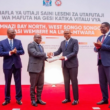
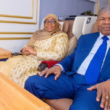
In September 2024, the Tanzania Horticulture Association (TAHA) and the British High Commission of Tanzania launched the Horticulture Exports Accelerator Program (HEAP) in Arusha, Tanzania.

Officially introduced by the British High Commissioner to Tanzania, Ms. Marianne Young, the UK-funded initiative focuses on increasing the quantity and quality of horticultural exports while supporting women in agribusiness and promoting climate adaptation.

This two-year program aims to strengthen Tanzania’s horticultural sector by enhancing local businesses’ export capabilities, ensuring they meet international standards, and gaining access to UK and European markets.
Tanzania Investment Guide 2026 Free Edition

Through HEAP, more firms will benefit from the UK’s Developing Countries Trading Scheme (DCTS),a trade initiative designed to provide preferential access to the UK market for developing countries, further deepening the UK-Tanzania partnership in agriculture.

Speaking after the official announcement of the program, TAHA’s CEO Dr. Jacqueline Mkindi said, “This program has been established and is coordinated by TAHA in collaboration with the Tanzanian High Commission in the UK and the Ministry of Agriculture. The main goal is to increase the volume, quality, and value of horticultural products targeting the UK and European markets, while also aiming to boost the number of exporters and enhance their ability to compete internationally.”

On his part, the Permanent Secretary of the Ministry of Agriculture Mr. Gerald Mweli, highlighted the program’s importance in supporting the Tanzanian government’s agricultural development strategy, known as Agenda 10/30, which emphasizes the motto “Feed Ourselves, Feed Others Commercially.”

Horticulture in Tanzania

According to the National Horticulture Development Strategy and Action Plan 2021-2031, horticulture is one of the fastest-growing industries in Tanzania’s agricultural sector, with an annual growth rate of 9-12%.

The industry earned the economy nearly USD 418 million in 2023, up from USD 290 Million in 2022.
TanzaniaInvest Capital Markets Report Banner

The government has developed a strategy that aims to spur the horticulture industry’s growth and enable it to earn the economy at least USD 2 Billion annually by 2030.

Horticulture employs around four million people and contributes 38% of the total foreign income generated by the agricultural industry.

Women and youth comprise about 65 -70% of the small-scale horticultural producers in the country and have limited access to regional and international markets.

Want to know more about Agriculture in Tanzania? Our free overview of the Tanzania Business and Investment Guide 2026 covers Agriculture, plus key sectors and investment opportunities. The complete 141-page edition includes policies, taxation, key regulations, full macroeconomic data, and sources, and is also available at no cost upon completion of a short form.

Download Free OverviewGet the Full Edition for Free
Free Newsletter

Get our monthly update on business and investment in Tanzania.

Related Posts
Tanzania fisheries value chain
Read More

FSDT Outlines Steps to Unlock Fisheries Value Chain Finance as 47% of Tanzanian Operators Have Never Borrowed

Tanzania’s FSDT outlined steps to unlock finance for the fisheries value chain, noting that 47% of surveyed operators have never borrowed, while 91% save and 97% have mobile phones. The steps include better data, credit guarantees, alternative credit scoring, digital payments, and bundled insurance, alongside the Secured Transactions (Movable Property) Act 2026, which lets boats and cages serve as collateral through a Bank of Tanzania registry.
Tanzania Khamis Mussa Omar World Bank Anna Bjerde
Read More

Tanzania and World Bank Map Central Corridor Investment Opportunities in Agriculture, Logistics, Mining, and Tourism

Tanzania and the World Bank are mapping Central Corridor investment opportunities in agriculture, mining, tourism, transport, and logistics, with a possible extension to Rwanda, while UNDP prepares investor-ready projects for a June 2027 investment conference and seeks Asian Infrastructure Investment Bank financing. The World Bank named job creation its top priority and discussed shifting small business lending from collateral to cash-flow assessment, while Tanzania pursues a 40% value addition target through agriculture, livestock, and minerals.
EU-Tanzania Investment & Business Forum 2026-2027 Helsinki day 1
Read More

Tanzania Pitched a 68-Project, USD 30.1 Billion Pipeline at the EU–Tanzania Roadshow in Finland, Italy, the Netherlands and Belgium Ahead of the Early 2027 Dar es Salaam Forum

The EU-Tanzania roadshow 2026 took Tanzanian ministers and agencies to Helsinki, Cesena, The Hague, Rotterdam, and Antwerp between 28 September and 6 October, pitching critical minerals, agribusiness, renewable energy, digital, and port and rail projects from a 68-project, USD 30.1 billion pipeline. The roadshow leads to a high-level EU-Tanzania Investment and Business Forum in Dar es Salaam planned for early 2027.
EU-Tanzania Roadshow 2026 APM Terminals at Maasvlakte Rotterdam
Read More

EU–Tanzania Roadshow Ends With Rotterdam and Antwerp Port Visits as Tanzania Pitches Port, Rail and Logistics Opportunities to European Companies

The EU-Tanzania roadshow ended in Antwerp on 6 October 2026 after port visits in Rotterdam, with Tanzania's port and rail authorities pitching openings for terminal operators, EPC contractors, private rail operators and digital rolling stock tracking, while rail operator Vecturis, minerals logistics group Polytra, heavy lifting company Sarens and marine data company GEOxyz outlined their plans in Tanzania. The EU said it will join the World Bank and the EIB, which has a formal financing request, in supporting the Dar es Salaam port expansion, and offered Global Gateway guarantees, equity and feasibility funding for company projects screened by member states.