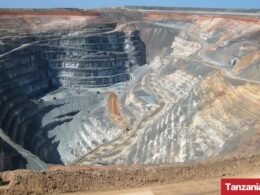

A new report by the Citizen has indicated government plans to send a bill for a new Tanzania mining law to parliament in October that will provide it with a 10-15 percent stake in any future mining operations.
According to William Ngeleja, the minister for Energy and Minerals, the aim is for this proposed law to begin addressing some of the current shortcomings in the sector in order to help the country take more advantage of its abundant natural resources.
“We are currently reviewing the existing mining law in order to come up with new legislation that will give the parties a win-win situation,” he said, “We are not doing this to discourage investors.”
Mr. Ngeleja went on to explain that the proposed changes would not affect current investments, but any weaknesses would be improved upon.

“The changes that are going to be introduced will not so much affect the existing investments,” said the Tanzania Energy and Minerals minister, “For instance, we have agreed if there’s a weakness in the royalties that they are paying now, we will make some improvements.”
In addition, Mr. Ngeleja explained that the proposed law is meant to not only ensure that the country’s resources are properly exploited, but also to ensure that the revenue from these resources was transparently accounted for.
In fact, according to the Citizen, the proposed legislation corresponds to other legal and fiscal regimes that are applicable to mining industries in other African countries and was created specifically to respond to critics of the mining sector in Tanzania who said that the country could benefit more from the lucrative sector.
As well as the creation of new ownership rules, the Government is also planning to establish new rates for royalties, which have currently been set at three percent for gold and other minerals and five percent for gemstones, particularly diamonds.
Additional changes include restricting the provision of services to mines to local companies rather than to foreign companies.

Nevertheless, Mr. Ngeleja said that in spite of these changes, the new law will still be used to help protect the interest of investors.
“Today [the] mining sector is the second largest foreign exchange earner in the country,” he said, “There are in place the 1997 mining policy and the 1998 mining law, which despite certain weaknesses, are attractive to investors.”
As a result of the global economic crisis, the prices of diamonds and tanzanite have fallen, which has led to some concern about the overall impact that the crisis will have on the sector.
In response to this concern, Mr. Ngeleja indicated that the current high gold prices should help to soften the impact as the country currently represents the third largest producer of gold on the continent in addition to its diamonds, nickel and uranium deposits.
“Since we have many gold mines, we see it as a leverage point,” said Mr. Ngeleja, “Although the impact of the economic crisis is global, the improvement of gold prices will help mitigate the effect.”
Want to know more about Mining in Tanzania? Our free overview of the Tanzania Business and Investment Guide 2026 covers Mining, plus key sectors and investment opportunities. The complete 141-page edition includes policies, taxation, key regulations, full macroeconomic data, and sources, and is also available at no cost upon completion of a short form.
Download Free OverviewGet the Full Edition for Free