



Tanzania Considers China’s Model To Improve Efficiency Of State Owned Enterpises

Tanzania is considering adopting China’s State-owned Assets Supervision and Administration Commission (SASAC) model to improve efficiency and governance of its TZS 92.3 trillion state investment portfolio managed by the Treasury Registrar’s Office. The reform focuses on 308 public institutions.
Tanzania Treasury Registrar Nehemiah Mchechu China Ambassador Chen Mingjian

Tanzania is considering the adoption of China’s State-owned Assets Supervision and Administration Commission (SASAC) model as a reference framework to reform and improve efficiency in its TZS 92.3 trillion state investment portfolio managed by the Office of the Treasury Registrar (OTR).

The discussions were held in Dar es Salaam between OTR, led by Treasury Registrar Nehemiah Mchechu, and Chinese Ambassador to Tanzania Chen Mingjian and his delegation on May 18 and May 19, 2026.

The talks focused on improving governance, efficiency, and financial performance of state-owned enterprises and government investments.

Tanzania Investment Guide 2026 Free Edition

OTR manages 308 institutions and companies in which the government has investments, including 252 majority-owned entities.

The total value of these investments stands at TZS 92.3 trillion across sectors, including aviation, energy, oil and gas, mining, and transport.

The reform discussions centered on improving management structures and performance of public enterprises.

Tanzania is studying China’s SASAC system as a reference model for state-owned enterprise reform and asset management.

Mchechu said the objective is to improve efficiency, reduce reliance on subsidies, increase dividend returns to the state, and strengthen the autonomy of public institutions, adding that inefficient public enterprises remain a constraint to private sector growth.

TanzaniaInvest Capital Markets Report Banner

For her part, Chinese Ambassador Chen Mingjian said China is ready to share experience in state-owned enterprise reform under its economic transformation process initiated in 1978.

She added that China will continue supporting Tanzania in industrial development, infrastructure, mineral value addition and capacity building.

The discussions also covered cooperation in infrastructure, maritime transport, ports and mining, as well as training programmes for OTR staff.

Additional topics included mineral processing initiatives and cooperation on the Tanzania-Zambia Railway Authority (TAZARA), which is marking 50 years of operations.

Want to know more about the Economy in Tanzania? Our free overview of the Tanzania Business and Investment Guide 2026 covers the Economy, plus key sectors and investment opportunities. The complete 141-page edition includes policies, taxation, key regulations, full macroeconomic data, and sources, and is also available at no cost upon completion of a short form.

Download Free OverviewGet the Full Edition for Free

Related Posts
IMF World Economic Outlook 2026 Tanzania
Read More

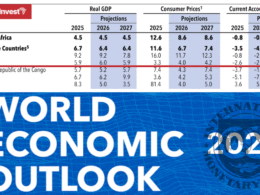
Tanzania GDP to Grow 6.0% in 2026 and 5.9% in 2027 With Inflation at 4.0%, IMF Projects

In its World Economic Outlook October 2026, the IMF projects Tanzania’s real GDP growth at 6.0% in 2026 and 5.9% in 2027, above the 4.5% sub-Saharan Africa average and Kenya’s 4.5%, while Uganda and Rwanda are projected at 6.2% and 7.4%. Tanzania’s inflation is projected at 4.0% in 2026 and 4.2% in 2027, below the 8.6% sub-Saharan Africa average and Kenya’s 6.0%.
Central Bank of Tanzania BOT CBR Interest Rate Q4 2026
Read More

BOT Maintains Tanzania Central Bank Rate at 6.25% for Q4 2026; GDP Growth Projected at 7.2% in Q4 2026, Driven by Agriculture, Construction, Mining, and Tourism

The Bank of Tanzania (BOT) released its Monetary Policy Report of October 2026, in which the Monetary Policy Committee (MPC) decided to maintain the Central Bank Rate (CBR) at 6.25% for the fourth quarter of 2026, allowing the July 2026 increase to fully transmit through the economy. The MPC will keep policy agile and flexible to limit risks to the inflation outlook from the Middle East conflict and potential El Niño-related disruptions, and keep inflation within the 3-5% target range.
Interview Jana Bricco IMF Resident Representative Tanzania no logo
Read More

Interview with Jana Bricco, New IMF Resident Representative in Tanzania, on Economic Growth, Private Investment, and Needed Reforms

In this exclusive interview with TanzaniaInvest, the new IMF Resident Representative Jana Bricco says Tanzania can sustain growth of around 6% by preserving macroeconomic stability and accelerating reforms supporting private investment, productivity and jobs. She calls for fewer regulatory obstacles, more predictable taxation, faster VAT refunds and better access to finance for businesses and SMEs, and explains how IMF support will evolve following the end of its financing programmes, with the relationship now focused on policy dialogue and capacity development.

