

Brussels Airlines launched its first direct flights between Brussels, Belgium, and Kilimanjaro International Airport (KIA), with the inaugural Airbus A330-300 flight arriving on 3 June 2026 carrying 248 passengers.
KIA serves as the main gateway for travelers heading to Tanzania’s northern safari circuit, acting as a hub for those continuing on to the Serengeti and the Ngorongoro Conservation Area and for tourists seeking to climb Africa’s tallest mountain.
The service forms part of Brussels Airlines’ wider expansion of its network in sub-Saharan Africa, and adds to a string of international carriers introducing new routes to Tanzania.

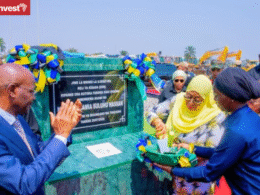
The Minister for Transport, Prof. Makame Mbarawa, led officials in receiving the inaugural flight at KIA.
Mbarawa said the new service opens tourism, business and bilateral relationship opportunities between Tanzania and Belgium.
He attributed the development to the enabling environment created by President Dr. Samia Suluhu Hassan.
Mbarawa added that the government is continuing to upgrade airports across the country, particularly KIA, where a modern passenger terminal is being built to attract more airlines to Tanzania.
The Deputy Minister for Foreign Affairs and East African Cooperation James Millya noted that launching flights from Brussels, the headquarters of the European Union (EU), signals strengthening diplomatic and economic ties between Tanzania and Belgium as well as other European countries.

Brussels Airlines President Julia Hillenbrand stated that the launch marks an important step in air travel between Tanzania and Belgium, enabling tourists and business travelers to come to Tanzania directly.
Tanzania Airports Authority (TAA) Director General Abdul Mombokaleo explained that the government is continuing to improve airports so that more airlines can serve the country.
Want to know more about Transport in Tanzania? Our free overview of the Tanzania Business and Investment Guide 2026 covers Transport, plus key sectors and investment opportunities. The complete 141-page edition includes policies, taxation, key regulations, full macroeconomic data, and sources, and is also available at no cost upon completion of a short form.
Download Free OverviewGet the Full Edition for Free