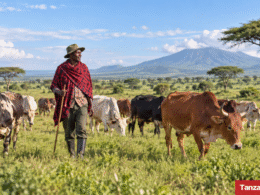


According to recent reports, an agribusiness investor, Bruce Rastetter, from the US is currently working on a Tanzania agriculture project that will transform approximately 800,000 acres of land into a substantial grain-and-livestock operation.
Mr. Rastetter, who will be heading the investment project with his group known as AgriSol, said that the project is intended to help demonstrate that the proper use of the high-quality seeds, machinery and chemicals that are frequently used in U.S. agriculture can have a significant impact on the amount of food that is produced in Africa and, therefore, help to improve the livelihoods of those living in the country.
“Our goal is to work to bring modern sustainable agriculture to that part of Tanzania,” said Mr. Rastetter, “in cooperation with the government and the local people.”

According to reports, experts have said that in spite of the fact that a large portion of the region is currently grassland, there is sufficient rainfall and the soil is fertile enough to be agriculturally productive.
Mr. Rastetter went on to say that the farmers in the region are currently harvesting less than 20 bushels of corn per acre, which is significantly less than they are capable of.
According to the government of Tanzania, a deal is currently awaiting approval next month that would provide AgriSol with land under 99-year leases.
In addition, the government of Tanzania has been aggressively seeking to attract foreign investors and aid in order to further develop the country’s agricultural sector.
While this development project is currently still in its early stages, AgriSol, has reportedly already invested USD 2 million in preliminary work on the project.

According to reports, many important details of the project have not yet been resolved, including the amount of the land that will be available to local farmers, but a 45-page presentation that was developed by a partner in the project known as the Pharos Global Agriculture Fund, has said it would involve three sites ranging from 62,000 acres to 544,000 acres.
In addition, reports have indicated that the crops could be seeded as early as this year, with plantings increasing over the next few years of corn, sorghum, soybeans and sugarcane as well as the production of cattle, poultry and ethanol.
According to an award winning soil scientist, Pedro Sanchez, the biggest challenge facing AgriSol will be the transportation of its crops to market when faced with the lack of roads and rail service in the majority of the region as well as the risk that small-scale farmers will become indebted AgriSol after buying seed and fertilizer from the company.
In response to these concerns, Mr. Rastetter has said that this project will be developed as transportation within the region becomes available in the region and his partner company, AgriSol, is committed to working with local farmers in order to avoid them becoming indebted to the company.
Want to know more about Agriculture in Tanzania? Our free overview of the Tanzania Business and Investment Guide 2026 covers Agriculture, plus key sectors and investment opportunities. The complete 141-page edition includes policies, taxation, key regulations, full macroeconomic data, and sources, and is also available at no cost upon completion of a short form.
Download Free OverviewGet the Full Edition for Free