


The East African Community (EAC) has launched the Sustainable Regional Agricultural Extension (ENSURE) Project, a three-year initiative with a total budget of USD 12.5 million to enhance agricultural productivity and sustainability across the East African region.
Funded by the African Development Bank (AfDB), the ENSURE Project is designed to improve access to robust agricultural extension services and strengthen the capacity of EAC Partner States to provide responsive and adaptive extension services.
The initiative aligns with Article 105 (2d) of the EAC Treaty, which emphasizes the importance of agricultural development in the region.

The ENSURE Project will focus on three key areas of intervention: creating an enabling environment for harmonized regional extension and input policies, deploying a pluralistic extension approach involving public, private, and NGO actors, and establishing a regional capacity-building program to address transboundary pests and diseases, such as the fall armyworm and desert locusts.
The project is expected to benefit over 5 million people, both directly and indirectly, with at least 50% of the beneficiaries being women.
Additionally, it aims to create 1 million jobs across the region, half of which will be for women, through bundled extension packages integrated with existing pluralistic extension approaches.
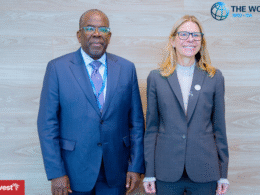
Speaking at the launch, EAC Deputy Secretary General for Infrastructure, Productive, Social, and Political Sectors, Hon. Andrea Aguer Ariik Malueth, emphasized the importance of the project in transforming the region’s agricultural sector. He noted that the ENSURE Project complements other EAC initiatives, such as the Agricultural Inputs System Development Programme and the EAC Regional Agriculture Investment Plan (RAIP).
“The ENSURE Project is a beacon of hope, designed to equip our farmers with the necessary skills, knowledge, and resources to thrive sustainably,” said Hon. Ariik. He highlighted the need for value for money and ensuring that the project delivers meaningful improvements for farmers, who are the true stakeholders.

Hon. Ariik also underscored the critical role of agriculture in the EAC’s economic landscape, noting that the sector employs over 60% of the region’s population and remains the backbone of its economies.
Dr. Innocent Musyabimana, AfDB’s Chief Agricultural Technologies Officer for Agricultural Research, Production, and Sustainability, reiterated the bank’s commitment to supporting agricultural resilience and productivity. “The African Development Bank is proud to support the ENSURE Project, as it aligns with our mission to improve food security and reduce poverty across the continent,” he said.
Dr. Musyabimana outlined the project’s focus on addressing key challenges faced by farmers, including limited access to extension services, climate-smart technologies, and inputs, as well as the skills needed to use these inputs effectively. He added that the project will leverage digital extension technologies, such as internet platforms, podcasts, videos, and social media, to bridge the information gap and promote equitable access for men, women, and youth.
The ENSURE Project will also prioritize gender equity by improving women’s access to agricultural technology and knowledge, which is in line with the EAC’s Gender Policy. It aims to reduce the workload for women, boost their productivity, and increase their income while attracting youth to participate in agricultural activities.
The ENSURE Project
The ENSURE Project is part of the EAC’s broader efforts to transform agriculture in the region. Agriculture is a critical sector for the EAC, employing over 60% of the population and contributing significantly to the region’s GDP. However, the sector faces challenges such as limited access to extension services, climate-smart technologies, and training.
The project builds on the EAC’s existing initiatives, including the Agricultural Inputs System Development Programme and the EAC Regional Agriculture Investment Plan (RAIP). It also aligns with the AfDB’s mission to enhance food security and reduce poverty across Africa.
By focusing on regional collaboration, the ENSURE Project aims to address transboundary agricultural challenges, such as pests and diseases, while promoting sustainable farming practices. The use of digital technologies and a pluralistic extension approach will ensure that farmers across the region have access to the knowledge and resources they need to thrive.
Want to know more about Agriculture in Tanzania? Our free overview of the Tanzania Business and Investment Guide 2026 covers Agriculture, plus key sectors and investment opportunities. The complete 141-page edition includes policies, taxation, key regulations, full macroeconomic data, and sources, and is also available at no cost upon completion of a short form.
Download Free OverviewGet the Full Edition for Free