

On October 17, 2024, Tanzania’s Minister of Agriculture, Hon. Hussein Bashe (MP), met with Hon. Professor Adelardus Kilangi, Tanzania’s Ambassador to Brazil, alongside representatives from LTS Consultoria, a Brazilian consulting firm.
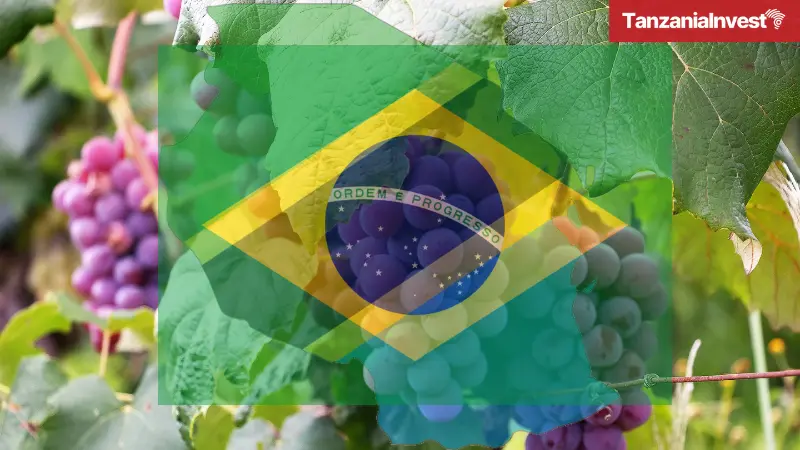
The meeting aimed to explore investment opportunities in grape farming, which is increasingly seen as a lucrative sector within Tanzania’s agricultural landscape.
During the discussions, the LTS Consultoria team revealed that Brazilian investors are keen to invest in the grape industry.

Plans include building capacity for local grape farmers and establishing a training center focused on grape production and processing in collaboration with the Agricultural Research Institute (TARI).
Additionally, there are intentions to invest in large-scale grape farms, processing facilities, and modern laboratories for wine testing.
Prior to the meeting, Ambassador Kilangi and the delegation met with experts from the Ministry of Agriculture at the Dodoma Regional Commissioner’s office, where they received a comprehensive presentation on investment opportunities in the region.
The delegation then visited smallholder grape farms and wine production facilities, including Vareno Wine in Miyuji and Bigambe Wines Enterprises in Msalato, to observe the grape farming and wine-making processes firsthand.
Minister Bashe emphasized the numerous agricultural investment opportunities available in Tanzania and invited the Brazilian delegation to consider investing in the sector.

He highlighted the recent establishment of a grape juice production plant in Chinangali, Dodoma, as an example of the sector’s potential.
Looking ahead, LTS Consultoria plans to return to Tanzania in November 2024 for further technical discussions in collaboration with experts from the Ministry of Agriculture.
This ongoing dialogue is expected to strengthen ties between Tanzania and Brazil, fostering investment that could enhance the country’s agricultural capabilities and output.
Want to know more about Agriculture in Tanzania? Our free overview of the Tanzania Business and Investment Guide 2026 covers Agriculture, plus key sectors and investment opportunities. The complete 141-page edition includes policies, taxation, key regulations, full macroeconomic data, and sources, and is also available at no cost upon completion of a short form.
Download Free OverviewGet the Full Edition for Free