
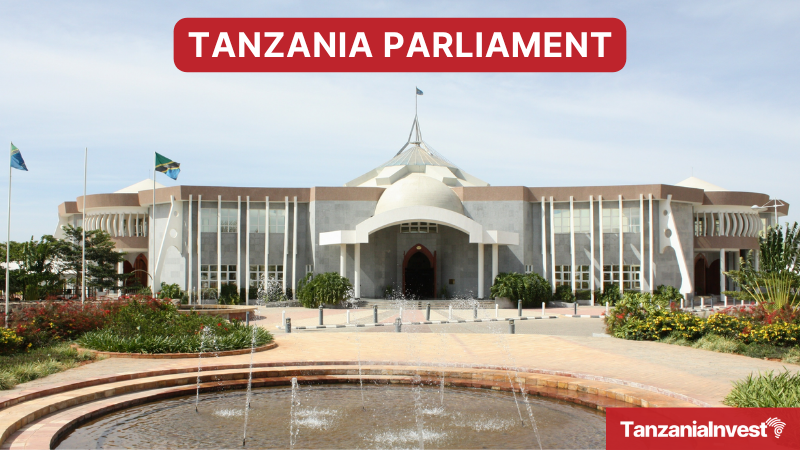
Tanzania’s Parliament has opened its Fourth Parliamentary Session in Dodoma, with five Bills scheduled to be debated and passed during the session running from August 26 to September 4, 2026.
The Bills are the Agriculture Laws (Amendments) Bill, 2026; the Bill to Repeal the Pyrethrum Industry Act, 2026; the Movable Property Security Rights Loans Bill, 2026; the Written Laws (Miscellaneous Amendments) Bill, 2026; and the Written Laws (Miscellaneous Amendments) (No. 2) Bill, 2026.
All five Bills were given their First Reading during the Second and Third Parliamentary Sessions and will now be presented to Parliament for debate and passage.

The session will also include approximately 140 Ordinary Questions from Members of Parliament, which will be answered by the Government.
During the Prime Minister’s Question Time, an average of 16 questions are expected to be asked by Members of Parliament and answered by the Prime Minister.
The Government is also expected to present a parliamentary resolution seeking approval for the proposed ratification of the Agreement Establishing the Global Green Growth Institute.
Parliament will further receive a report from the Standing Parliamentary Committee on Subsidiary Legislation concerning its analysis of subsidiary legislation submitted during the Second and Third Parliamentary Sessions.
Parliamentary Sessions are periods during which Tanzania’s National Assembly conducts its legislative and oversight functions.

During these sessions, Members of Parliament debate and pass proposed laws, question the Government, consider resolutions and receive reports from parliamentary committees.
The President summons Parliament to meet, while parliamentary business is conducted under the authority of the Speaker in accordance with the Constitution and the rules of Parliament.
Want to know more about Agriculture in Tanzania? Our free overview of the Tanzania Business and Investment Guide 2026 covers Agriculture, plus key sectors and investment opportunities. The complete 141-page edition includes policies, taxation, key regulations, full macroeconomic data, and sources, and is also available at no cost upon completion of a short form.
Download Free OverviewGet the Full Edition for Free