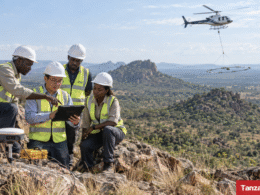


The Ministry of Mining of Tanzania recently provided important updates on the progress of the Liganga and Mchuchuma projects, key ventures expected to position Tanzania as the largest producer of iron ore in Africa.
The projects, located in Ludewa District, Njombe Region, are poised to become significant contributors to the country’s mining and industrial sectors.
The Liganga project involves the mining of iron ore, with a production capacity of 219 million tons over a lifespan of more than 70 years. It will also produce 175,400 tons of titanium and 5,000 tons of vanadium annually.

These minerals are critical for a range of industries, from construction to aerospace and energy storage.
The Mchuchuma project, closely linked with Liganga, focuses on coal mining and power generation, with coal being a key input in iron production.
The Ministry explains that the Liganga and Mchuchuma projects are integral to Tanzania’s efforts to industrialize and develop its mining sector.
Furthermore, in August 2024, the National Development Corporation (NDC) signed a USD 77 million agreement with Fujian Hexingwang Industry Tanzania Co. Ltd for coal and iron mining at the Maganga Matitu project, a key component in the broader development of the Liganga and Mchuchuma projects.
In addition to mining activities, the projects will include the construction of a 220 kV power transmission line and a steel processing plant, further strengthening Tanzania’s industrial base.

These projects are part of Tanzania’s broader strategy to become a leading player in the African mining sector, with expectations that the country will emerge as the largest iron ore producer on the continent once the Liganga and Mchuchuma projects become fully operational.
The Tanzanian government has prioritized the development of these resources to fuel the country’s economic growth and industrialization efforts.
Iron Ore in Tanzania
Tanzania is home to significant deposits of iron ore, mainly found in the southern part of the country.
In 2022, Tanzania exported US$753 worth of iron ore, positioning it as the 113th largest exporter of iron ore globally. The primary destinations for Tanzania’s iron ore exports were China (US$450) and South Africa (US$303).
Want to know more about Mining in Tanzania? Our free overview of the Tanzania Business and Investment Guide 2026 covers Mining, plus key sectors and investment opportunities. The complete 141-page edition includes policies, taxation, key regulations, full macroeconomic data, and sources, and is also available at no cost upon completion of a short form.
Download Free OverviewGet the Full Edition for Free