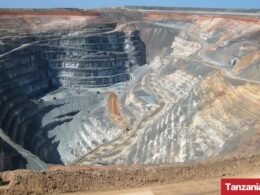


In November 2024, Engineer Aziza Swedi, Acting Director of Licenses and Information and Communication Technology (ICT) at the Tanzania Mining Commission, announced that the commission had issued a total of 54,626 licenses from the 2018/19 fiscal year up to September 2024.
She highlighted that among the licenses, 1,683 were Prospecting Licenses (PLs), 144 were Mining Licenses (MLs), and five were Special Mining Licenses (SMLs).
She also highlighted that 35,536 Primary Mining Licenses (PMLs) were issued, along with 216 Processing Licenses (PCLs), seven Refinery Licenses (RFLs), six Smelting Licenses (SLs), 12,273 Brokers Licenses (BLs), and 4,756 Dealers Licenses (DLs).

Swedi further mentioned that the commission has continued to designate specific areas for small-scale miners, creating a conducive environment for them to obtain mining licenses.
She noted that the commission has also been connecting small-scale miners with financial institutions to facilitate access to loans for mining activities and highlighted: “As of October 2024, the Commission had successfully designated 65 areas for small-scale miners in various regions with mining activities.”
Engineer Swedi also mentioned that the Mining Commission has been collaborating with the Geological Survey of Tanzania (GST) to conduct research in various areas to enable miners to obtain information about the presence of mineral resources and engage in more productive mining.
She added that to strengthen the management of license issuance, the Mining Commission has developed a new system to improve the processing, management, and issuance of mining licenses.
“Once all improvements are completed, the next step will involve linking the new system with other government systems, transferring data from the old system to the new one, and providing training to system users,” concluded Swedi.

Tanzania’s Mining Licensing
In Tanzania, mining licenses are issued by the Tanzania Mining Commission, which operates under the Ministry of Minerals.
This government body is also responsible for regulating and overseeing the mining sector, including monitoring compliance, and ensuring proper management of mineral resources.
The Commission also ensures compliance with safety and environmental standards while monitoring local content implementation to promote local participation in the mining sector.
Additionally, the Commission provides laboratory services for quality control of minerals produced by different mining operations.
The Commission issues various mining licenses tailored to specific operations. Prospecting Licenses (PLs) support exploration, while Special Mining Licenses (SMLs) and Mining Licenses (MLs) cater to large- and medium-scale mining, respectively, based on investment levels.
Primary Mining Licenses (PMLs) are for small-scale Tanzanian miners, while Processing Licenses (PCLs), Refining Licenses (RFLs), and Smelting Licenses (SLs) govern mineral processing, refining, and smelting activities. Dealer Licenses (DLs) and Broker Licenses (BLs) enable mineral trade, with DLs allowing exports and BLs restricted to local transactions. License durations vary, aligning with operation type and scale.
Want to know more about Mining in Tanzania? Our free overview of the Tanzania Business and Investment Guide 2026 covers Mining, plus key sectors and investment opportunities. The complete 141-page edition includes policies, taxation, key regulations, full macroeconomic data, and sources, and is also available at no cost upon completion of a short form.
Download Free OverviewGet the Full Edition for Free