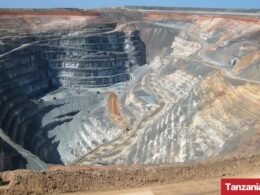



On 14th September 2024, Tanzania’s Minister of Minerals Hon Anthony Mavunde officially launched the Tanzania Mining Suppliers Association (TAMISA) that was recently established in Dar es Salaam.
The association aims to promote local content, foster innovation, and encourage sustainable business practices within Tanzania’s mining sector so that Tanzania’s mineral wealth directly benefits local communities and companies.
The Chairman of TAMISA, Peter Kumalilwa, explained that the Association was founded to defend the interests of suppliers in the mining sector, improve the business environment, and promote collaboration among stakeholders.

Additionally, it aims to strengthen the supply chain and mining services sector by providing its members with valuable opportunities.
While launching the Association, Hon. Mavunde explained that the Tanzanian government is prioritizing productive investments through local employment in mining and the use of services produced within the country.
As a result, it plans to see Tanzanian companies venture into the establishment of factories and the production of essential goods in the mining sector to promote economic growth and reduce dependence on foreign inputs.
“Connecting Tanzanians in the mining sector through domestic content is key to sustainable growth and will enable the government to solve local content challenges. TAMISA will contribute to the government’s determination to ensure that our mineral resources benefit our citizens directly and promote economic development,” Hon. Mavunde concluded.
Tanzania Mining Local Content
Endowed with mineral resources, Tanzania has experienced a boom in its mining sector over the past years.

However, for a long time, there has been a concern about the limited participation of, and hence, limited benefits to, local communities and businesses in the sector’s value chain.
In response to these concerns, Tanzania introduced the Mining (Local Content) Regulation of 2018, and the consequent Amendments of 2019, to ensure that mining activities’ benefits are shared more equally among its citizens.
This regulation requires, among other things, that mining stakeholders maintain a minimum level of Tanzanian employees, use Tanzanian-licensed service providers, and give preference to Tanzanian-incorporated suppliers who meet certain criteria.
Tanzania’s Mining Policy on Local Content report indicates that despite adequate legislation and regulation, there is little evidence that local content policies have so far effectively provided much competitive advantage to locals nor that they have increased mining-based benefits, particularly at the community level.
The implementation of local content policies in Tanzania’s mining sector encounters a range of challenges. A notable challenge lies in the disparity between required skills and available workforce within the mining industry.
According to the authors of the Report, bridging this skills gap necessitates the implementation of continuous training and educational initiatives.
Want to know more about Mining in Tanzania? Our free overview of the Tanzania Business and Investment Guide 2026 covers Mining, plus key sectors and investment opportunities. The complete 141-page edition includes policies, taxation, key regulations, full macroeconomic data, and sources, and is also available at no cost upon completion of a short form.
Download Free OverviewGet the Full Edition for Free