
Tanzania Agriculture Receives Priority in Economic Stimulus Package

A new economic stimulus package has recently been introduced in which the Tanzania agriculture sector will receive financial priority, with special focus being given to increasing food production in order to both fulfill the domestic needs of the country and to be used for exportation.

In order to accomplish this task, the government is preparing to utilize the Tanzania Investment Bank (TIB) as a means of disbursing TZS 20 billion into the general economy as well as an additional TZS 20 billion to be used specifically for low-interest farm inputs.

In addition, President Jakaya Kikwete also said that another TZS 20 billion would be provided by the banks that involve themselves in this project.

According to a report by This Day, the government, in partnership with the World Bank, is also currently looking into the possibility of launching a credit facility so as to allow for the purchase of additional tractors.

Tanzania Investment Guide 2026 Free Edition

The primary focus of this rescue package is to offset the losses that were felt by cash crop exporters during the 2008/2009 fiscal year.

To this end, President Kikwete has announced that the government is planning to provide TZS 21.9 billion in compensation to cover the debts that cooperative societies and other companies will incur.

“I want to assure you that the need to protect our country from the worst effects of the global recession has been taken seriously by the government,” he said, “This plan intends to firstly reduce the pinch of the recession and secondly boost investments in key economic sectors.”

The President went on to explain that the general intention of the plan was to both reduce losses and debts incurred by companies that bought various crops, and to reimburse the banks from which the business people borrowed.

In addition, President Kikwete explained that, without assistance from the stimulus finds, the failure of companies to pay back their loans would result in their being evicted by the bank from which they had borrowed as well as bankruptcy in some cases.

TanzaniaInvest Capital Markets Report Banner

Either of these results would lead to the banks refusing to lend to these companies again, in which case there would be a subsequent surplus in crops all over the country that had not yet been purchased.

Other sectors to benefit from the rescue package include local industries, the tourism sector, the banking sector, the mining sector and the export guarantee along with the small medium enterprise credit schemes.

Want to know more about Agriculture in Tanzania? Our free overview of the Tanzania Business and Investment Guide 2026 covers Agriculture, plus key sectors and investment opportunities. The complete 141-page edition includes policies, taxation, key regulations, full macroeconomic data, and sources, and is also available at no cost upon completion of a short form.

Download Free OverviewGet the Full Edition for Free
Free Newsletter

Get our monthly update on business and investment in Tanzania.

Related Posts
Tanzania fisheries value chain
Read More

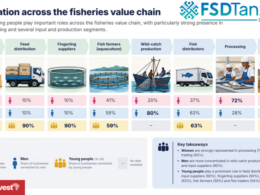
FSDT Outlines Steps to Unlock Fisheries Value Chain Finance as 47% of Tanzanian Operators Have Never Borrowed

Tanzania’s FSDT outlined steps to unlock finance for the fisheries value chain, noting that 47% of surveyed operators have never borrowed, while 91% save and 97% have mobile phones. The steps include better data, credit guarantees, alternative credit scoring, digital payments, and bundled insurance, alongside the Secured Transactions (Movable Property) Act 2026, which lets boats and cages serve as collateral through a Bank of Tanzania registry.
Tanzania Khamis Mussa Omar World Bank Anna Bjerde
Read More

Tanzania and World Bank Map Central Corridor Investment Opportunities in Agriculture, Logistics, Mining, and Tourism

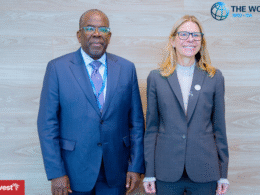
Tanzania and the World Bank are mapping Central Corridor investment opportunities in agriculture, mining, tourism, transport, and logistics, with a possible extension to Rwanda, while UNDP prepares investor-ready projects for a June 2027 investment conference and seeks Asian Infrastructure Investment Bank financing. The World Bank named job creation its top priority and discussed shifting small business lending from collateral to cash-flow assessment, while Tanzania pursues a 40% value addition target through agriculture, livestock, and minerals.
EU-Tanzania Investment & Business Forum 2026-2027 Helsinki day 1
Read More

Tanzania Pitched a 68-Project, USD 30.1 Billion Pipeline at the EU–Tanzania Roadshow in Finland, Italy, the Netherlands and Belgium Ahead of the Early 2027 Dar es Salaam Forum

The EU-Tanzania roadshow 2026 took Tanzanian ministers and agencies to Helsinki, Cesena, The Hague, Rotterdam, and Antwerp between 28 September and 6 October, pitching critical minerals, agribusiness, renewable energy, digital, and port and rail projects from a 68-project, USD 30.1 billion pipeline. The roadshow leads to a high-level EU-Tanzania Investment and Business Forum in Dar es Salaam planned for early 2027.
EU-Tanzania Roadshow 2026 APM Terminals at Maasvlakte Rotterdam
Read More

EU–Tanzania Roadshow Ends With Rotterdam and Antwerp Port Visits as Tanzania Pitches Port, Rail and Logistics Opportunities to European Companies

The EU-Tanzania roadshow ended in Antwerp on 6 October 2026 after port visits in Rotterdam, with Tanzania's port and rail authorities pitching openings for terminal operators, EPC contractors, private rail operators and digital rolling stock tracking, while rail operator Vecturis, minerals logistics group Polytra, heavy lifting company Sarens and marine data company GEOxyz outlined their plans in Tanzania. The EU said it will join the World Bank and the EIB, which has a formal financing request, in supporting the Dar es Salaam port expansion, and offered Global Gateway guarantees, equity and feasibility funding for company projects screened by member states.