


Tanzania’s inflation rate is projected to remain stable at 5% throughout H1 2017 and to remain constant in the medium term.
This is indicated in the Guidelines for the Preparation of Plans and Budget for 2017–2018, issued by Tanzania’s Ministry of Finance in November 2016.
The slowdown in Tanzania’s inflation rate is due to:

- Reduction in the production costs on account of reliable and affordable power supply resulting from completion of natural gas pipeline project, completion of Kinyerezi I power plant and cost reduction in oil import for power generation;
- Improvement in food supply in 2016 and 2017 on account of favorable weather conditions in the region;
- Prudent fiscal policy including public expenditure management and continued monetary policy tightening;
- Stability in the regional consumer price index particularly for the East African Community (EAC) ;
- Low and stable oil prices in the world market;
- Stability of the Shilling exchange rate against the US Dollar.
Tanzania Inflation
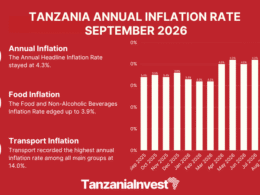
The inflation rate of Tanzania peaked at 6.8% in December 2015. Since then, it has been steadily decreasing, reaching 5.1% in April 2016, slightly increasing to 5.5% in June, and again, falling to 5.1% in July, 4.9% in August, and 4.5% in September and October 2016.
The Bank of Tanzania (BOT) Monetary Policy Statement of June 2016 indicates that the BOT target is to keep inflation close to 5%.
Want to know more about the Economy in Tanzania? Our free overview of the Tanzania Business and Investment Guide 2026 covers the Economy, plus key sectors and investment opportunities. The complete 141-page edition includes policies, taxation, key regulations, full macroeconomic data, and sources, and is also available at no cost upon completion of a short form.
Download Free OverviewGet the Full Edition for Free