Tanzania Names New Works, Energy and Legal Affairs Ministers

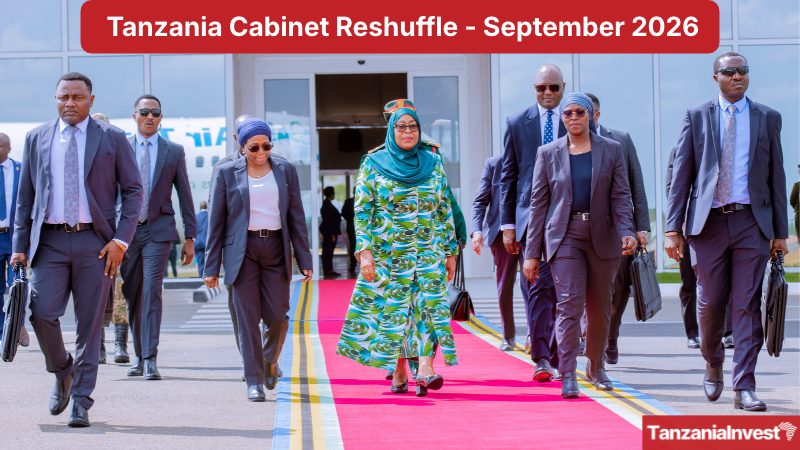
President Samia Suluhu Hassan reshuffled Tanzania’s Cabinet on 27 September 2026, naming new ministers for Works, Energy, and Constitution and Legal Affairs. Four other senior appointments were also announced, including a new Chief Medical Officer and Deputy Permanent Secretary for Finance.
Samia Suluhu Hassan Tanzania Cabinet reshuffle September 2026

Tanzania’s President Dr. Samia Suluhu Hassan has reshuffled her Cabinet, appointing Masanja Kungu Kadogosa as Minister for Works, Abdallah Hamis Ulega as Minister for Constitution and Legal Affairs, and Dr. Juma Zuberi Homera as Minister for Energy.

The appointments were announced in a statement issued in Dodoma on 27 September 2026 by the Chief Secretary, Ambassador Dr. Moses Kusiluka.acc

Kadogosa moves to Works from his role as Director General of the Tanzania Railways Corporation (TRC), a position he had held since July 2016 and in which he oversaw construction of the country’s Standard Gauge Railway (SGR).
Tanzania Investment Guide 2026 Free Edition

Ulega, who previously served as Minister for Works, takes over the Ministry of Constitution and Legal Affairs.

Homera, who previously headed the Ministry of Constitution and Legal Affairs, moves to the Ministry of Energy.

Asha Khamis Abdulla has been appointed Deputy Permanent Secretary in the Ministry of Finance, handling financial management matters.

Prof. Bruno Fokas Sunguya has been appointed Chief Medical Officer of the Government, taking on the senior role coordinating national public health services.

Jabiri Omari Makame has been appointed Executive Secretary of the National Economic Empowerment Council (NEEC).
TanzaniaInvest Capital Markets Report Banner

Dr. Idrissa Muslim Hijja has been appointed Chairman of the National Commission for UNESCO of the United Republic of Tanzania.

The Vice Presidential Succession Behind the Reshuffle

The ministerial changes follow the elevation of Deogratius John Ndejembi, Tanzania’s former Minister for Energy, to Vice President on 29 August 2026, succeeding Emmanuel Nchimbi, whose resignation had left the vice presidency vacant.

Ndejembi’s move out of the Energy Ministry created the vacancy that Homera has now filled, triggering the linked reassignments of Ulega and Kadogosa across the Works and Constitution and Legal Affairs portfolios.

Want to know more about the Economy in Tanzania? Our free overview of the Tanzania Business and Investment Guide 2026 covers the Economy, plus key sectors and investment opportunities. The complete 141-page edition includes policies, taxation, key regulations, full macroeconomic data, and sources, and is also available at no cost upon completion of a short form.

Download Free OverviewGet the Full Edition for Free
Related Posts
IMF World Economic Outlook 2026 Tanzania
Read More

Tanzania GDP to Grow 6.0% in 2026 and 5.9% in 2027 With Inflation at 4.0%, IMF Projects

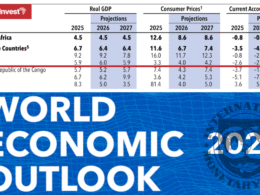
In its World Economic Outlook October 2026, the IMF projects Tanzania’s real GDP growth at 6.0% in 2026 and 5.9% in 2027, above the 4.5% sub-Saharan Africa average and Kenya’s 4.5%, while Uganda and Rwanda are projected at 6.2% and 7.4%. Tanzania’s inflation is projected at 4.0% in 2026 and 4.2% in 2027, below the 8.6% sub-Saharan Africa average and Kenya’s 6.0%.
Central Bank of Tanzania BOT CBR Interest Rate Q4 2026
Read More

BOT Maintains Tanzania Central Bank Rate at 6.25% for Q4 2026; GDP Growth Projected at 7.2% in Q4 2026, Driven by Agriculture, Construction, Mining, and Tourism

The Bank of Tanzania (BOT) released its Monetary Policy Report of October 2026, in which the Monetary Policy Committee (MPC) decided to maintain the Central Bank Rate (CBR) at 6.25% for the fourth quarter of 2026, allowing the July 2026 increase to fully transmit through the economy. The MPC will keep policy agile and flexible to limit risks to the inflation outlook from the Middle East conflict and potential El Niño-related disruptions, and keep inflation within the 3-5% target range.
Interview Jana Bricco IMF Resident Representative Tanzania no logo
Read More

Interview with Jana Bricco, New IMF Resident Representative in Tanzania, on Economic Growth, Private Investment, and Needed Reforms

In this exclusive interview with TanzaniaInvest, the new IMF Resident Representative Jana Bricco says Tanzania can sustain growth of around 6% by preserving macroeconomic stability and accelerating reforms supporting private investment, productivity and jobs. She calls for fewer regulatory obstacles, more predictable taxation, faster VAT refunds and better access to finance for businesses and SMEs, and explains how IMF support will evolve following the end of its financing programmes, with the relationship now focused on policy dialogue and capacity development.