A staff team from the International Monetary Fund (IMF) held meetings in Dodoma and Dar es Salaam from February 8 to February 23, 2023, to discuss progress on reforms and the authorities’ policy priorities in the context of the first review of Tanzania’s forty-month program under the Extended Credit Facility (ECF)-supported program.
The arrangement was approved for a total amount of SDR 795.58 million (USD 1.046 billion at that time) on July 18, 2022.
The team also conducted the 2023 Article IV consultation which provides recommendations on a broad range of issues including fiscal, monetary, and exchange rate policy; health care and pensions; labour market policy (including wages, unemployment compensation, and employment protections); and numerous other policy issues.

At the conclusion of the mission, IMF team leader Charalambos Tsangarides issued the following statement: “The Tanzanian authorities and IMF staff team have reached a staff-level agreement on the first review of Tanzania’s economic program under the ECF arrangement. Staff-level agreement is subject to the approval of IMF management and the Executive Board in the coming weeks. Upon completion of the Executive Board review, Tanzania would have access to SDR 113.37 million (about USD 151 million), bringing the total IMF financial support under the arrangement to SDR 228.73 million (about USD 302.7 million).
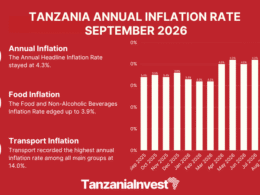
“Tanzania’s economic recovery from the impact of the pandemic is continuing despite headwinds from the global economic environment. While some sectors, including mining, tourism, and other services, showed signs of recovery in 2022, growth for the year is estimated to have reached 4.7%, reflecting the impact of global economic conditions, and the effects of a shortfall in rainfall on electricity production and agriculture. Despite price subsidies provided by the government on fuel and fertilizer, inflation peaked at 4.9% (year-on-year) in January (from 4.0% a year earlier), approaching the Bank of Tanzania’s (BoT) 5% upper band. With inflation rising, the BoT has stepped up its repo operations to mop up excess liquidity.
“The economy is benefitting from improvements in the business environment but is also expected to continue facing spillovers of the war in Ukraine in the near term. Economic growth is projected at 5.2% in 2023 and inflation is expected to surpass the BoT’s target and reach about 5.3% by the end of the current fiscal year. The current account deficit is projected to remain elevated in 2023 amid the uncertain global environment.
“In the context of modest revenue growth, increased priority social spending is being achieved through reallocation of resources from capital to social spending, keeping the fiscal stance unchanged, in line with the ECF program objectives. With limited external financing, the budget deficit was financed mainly from domestic sources. The verification of domestic government arrears has slowed and fallen behind the government’s targets.
“The BoT relies mostly on foreign exchange sales for its response to external shocks. The Tanzanian shilling remained stable against the US dollar since last year, depreciating only by 0.6% (year-on-year) by end-2022. At the same time, the real effective exchange rate appreciated by about 3.7% (yoy) at end-December 2022. The level of gross international reserves declined in 2022 by USD 1.2 billion to USD 5.2 billion (about 4.3 months of imports) in December 2022.

“In the near-term, temporary fiscal support should continue to safeguard the economy from spillovers of the war in Ukraine. Monetary policy will continue to be tuned to developments in actual and expected inflation while allowing exchange rate flexibility to cushion the economy against external shocks.
“Contingent on the implementation of the authorities’ structural reform agenda, including the business environment and governance, real GDP growth is projected to rebound to about 7% over the medium term, inflation is expected to return to the BoT’s target, and the current account deficit to moderate over the medium term as the global shocks subside and the authorities’ reforms start to pay off. Enhanced revenue mobilization efforts and fiscal efforts are expected to improve the fiscal outlook. Modernizing the monetary policy framework through the transition to an interest-rate-based monetary policy will improve the effectiveness of the monetary policy while upgrading the financial supervision framework could promote financial sector stability and deepening. Advancing structural reforms will create an enabling environment for sustainable and inclusive private sector-led growth.
“The mission met with the Minister of Finance and Planning Mwigulu Nchemba, The Governor of the Bank of Tanzania Emmanuel Tutuba, other senior officials, development partners, and private sector representatives. The mission would like to thank the Tanzanian authorities for their cooperation, hospitality, and constructive discussions.”
Want to know more about the Economy in Tanzania? Our free overview of the Tanzania Business and Investment Guide 2026 covers the Economy, plus key sectors and investment opportunities. The complete 141-page edition includes policies, taxation, key regulations, full macroeconomic data, and sources, and is also available at no cost upon completion of a short form.
Download Free OverviewGet the Full Edition for Free