


Tanzania’s Minister of Industry and Trade, Hon. Dr. Ashatu Kijaji, has announced that the government is in the process of preparing a single tax collection system for businesses in the country to eliminate the hassle of various government institutions collecting taxes.
She made the statement on May 10, 2024, in Mbeya during a dialogue meeting between the public and private sectors aimed at discussing ways to address various challenges facing businesses in the region.
Dr. Kijaji stated that this issue has long been complained about by business owners and various stakeholders, as it has been contributing to stifling business growth and driving away entrepreneurs.

“We have heard this cry, and as a government, we are in discussions to establish a single revenue collection system, where all revenues will be collected into one basket, and then each institution will receive its share, thus reducing inconvenience,” said Dr. Kijaji.
She also mentioned that her ministry is in talks with Turkish Airlines for the transportation of avocados produced in the country to Turkey, which represents a large market for the crop.
For his part, the Permanent Secretary of the Ministry of Industry and Trade, Dr. Hashil Abdallah, said the ministry has been collaborating with various agencies to conduct operations to seize counterfeit goods being imported into the country to protect local industries and the health of citizens.
He said they recently conducted inspections in various regions of the country and seized some traders selling counterfeit phones, taking legal action, including confiscating the goods and detaining the perpetrators.
He ordered relevant institutions responsible for ensuring the quality of products in the country to continue taking action against those who violate regulations to promote local industries and protect citizens’ safety.

“We cannot allow people to import counterfeit goods into the country; these goods are dangerous to our economy and the lives of citizens, so I assure you that we will continue to take action because the safety of Tanzanians is in our hands,” said Abdallah.
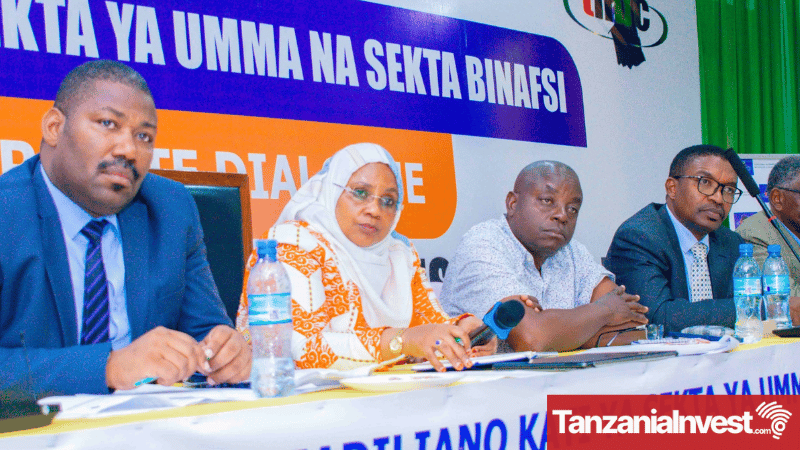
Meanwhile, the Chairman of the Tanzania Chamber of Commerce, Industry, and Agriculture (TCCIA) for the Mbeya Region, Erick Sichinga, said the multitude of taxes has been causing misunderstandings between business owners and government institutions.
He said some tax-collecting institutions have been operating without involving private sector stakeholders to provide their opinions, which continues to cause conflicts.
He mentioned that one of the institutions hindering business owners and factory owners is the Tanzania Revenue Authority (TRA) and the Occupational Safety and Health Administration (OSHA), which impose hefty fees.
Representative of the Tanzania Private Sector Foundation (TPSF), Victoria Michael, said some councils and regions in the country have been introducing various fees that contradict the Business Environment Improvement Plan (MKUMBI).
She said the aim of the plan is to solve business challenges facing entrepreneurs, but when new fees are introduced at the council level, they generate new problems contrary to the objective.
Michael, a policy analyst, said the private sector currently contributes 50%, and the public sector contributes 50% to discussions on improving the business environment.
The Executive Officer of the Tanzania Chamber of Commerce, Industry and Agriculture (TCCIA) for the Songwe Region, Elijah Simbeye, advised the government to address tax issues, including streamlining taxes by consolidating them into one basket to ease the burden on business owners.
Want to know more about the Economy in Tanzania? Our free overview of the Tanzania Business and Investment Guide 2026 covers the Economy, plus key sectors and investment opportunities. The complete 141-page edition includes policies, taxation, key regulations, full macroeconomic data, and sources, and is also available at no cost upon completion of a short form.
Download Free OverviewGet the Full Edition for Free