

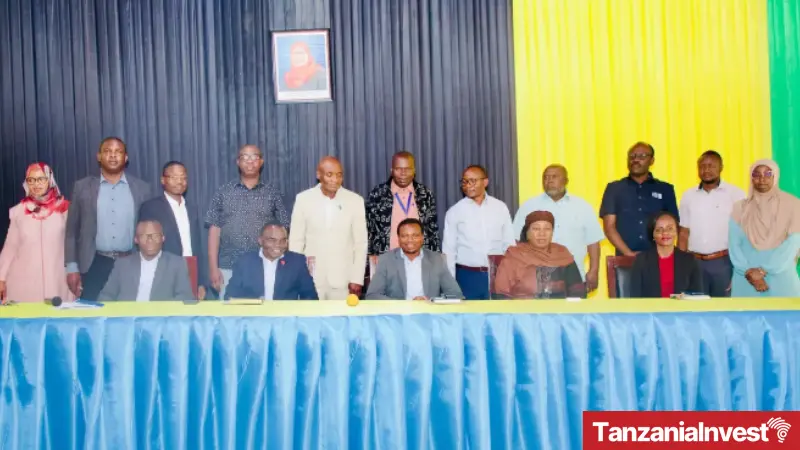
On 8th October 2024, Tanzania’s National Economic Empowerment Council (NEEC) launched the “Imarisha Uchumi na Mama Samia” (IMASA) program in the Rukwa region.
The IMASA program aims to uplift youth, women, the elderly, and other vulnerable groups and enable their participation in the national economy by providing them with machinery, loans, and training.
Speaking about the program, the Executive Secretary of NEEC, Beng’i Issa, explained that the program aims to empower entrepreneurs by enhancing the value of their activities.

Issa highlighted: “Rukwa region is a major food producer, and its farmers will benefit from the IMASA program by being enabled to add value to their crops. Agriculture is the primary economic activity in Rukwa, and thus the IMASA program will provide farmers with education and machines that can enhance value addition for their products.”
Issa added that the IMASA program has registered over 100,000 members in the formal system, and the registration process for Tanzania citizens is still ongoing.
She encouraged entrepreneurs to participate in the program as a public initiative with free registration and no joining or connecting fees.
The IMASA Program
Tanzania’s “Imarisha Uchumi na Mama Samia” (IMASA) program coordinated by NEEC was established to empower women, youth, the elderly, and other special groups across 26 regions in mainland Tanzania and five regions in Zanzibar.
The program supports pastoralists, farmers, and miners by enhancing their productivity and enabling them to seize community opportunities, focusing on local resources and raw materials.

Currently, the program has already been launched in many regions in Tanzania, including Geita, Shinyanga, Dar es Salaam, Mtwara, and the Simiyu Region.
According to the 2022 Population and Housing Census, the total population of Rukwa is 1,540,519 with 743,119 (48%) being men, while 797,400 (52%) are women.
Rukwa Region’s economy is predominantly agriculture-based, with maize, beans, sunflower, and paddy being the main food and cash crops.
Want to know more about the Economy in Tanzania? Our free overview of the Tanzania Business and Investment Guide 2026 covers the Economy, plus key sectors and investment opportunities. The complete 141-page edition includes policies, taxation, key regulations, full macroeconomic data, and sources, and is also available at no cost upon completion of a short form.
Download Free OverviewGet the Full Edition for Free