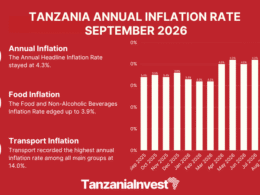



The National Bureau of Statistics of Tanzania (NBS) revealed that the annual headline inflation rate for the month of September 2024 has decreased to 3.0% from 3.1% recorded in September 2024.
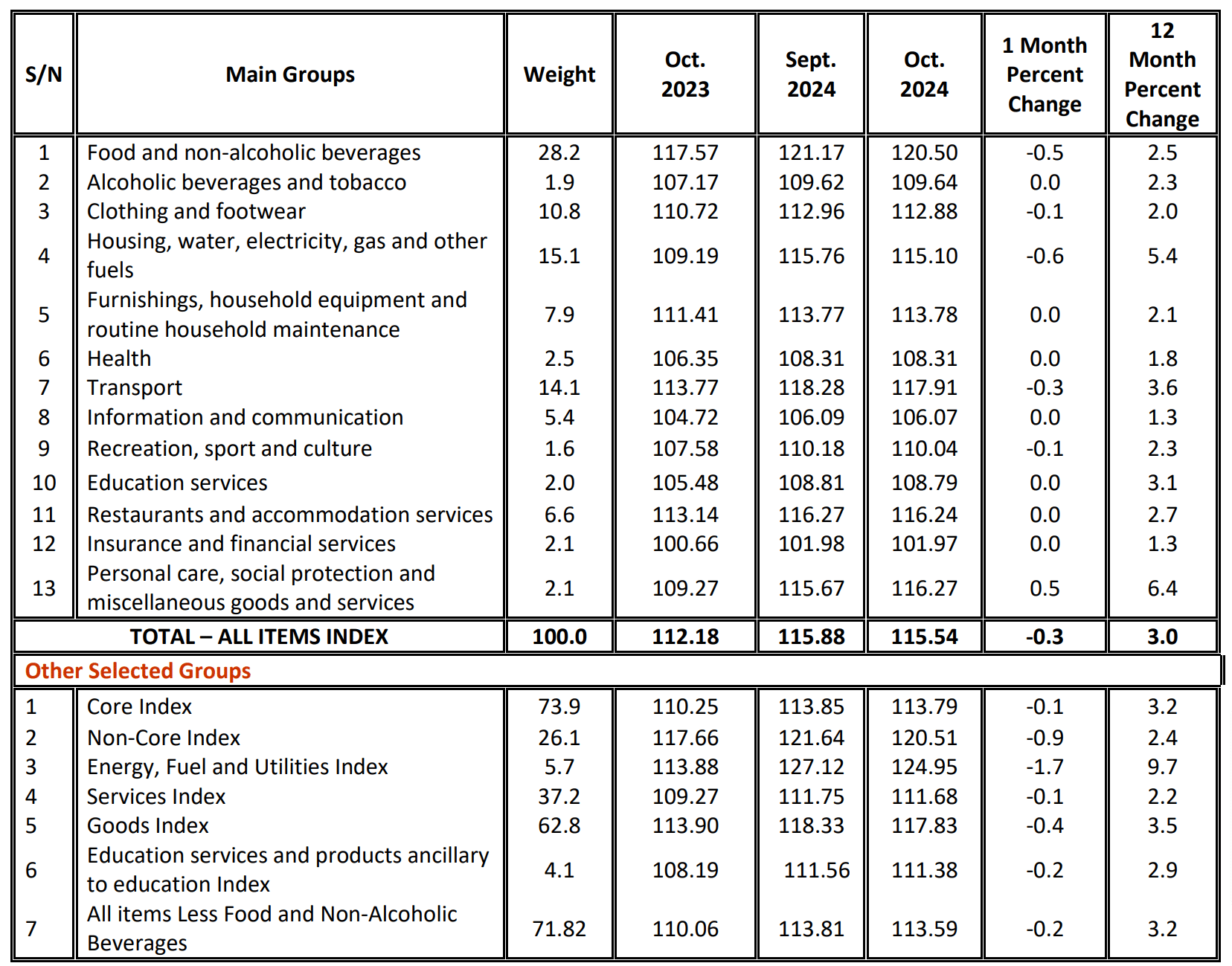
The overall index went up from 112.18 recorded in October 2023 to 115.54 recorded in October 2024.
Food Inflation

Food and Non-Alcoholic Beverages Inflation Rate for October 2024 has stagnated at 2.5% as recorded in September 2024.
Non-Food Inflation
The Annual Inflation Rate for all items without food and non-alcoholic beverages for October 2024 has decreased to 3.2% from 3.4% recorded in September 2024.
Core Inflation
Computation of the Core Index excludes items with volatile prices, such as unprocessed food, energy, and utilities, with the exception of maize flour.

Excluding volatile prices from the total NCPI provides a more stable Inflation Rate figure for policymakers.
The Core Index covers 297 items, and the share of weight to the total NCPI weight is 73.9%.
The inflation rate for the Core Index in October 2024 has stagnated at 3.2% as it was recorded in September 2024.
Monthly Consumer Price Index September-October 2024
The National Consumer Price Index (NCPI) between September 2024 and October 2024 has decreased from 115.88 to 115.54. The overall index decrease is attributed to price reductions for some food and non-food items.
Food items that contributed to the decrease include wheat grains by 0.9%, rice by 1.7%, sorghum grains by 0.9%, wheat flour by 0.6%, oils and fats by 0.2%, vegetables by 3.4%, round potatoes by 2.6%, sweet potatoes by 0.5%, fresh cassava by 7.2%, cocoyams by 4.4%, cooking bananas by 5.1%, cassava dry by 1.9%, cassava flour by 4.1%, and sugar by 1.1%.
Non-food items that contributed to the decrease include garments for women by 0.3%, footwear for men by 0.1%, materials for the maintenance of the dwelling by 0.2%, kerosene by 3.0%, firewood by 2.4%, wood charcoal by 1.2%, household furniture by 0.1%, diesel by 4.7%, petrol by 3.8%, laptop computers by 0.2%, television sets by 0.2%, and recreation, sport, and culture by 0.1%.
Changes in Tanzania National Consumer Price Indices (NCPI) for October 2024, (2020 = 100)
Want to know more about the Economy in Tanzania? Our free overview of the Tanzania Business and Investment Guide 2026 covers the Economy, plus key sectors and investment opportunities. The complete 141-page edition includes policies, taxation, key regulations, full macroeconomic data, and sources, and is also available at no cost upon completion of a short form.
Download Free OverviewGet the Full Edition for Free