The Government of Tanzania and the World Bank have signed two agreements worth a total of US$ 104 million, equivalent to approximately TZS 248 billion, to support the PAMOJA Gender Equality Enhancement Project.
The agreements include a US$ 4 million grant and a US$ 100 million concessional loan.
The project aims to enhance women’s economic opportunities and strengthen services to prevent and address gender-based violence in both Mainland Tanzania and Zanzibar.

It will directly benefit 319,850 women and an additional 399,000 indirect beneficiaries, including family members.
Key initiatives under the project include business skills development, market linkage support for women’s groups, affordable loans, improved access to financial services, and enhanced GBV response systems.
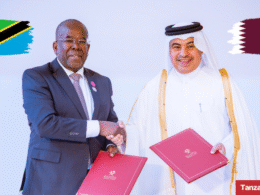
The signing ceremony took place in Dar es Salaam, with Minister of Finance Hon. Dr. Mwigulu Lameck Nchemba representing the Tanzanian government and Mr. Nathan Belete, the World Bank Country Director for Tanzania, signing on behalf of the World Bank.
Dr. Nchemba emphasized that gender equality is fundamental for a thriving nation, noting that eliminating gender disparities boosts productivity and economic resilience. He underscored that this project aligns with the Third Five-Year Development Plan, Vision 2050, and the priorities of President Dr. Samia Suluhu Hassan’s administration.
Mr. Nathan Belete highlighted that the project addresses critical social and economic gender challenges by empowering women and challenging harmful cultural practices to combat gender-based violence. He expressed optimism about its swift implementation and tangible results for beneficiaries.

The project will also support the construction of 10 safe houses for children affected by gender-based violence and 200 childcare centers, with 184 in Mainland Tanzania and 16 in Zanzibar. Additional funds will be used to construct and equip 40 offices each for Community Development Officers and Social Welfare Officers to enhance service delivery.
This initiative aligns with Tanzania’s commitment to the UN’s Sustainable Development Goal 5 (Gender Equality) and demonstrates the government’s dedication to inclusive economic growth.
The PAMOJA Program
The Program for Advancing Gender Equality in Tanzania (PAMOJA) is a comprehensive initiative aimed at addressing both social and economic dimensions of gender inequality in the country.
The Program is coordinated by Tanzania’s Ministry of Community Development, Gender, Women, and Special Groups, which oversees the implementation of the project’s initiatives, ensuring alignment with national policies and effective collaboration with stakeholders, including the World Bank. The World Bank supports the project by providing funding and technical assistance, and working closely with the ministry to achieve the project’s objectives.
The project operates at multiple levels, including individual, community, and institutional, with a strong emphasis on community engagement. It includes:
- Promoting Economic Opportunities for Women and Adolescent Girls: This component focuses on strengthening community-based institutions to enhance economic opportunities and delivering services that support women’s economic empowerment.
- Strengthening Gender-Based Violence (GBV) Prevention and Response: This involves initiatives aimed at shifting social norms towards gender equality and enhancing services that respond to GBV incidents.
- Institutional Development, Policy Dialogue, and Project Management: This component aims to create an enabling environment for gender equality through institutional development and policy dialogue, alongside effective project management and monitoring.
Want to know more about the Economy in Tanzania? Our free overview of the Tanzania Business and Investment Guide 2026 covers the Economy, plus key sectors and investment opportunities. The complete 141-page edition includes policies, taxation, key regulations, full macroeconomic data, and sources, and is also available at no cost upon completion of a short form.
Download Free OverviewGet the Full Edition for Free