


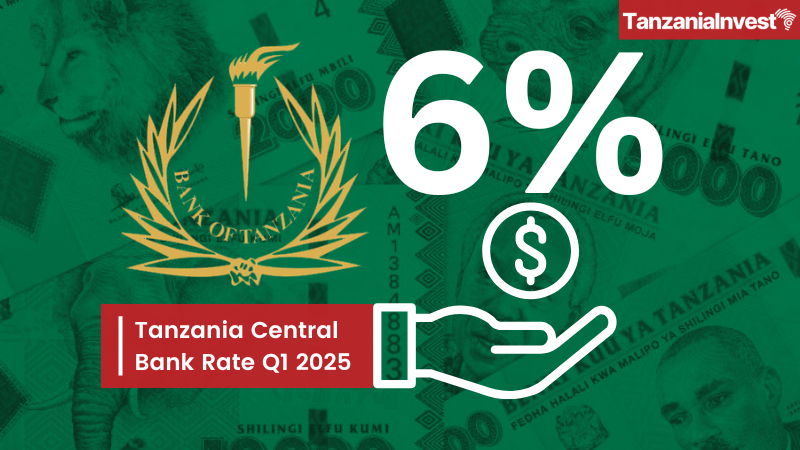
The Bank of Tanzania has announced that the Central Bank Rate (CBR) will remain unchanged at 6% for the first quarter of 2025.
This decision was made by the Monetary Policy Committee to ensure adequate liquidity in the economy, control inflation, and support economic growth.
Governor Emmanuel Tutuba, who also serves as the Chair of the Monetary Policy Committee, shared the decision during a press conference held on January 8, 2025, in Dar es Salaam. The announcement followed the Monetary Policy Committee meeting conducted on January 7.

“The Committee’s decision to keep the CBR unchanged aims to ensure adequate liquidity in the economy, control inflation to remain below the 5% target, and facilitate a growth rate of around 5.7% in the first quarter of 2025,” said Governor Tutuba.
The move is also designed to stabilize the Tanzanian shilling against foreign currencies, thereby discouraging the use of foreign currencies in domestic transactions. “Stability of the Tanzanian shilling against foreign currencies will contribute to efforts to discourage citizens from conducting transactions in foreign currencies within the country,” the Governor added.
The Committee’s decision was informed by an evaluation of both global and domestic economic conditions.
Globally, the economic environment has improved significantly, with growth accelerating and inflation decreasing in many countries. Reports from the International Monetary Fund (IMF) and the World Bank indicate strong global economic growth in 2024.
“Commodity prices, especially crude oil, decreased, which contributed to the strengthening of Tanzania’s economy. This positive economic environment is expected to continue into the first quarter of 2025 due to increased consumer demand, supportive budgetary policies, and improved access to low-interest financing,” Governor Tutuba explained.

Despite these favorable conditions, the Committee noted that escalating global political conflicts and trade tensions could pose risks to the positive economic outlook.
Domestically, the Bank of Tanzania expressed satisfaction with the country’s economic performance. This progress was attributed to effective monetary and fiscal policies that have fostered economic stability and growth.
Governor Tutuba highlighted that Fitch Ratings affirmed Tanzania’s B+ credit rating with a positive outlook in December 2024, underscoring the country’s robust economic performance.
The IMF has also commended Tanzania’s economic management, particularly in the context of the Extended Credit Facility (ECF) and the Resilience and Sustainability Trust (RST) programs. These evaluations reflect confidence in the country’s economic trajectory.
“The Central Bank will continue to ensure that liquidity aligns with the needs of the economy to achieve the goal of low inflation and promote economic growth. In achieving these goals, the Central Bank will monitor economic trends and take appropriate actions when necessary,” concluded Governor Tutuba.
Want to know more about Banking in Tanzania? Our free overview of the Tanzania Business and Investment Guide 2026 covers Banking, plus key sectors and investment opportunities. The complete 141-page edition includes policies, taxation, key regulations, full macroeconomic data, and sources, and is also available at no cost upon completion of a short form.
Download Free OverviewGet the Full Edition for Free