Tanzania to Connect Geothermal Energy to National Grid by 2030

Tanzania aims to integrate geothermal energy into its national grid by 2030, benefiting 16 regions and supporting its Vision 2025 for sustainable energy. The country has over 5,000 MW of geothermal potential, with ongoing exploration at more than 50 sites.
Felchesmi Mramba SEforALL conference geothermal energy Tanzania

Tanzania has announced plans to integrate geothermal energy into its national grid by 2030 as part of its commitment to reliable renewable energy and sustainable development, aligning with the Tanzania Vision 2025, which emphasizes energy as a pillar of economic transformation.

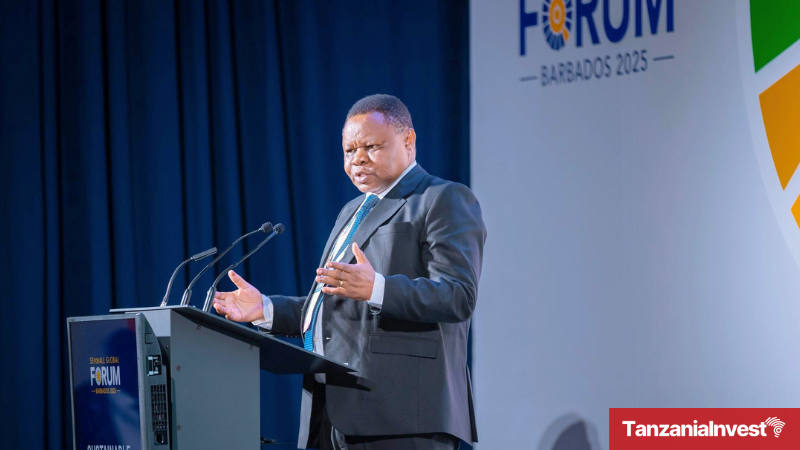
The announcement was made by the Permanent Secretary of the Ministry of Energy, Hon. Felchesmi Mramba, during a leadership discussion at the International Sustainable Energy for All (SEforALL) conference held in Bridgetown, Barbados.

“Our goal is to connect geothermal energy to the national grid by 2030. This is part of our broader ambition to ensure universal access to electricity by 2030 and achieve net-zero carbon emissions by 2050. This aligns with the 2015 National Energy Policy, the 2020 Energy Master Plan, and the Dar es Salaam Declaration on ‘Mission 300’ from the 2025 African Energy Summit,” said Mr. Mramba.

Tanzania Investment Guide 2026 Free Edition

He further explained that 16 regions in Tanzania are set to benefit from geothermal energy development, which will serve as a cornerstone of the country’s sustainable energy strategy.

This commitment is evident through the establishment of the Tanzania Geothermal Development Company (TGDC), which is tasked with exploring and developing geothermal resources. To date, TGDC is working on over 50 sites across the country.

To attract investment, the government has implemented a robust policy and regulatory framework to encourage international investors to conduct research and unlock the full potential of geothermal energy. “Recognizing its strategic importance, the Government of the United Republic of Tanzania has prioritized geothermal energy in the national energy development agenda,” Mr. Mramba added.

The Minister of Energy for the Federation of St. Kitts and Nevis, Hon. Konris Maynard, also emphasized the need for countries to promote geothermal energy and transition away from environmentally harmful energy sources. He urged stakeholders at the conference to continue advocating for the adoption of geothermal energy.

Tanzania is endowed with significant geothermal energy potential, estimated at over 5,000 MW of electricity and 15,000 MW of thermal energy. The country’s geographical location, surrounded by the East African Rift System (EARS) to the east and west, provides a favorable geological foundation for harnessing this renewable resource.

Tanzania Investment Guide 2026 Full Edition

Want to know more about Energy in Tanzania? Our free overview of the Tanzania Business and Investment Guide 2026 covers Energy, plus key sectors and investment opportunities. The complete 141-page edition includes policies, taxation, key regulations, full macroeconomic data, and sources, and is also available at no cost upon completion of a short form.

Download Free OverviewGet the Full Edition for Free

Related Posts
Tanzania Julius Nyerere Hydropower Project (JNHPP)
Read More

Tanzania Electricity Surplus Hits 2,375 MW As Julius Nyerere Hydropower Project Is Officially Launched

The Julius Nyerere Hydropower Project's 2,115MW plant lifted Tanzania's installed generation capacity to 4,646MW against peak demand of 2,271MW, with a surplus of 2,375MW, after President Samia Suluhu Hassan's inauguration on 22 August 2026. The government has signed an agreement to export power to Zambia and reached a trading arrangement with Kenya, while a newly completed 400kV Chalinze-Dodoma transmission line lifted national peak demand by 150MW within three days of coming online.
Presidents Samia Suluhu Hassan and Yoweri Museveni witness the Tanga Regional Energy Hub MoU signing, State House Dar es Salaam
Read More

Tanzania, Uganda Sign MoU for USD 20 Billion Tanga Energy Hub

Tanzania and Uganda signed a Memorandum of Understanding at State House on 6 August 2026 to develop Tanga as a Regional Energy Hub, a deal Tanzania's Energy Minister said could attract investment exceeding USD 20 billion. The agreement, signed by the Uganda National Oil Company, the Tanzania Petroleum Development Corporation, and Vitol Bahrain E.C., covers petroleum storage, refining, logistics, and distribution infrastructure at the port of Tanga, building on the East African Crude Oil Pipeline.
Samia Suluhu Hassan Africa50 Forum Dar es Salaam 2026
Read More

Tanzania President Calls for Faster Infrastructure Delivery Via PPPs as Country Signs Five Agreements on Power Transmission, Gas and Health

Tanzania President Samia Suluhu Hassan called for faster infrastructure delivery through public-private partnerships (PPPs) as Tanzania signed five agreements at Africa50's Infra for Africa Forum, covering an electricity transmission PPP with TANESCO, natural gas supply to local industry with TPDC and TAQA Arabia, and expanded kidney dialysis care. Africa50 secured USD 70 million in new capital from British International Investment, the Italian Climate Fund and Proparco, the private sector financing arm of the French Development Agency group (AFD).
Tanzania Contract 100 MW Kishapu Solar Project Phase Two
Read More

Tanzania Signs TZS 204.4 Billion Contract for 100 MW Kishapu Solar Project Phase Two

Tanzania has signed a contract worth approximately TZS 204.4 billion with Sagemcom Energy & Telecom SAS and STEG International Services for the 100 MW second phase of the Kishapu Solar Power Project in Ngunga, Shinyanga Region, taking the full 150 MW project's cost to approximately TZS 323 billion. The contract follows completion of the project's 50 MW first phase, which cost TZS 118.6 billion and became Tanzania's first grid-connected utility-scale solar plant in March 2026.