

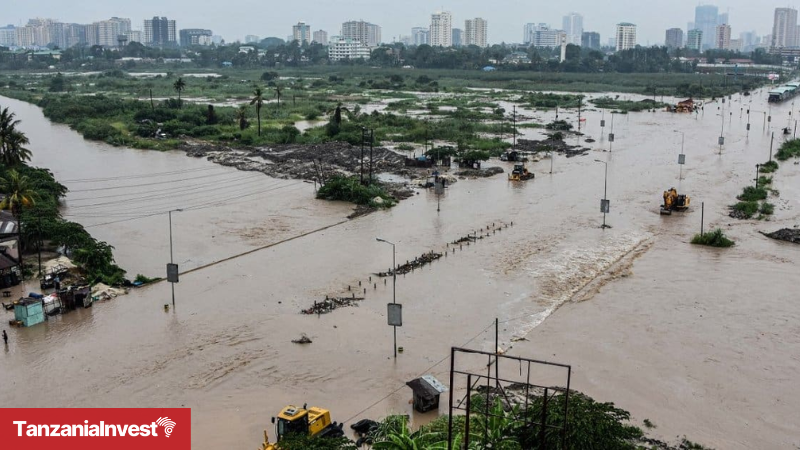
On 5 June 2025, the World Bank approved a US$300 million financing package to strengthen Tanzania’s disaster preparedness and response, aiming to benefit approximately 1.9 million people.
The package includes US$100 million in Development Policy Financing (DPF) as budget support and US$200 million through a Catastrophe Deferred Drawdown Option (Cat-DDO), both provided by the International Development Association (IDA).
The financing aims to improve Tanzania’s technical, financial, and institutional capacity to manage climate, fiscal, and disaster risks, while enhancing overall economic resilience.

Tanzania’s exposure to disaster risks is increasing due to population growth and economic expansion.
Severe events such as Cyclone Kenneth in 2019, Cyclone Jobo in 2021, and Tropical Cyclone Hidaya between 2023 and 2024 caused 155 deaths, affected over 200,000 people, and resulted in US$368 million in damages.
To address these risks, the government is pursuing reforms to improve fiscal and debt sustainability, strengthen regulatory and institutional frameworks, and invest in resilient infrastructure.
The new program is built around three main pillars.
The first pillar, strengthening institutional and financial capacity for disaster preparedness and response, will reinforce disaster response capacities in the health and disaster risk management sectors, establish flood early warning systems in flood-prone basins, and allocate additional funds to the national Contingency Fund.

The second pillar, mainstreaming disaster risk management in key sectors, will integrate resilience and risk reduction in urban planning and strengthen Zanzibar’s water and energy infrastructure.
The third pillar, enhancing economic resilience and establishing foundations for carbon market access, will support Tanzania’s efforts to access global climate finance through the development of enabling institutional and regulatory environments.
“Tanzania is making steady progress to handle climate related disasters but needs to double down on its resilience agenda through multi-sectoral coordinated policy reforms to ensure long term sustainability,” said Nathan Belete, World Bank Division Director.
“The economic costs from direct damage to infrastructure, loss of property, and the interruption of economic activities caused by climate related disasters are immense requiring immediate intervention. The project will provide robust policy framework and critical contingent financing to the country to help the government respond to emergencies quickly and effectively,” said Yohannes Kesete, World Bank Senior Disaster Risk Management Specialist and Task Team Leader.
The Cat-DDO component was prepared with technical and financial assistance from the Global Facility for Disaster Reduction and Recovery (GFDRR).
The financing is provided by the International Development Association (IDA), the World Bank’s fund for the poorest countries, which offers low to zero-interest loans and grants.
Since its establishment in 1960, IDA has provided US$496 billion to 114 countries, with about 70% of recent annual commitments directed to Africa.
Disaster Risk in Tanzania
Tanzania faces increasing disaster risks due to rapid urbanisation, deforestation, poor land use planning, and climate variability.
Flooding is the most frequent hazard, particularly in urban areas such as Dar es Salaam, due to inadequate drainage and informal settlements.
Droughts and landslides are also common in different regions of the country, affecting agriculture, food security, and infrastructure.
Although cyclones rarely make landfall in Tanzania, Tropical Storm Jobo in 2021 brought heavy rains and flooding to coastal areas, causing at least 22 deaths and affecting thousands of people.
Cyclone Hidaya in 2024 was one of the strongest cyclonic systems to directly impact the country, resulting in severe rainfall, flash floods, fatalities, and damage to infrastructure and the electricity supply.
Tanzania has adopted key national frameworks such as the Disaster Risk Reduction Strategy and the National Climate Change Response Strategy to address these growing risks.
Disaster management is coordinated by the Prime Minister’s Office through the Disaster Management Department.
Want to know more about the Economy in Tanzania? Our free overview of the Tanzania Business and Investment Guide 2026 covers the Economy, plus key sectors and investment opportunities. The complete 141-page edition includes policies, taxation, key regulations, full macroeconomic data, and sources, and is also available at no cost upon completion of a short form.
Download Free OverviewGet the Full Edition for Free