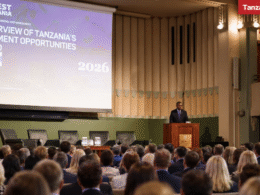

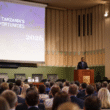
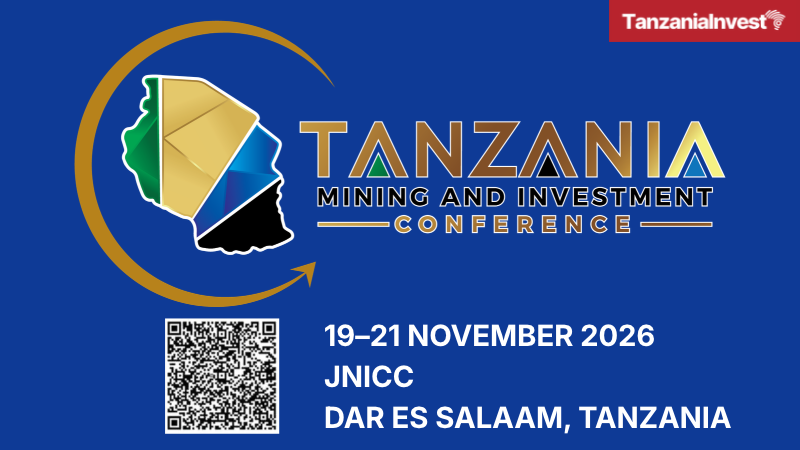
The Tanzania Mining and Investment Conference 2026 (TMIC 2026) will take place from 19 to 21 November 2026 at the Julius Nyerere International Convention Center (JNICC) in Dar es Salaam.
The seventh edition of the conference since 2019 is hosted by the Ministry of Minerals in collaboration with the Tanzania Chamber of Mines (TCM) under the theme “Value-Added Minerals: The Engine of Industrialization and Economic Growth”.
It is designed to bring governments, mining companies, investors, financial institutions, technology providers, researchers, policymakers and development partners together to explore investment opportunities and strategic partnerships across the mineral value chain, from exploration and mine development to processing, refining, mineral-based manufacturing and advanced value-added products.

Who is Attending
Organizers expect approximately 2,000 to 3,000 participants from Tanzania and around the world, including delegates from over 50 countries and more than 100 speakers, among them government officials and policymakers, mining companies and mineral rights holders, mineral processing and manufacturing firms, mineral traders (brokers and dealers), local and international investors, financial institutions and development partners, technology and equipment providers, legal and regulatory experts, academics and research institutions, civil society organizations and media representatives.
The guests of honour of this edition are H.E. Samia Suluhu Hassan, President of Tanzania, who will officiate the opening ceremony, and H.E. Dr. Hussein Mwinyi, President of Zanzibar, who will officiate the closing ceremony.
Conference Format
The three-day event combines an opening ceremony and keynote addresses, high-level ministerial panel discussions, technical sessions and breakout workshops, investment promotion presentations, business-to-business (B2B) meetings, exclusive investment matchmaking and networking sessions, alongside an exhibition of mining and processing technologies.
The Mining Gala Night (Usiku wa Madini) will celebrate excellence and recognize outstanding contributions to the development of Tanzania’s mining industry.
Programme Overview
According to the provisional schedule, Day 1 on 19 November opens with registration, the opening ceremony and a ministerial address, followed by a panel on Tanzania’s Mining Vision 2030 and its policy and investment framework, parallel afternoon sessions on gold mining and on critical minerals including graphite, rare earths and battery metals, investment matchmaking meetings by appointment, and a welcome reception and gala dinner.

Day 2 on 20 November covers global mining trends and African opportunities, ESG and sustainable mining practices, parallel sessions on mining finance and deal structuring and on mining technology and innovation, and project pitching sessions by selected mining projects.
Day 3 on 21 November addresses the formalization and integration of artisanal and small-scale mining, community relations and social license to operate, deal announcements, and closing remarks by the Minister of Minerals, with optional site visits to mining operations available by pre-registration.
The full session-by-session programme is available at https://conference.madini.go.tz/program.
Topics of Discussion
Discussions will be organized around nine areas.
1. Policy, Governance and Regulatory Frameworks
The discussions will cover strengthening policies for inclusive and competitive mineral value chains, regulatory frameworks and investment incentives, transparency and accountability in resource management with adaptation to global standards such as EITI and ESG, creating an enabling environment for investment in mineral exploration, mining and mineral processing, and fiscal reforms and tax incentives to promote local value addition.
2. Mineral Value Addition as an Engine for Industrialization
The discussions will cover integrating the mineral sector for value addition into Tanzania’s industrialization transformation under Vision 2050, enhancing local content through backward and forward sector interlinkages and services, and how industrial parks and special economic zones can drive industrialization and mineral value addition through infrastructure for smelting and refining into semi-finished and finished products.
3. Energy Transition and Critical Minerals
The discussions will cover critical minerals for the green economy and the opportunities for Tanzania and its global status, developing midstream and downstream infrastructure for clean energy and high-technology minerals, responsible mining of energy transition minerals from exploration to finished product, Tanzania’s position in the global clean energy supply chain, and a showcase of Tanzania’s critical minerals pipeline projects.
4. Financing and Investment in Value-Added Mineral Industries
The discussions will cover possible global financing mechanisms for value addition projects, the role of public-private partnerships, development partners and financial institutions in infrastructure and technology, lessons from global case studies on value chain financing models and de-risking investments, and the question of whether Africa can create its own financing model and mechanism for mineral value addition industries.
5. Technological Advancement, Innovation and Infrastructure as a Catalyst for Mineral Value Addition and Economic Prosperity
The discussions will cover research and innovation in mineral value chain techniques, infrastructure and energy requirements given the high demand for mineral value addition, and how digital and automated mining technologies can be applied to value addition, including the challenges and opportunities.
6. Transformation of the Small-Scale Mining Subsector
The discussions will cover the roles of small-scale miners in the mineral value addition chain, an assessment of the subsector’s contribution to the economic transformation of the sector, and how to promote value addition through enhanced technology and skills for small-scale miners.
7. Environment, Social and Governance (ESG) and Sustainability: Global Climate Agenda
The discussions will cover ESG compliance in mineral value chains including policies, practice and monitoring, the national and global ESG sustainability drivers, the role of government in ESG management, whether ESG standards can serve as a monitoring tool for transparency and accountability in natural resource management, minimizing the environmental footprint through clean processing technologies and lower carbon emissions for climate-smart mining, mining and climate resilience through ESG adaptation and mitigation strategies, the social license to operate and community engagement for mutual benefit, and a case study on corporate social responsibility in mining areas and its impact on surrounding communities.
8. Human Capital Development and Inclusion
The discussions will cover building skills for the future through workforce development in mineral processing, the role of technical and vocational education and training (TVET) and other research and development institutions, bridging the human capital gap for sustainable mining in Tanzania, a case study comparing higher learning instruction with technical and vocational training, and promoting gender equity and youth empowerment in mining value chains for industrialization and economic benefit.
9. Regional Integration and Global Competitiveness
The discussions will cover positioning Tanzania as a regional hub for mineral processing, the paradox of resource-rich but industrially poor economies, why exporting raw minerals limits economic transformation, leveraging the AfCFTA for regional trade in value-added mineral products and regional integration, the case for beneficiation and value addition in Africa and globally, and the harmonization of policies in the region to enhance complementarity and collaboration.
Objectives and Expected Outcomes
The overall objective is to promote investment, innovation and policy collaboration in mineral value addition to drive sustainable industrial and economic growth in Tanzania, with specific objectives that include showcasing investment opportunities in exploration, mining, beneficiation and downstream industries, discussing policies and incentives that support value addition, attracting local and international investors in mineral processing and manufacturing, promoting public-private partnerships in mining infrastructure and industrial parks, strengthening linkages between mining, manufacturing, energy, finance and technology, and promoting sustainable and environmentally responsible mining practices.
Among the expected outcomes, organizers cite the promotion of Tanzania’s mineral wealth to an audience of more than 3,000 international mining and financial executives, government representatives, service providers and media, the exposure of the sector to technological advancement and innovation, and the attraction of capital investment into the minerals value chain, specifically value addition.
The Minister for Minerals, Anthony Mavunde, commented: “TMIC 2026 reflects Tanzania’s commitment to transforming its mineral wealth into industrial growth, employment opportunities, technological advancement and sustainable economic prosperity.”
He added: “We warmly invite investors and stakeholders from around the world to join us in shaping the future of mining and mineral value addition in Tanzania and Africa.”
Tanzania’s Mining Sector and The Value Addition Push
The mining sector remains one of the strategic pillars of Tanzania’s economy, contributing to export earnings, employment and foreign direct investment, with its share of GDP rising from 9.1% in 2023 to 10.1% in 2024 and reaching 11.9% in the last quarter of 2025, above the Government’s 2025 target, while accounting for more than half of non-traditional exports and supporting over six million jobs.
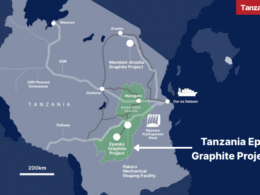
Tanzania holds significant reserves of graphite, nickel, praseodymium and neodymium, which are critical minerals used in lithium-ion batteries, electric vehicle motors and wind turbines, and with several large-scale graphite and rare earth projects underway the Government has identified value addition opportunities in cement and ceramics from limestone, graphite for battery anodes, nickel and cobalt products, fertilizers, steel, copper products, and gold bars and jewellery, which are projected to generate more than TZS 1 trillion in non-tax revenue depending on market conditions and production scale.
The push is aligned with Vision 2050, which targets a USD 1 trillion economy and per capita income of around USD 7,000 and positions the mineral sector as a central driver of industrialization, although the concept note points out that beneficiation is energy-intensive and infrastructure-dependent, requiring reliable electricity, efficient transport networks, ports and industrial special zones, and lists limited technology, financing gaps, weak industrial ecosystems and policy inconsistencies as constraints that have slowed progress.
Registration, Sponsorship, and Contacts
For registration, sponsorship opportunities, and exhibition packages, visit https://conference.madini.go.tz or contact Mr. Erick Ketagory on +255 714 278 620, by email at tmic@madini.go.tz or erick.ketagory@madini.go.tz.
Want to know more about Mining in Tanzania? Our free overview of the Tanzania Business and Investment Guide 2026 covers Mining, plus key sectors and investment opportunities. The complete 141-page edition includes policies, taxation, key regulations, full macroeconomic data, and sources, and is also available at no cost upon completion of a short form.
Download Free OverviewGet the Full Edition for Free