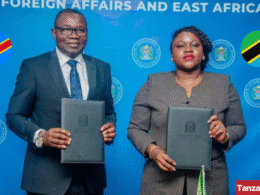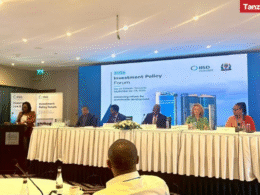



On 4th October 2024, Tanzania’s President Samia Suluhu Hassan officially launched the Presidential Commission for Tax Assessment and Advisory at a ceremony held at the State House in Dodoma.
This initiative aims to enhance Tanzania’s tax system to support economic growth, improve public services, and reduce poverty.
The members of the commission were appointed on 30th July 2024 and selected for their vast experience and expertise.

Purpose of the Tax Commission
The newly established commission is tasked with evaluating the current tax framework and making recommendations for improvement. Key objectives include:
- Comprehensive Assessment: The commission will conduct a thorough review of the existing tax policies to identify inefficiencies and areas for reform.
- Improving Business Environment: By refining the tax system, the government aims to create a more favorable environment for businesses and investors.
- Encouraging Tax Compliance: The goal is to develop a fair and transparent tax system that encourages all eligible taxpayers to comply voluntarily.
During the launch ceremony, President Samia highlighted that approximately 60% of Tanzania’s economy is informal, which poses challenges for tax collection and economic planning.
Hence, the commission will focus on strategies to integrate informal businesses into the formal economy, thereby expanding the tax base.
The President also praised the Tanzania Revenue Authority (TRA) for its recent successes in increasing revenue collection. In September 2024, TRA reported significant improvements in revenue performance, attributed to several government initiatives.
These include eliminating unnecessary fees, enhancing efficiency in government agencies, and strengthening TRA’s capabilities.

Tax Nuisances
In June 2024, prominent embassies in Tanzania raised the alarm over unfair tax enforcement practices faced by foreign investors.
In a joint letter, the ambassadors from the United States, United Kingdom, Netherlands, France, Belgium, Canada, Ireland, Sweden, Germany, and Korea, expressed deep concern over retrospective tax demands and account freezes imposed by the Tanzania Revenue Authority (TRA), despite compliance with auditing standards and agreements with the Tanzania Investment Centre (TIC).
They highlighted instances of asset seizures without adequate legal recourse, impacting investor confidence and operational stability.
In a prompt response, the Tanzanian Minister of Foreign Affairs and East African Cooperation at that time, Hon. January Makamba, issued a reply letter, acknowledging the concerns and committing to a constructive dialogue.
A month later, President Hassan announced the formation of a Presidential Commission to assess and advise on tax matters.
Want to know more about the Economy in Tanzania? Our free overview of the Tanzania Business and Investment Guide 2026 covers the Economy, plus key sectors and investment opportunities. The complete 141-page edition includes policies, taxation, key regulations, full macroeconomic data, and sources, and is also available at no cost upon completion of a short form.
Download Free OverviewGet the Full Edition for Free