

On 26th October 2026, the European Union (EU) confirmed a 10-year extension of its Generalised Scheme of Preferences (GSP) during an EU–Africa trade press briefing.
The announcement comes as the EU marks 25 years of the Everything But Arms (EBA) scheme and 25 years of formal EU–Africa political relations, which began with the 2000 Cairo Summit.
The extension of the GSP framework means that the EU will be maintaining predictable trade arrangements for developing countries including Tanzania and confirming that the EBA scheme will continue indefinitely for eligible least developed countries (LDCs).

Under the EBA scheme, eligible LDCs will continue to receive automatic, duty-free and quota-free access to the EU market for all products except arms and ammunition, without an expiry date or the need to reapply for the arrangement.
The revised GSP framework will take effect on 1st January 2027 and run for 10 years, through 2036.
Beyond tariff preferences, EU–Africa trade cooperation is increasingly focused on expanding local processing, supporting regional value addition, and strengthening sustainable supply chains.
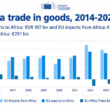
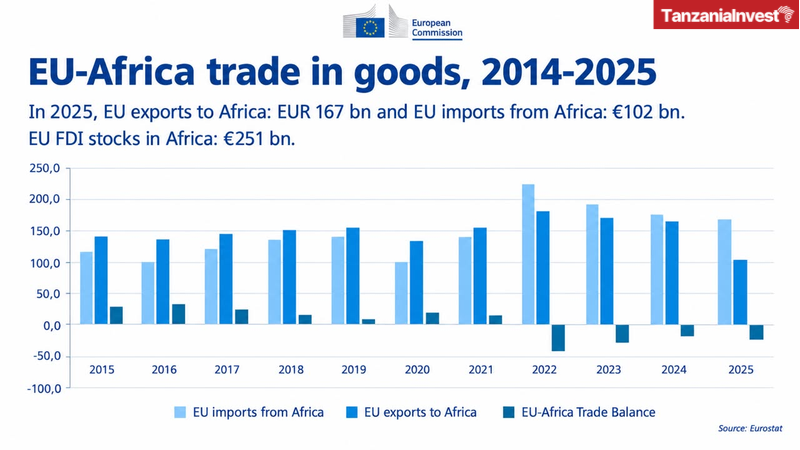
According to the EU, the Union remains Africa’s largest trade and investment partner as trade in goods between the two partners increased by 51%, from EUR 236 billion in 2016 to EUR 357 billion in 2025. The EU accounts for 33% of Africa’s total trade in goods and is the destination for almost 40% of African exports over the past 25 years.
In 2024, EU companies held more than EUR 250 billion in foreign direct investment stock in Africa, while African investments in the EU exceeded EUR 74 billion and African exports under EBA to the EU increased from EUR 112 million to nearly EUR 5 billion in 2025.
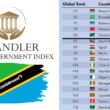
At a national level, Tanzania recorded a 96% utilisation rate for available trade preferences under the scheme, indicating that its exporters are making substantial use of the market access available to eligible products.
Continued EBA access provides an established route for Tanzania into the EU market, the extent to which the country benefits will depend in part on exporters’ ability to use available preferences, meet EU product standards and expand the value of goods produced for export.
Speaking on the matter, the European Commission Spokesperson for Trade, Economic Security and Customs, Olof Gill, stated: “The EU-Africa relationship is a true partnership of equals. Our trade and investment approach is designed to deliver maximum mutual benefit: supporting Africa’s ambitions for sustainable development, industrialisation and jobs, while at the same time helping Europe diversify its partnerships and build resilient supply chains.”
Gill reiterated: “In an increasingly unpredictable geopolitical context, the EU remains Africa’s first trade and investment partner, with longstanding agreements rooted in stability, predictability, and sustainability. 33% of Africa’s total trade in goods is with the EU, which is also the first destination of Africa’s exports, accounting for almost 40%. Both sides benefit from strong trade relations and cooperation. Africa ranks as the EU’s fourth-largest trade partner. Over the past decade, EU trade with Africa has grown by 51%, from EUR 236 billion in 2016 to EUR 357 billion in 2025. Overall, 44 African countries have duty-free access to the EU market, a market of 450 million consumers, and 97% of African exports enter the EU free of import duties.”
“At the same time, compliance with high EU standards opens up other potential markets and makes African products more competitive elsewhere. European investors hold the largest foreign direct investment stock in Africa. In 2024, the investments of EU companies in Africa were worth over EUR 250 billion, while African investments in the EU were worth over EUR 74 billion,” added Gill.
Gill confirmed: “With the 6 Economic Partnership Agreements with 15 countries currently in place, EU’s total trade with African EPA countries increased by 35%, and its foreign direct investment stock in African EPA countries increased from EUR 72 billion in 2014 to EUR 86 billion in 2024. This clearly shows that our Economic Partnership Agreements work and bring tangible benefits to economies on both sides.”
“These Economic Partnership Agreements with six countries in the Southern African Development Community (SADC), Cote d’Ivoire and Ghana were signed 10 years ago and since then our bilateral trade has increased, driving higher value added in the partner countries such as the automotive sector in South Africa or the cocoa sector in West Africa, attracting more investment imports by 61% since 2015,” noted Gill.
EU Generalised Scheme of Preferences (GSP)
The EU’s Generalised Scheme of Preferences (GSP) is a unilateral trade preference scheme that reduces or removes customs duties on eligible goods imported to the EU from developing countries.
It was established in 1971, following international efforts through the United Nations Conference on Trade and Development (UNCTAD) to help developing countries participate more fully in global trade and it’s current framework entered into force in January 2014.
The EU’s GSP comprises three arrangements: 1) Standard GSP, which provides for the partial or full removal of customs duties on two-thirds of tariff lines for eligible developing countries; 2) GSP+, which offers zero tariffs on these products to eligible vulnerable countries that meet additional requirements; 3) the Everything But Arms (EBA) arrangement, which grants least developed countries duty-free, quota-free access to the EU market for all products except arms and ammunition.
Want to know more about Trade in Tanzania? Our free overview of the Tanzania Business and Investment Guide 2026 covers Trade, plus key sectors and investment opportunities. The complete 141-page edition includes policies, taxation, key regulations, full macroeconomic data, and sources, and is also available at no cost upon completion of a short form.
Download Free OverviewGet the Full Edition for Free