
Tanzania should emphasize local content and measures to de-risk mining investments, such as offering collateral guarantees and streamlining financial processes.
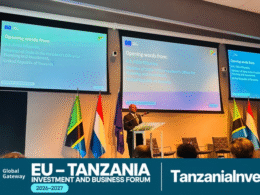
This statement was made on 20th November 2024 during a panel discussion on the second day of the Tanzania Mining and Investment Conference (TMIC) held in Dar es Salaam.
The conference brought together global mining leaders, government officials, and key stakeholders to discuss topics ranging from mining finance to energy transition minerals.

The first day of the event focused on addressing key challenges within the mining sector, including improving the policy, regulatory framework, and infrastructure, particularly roads, power supply, and railway to create a better environment for mining.
The second day highlighted the need for improved access to capital and the role of critical minerals with discussions pointing out the limited capacity of local banks to finance large-scale mining projects, and recommending syndications between local and international banks to expand financing opportunities.
For small-scale miners, it was suggested to adopt best practice models from other countries to facilitate financing without requiring excessive collateral.
The need for a strong regulatory framework to optimize value from the critical minerals value chain was also stressed, along with incentives for mineral value addition and supporting local fabricators in producing mining equipment. Public-private partnerships and local content initiatives were recommended to further develop the sector.
The third day focused on the value of Tanzanite and other gemstones, with recommendations to use joint marketing initiatives and participate in international gem shows to tap into global opportunities.

There was an emphasis on empowering youth and women in the mining sector, advocating for a collaborative approach to capacity-building, and providing supportive infrastructure.
A key recommendation was the integration of Environmental, Social, and Governance (ESG) principles, promoting responsible mining practices, and community engagement.
The need for standardized ESG practiceswithin the regulatory framework was also highlighted, ensuring the adoption of best practices across the mining industry.
Speaking on the second day of the event, Kenya’s Cabinet Secretary for Mining, Blue Economy & Maritime Affairs Ali Hassan Joho called for a regional value addition hub, emphasizing shared benefits in mineral beneficiation.
“We must think as one East African market, ensuring our resources create jobs and wealth for all,” noted Joho.
On her part, Uganda’s Minister of State for Energy and Mineral Development, Phiona Nyamutoro stated: “Tanzania’s strong mineral foundation boosts us as a region. Together, we can unlock East Africa’s mining potential through shared infrastructure and technology.”
Adam Kendall, from McKinsey & Company, emphasized Africa’s competitive advantage in the critical minerals value chain.
Kendall highlighted the continent’s vast untapped resources and noted that Africa could position itself as a leading supplier of refined minerals needed for the renewable energy transition.
Lorna Blaisse, the CEO of Helium One, showcased the success of Tanzania’s first-ever helium discovery, noting its unique position as a “green helium” source without CO2 or methane emissions.
“This positions Tanzania as a strategic player in the global helium market,” affirmed Lorna.
In his closing remarks, President Hussein Ali Hassan Mwinyi through a representative emphasized the significance of the mining sector for the nation’s economic development.
He expressed satisfaction with the participation of stakeholders from both within and outside the country, reflecting the collective commitment to developing the industry.
Mwinyi highlighted: “We must build industries capable of adding value to our resources, such as critical minerals like graphite and rare earth elements, which are crucial for modern technologies, including electric vehicles.”
Want to know more about Mining in Tanzania? Our free overview of the Tanzania Business and Investment Guide 2026 covers Mining, plus key sectors and investment opportunities. The complete 141-page edition includes policies, taxation, key regulations, full macroeconomic data, and sources, and is also available at no cost upon completion of a short form.
Download Free OverviewGet the Full Edition for Free