

The World Bank (WB) recently published its fifteenth edition of the Africa’s Pulse, a biannual analysis of African economies, stressing the resilience of Tanzania’s economic growth.
Overall, the difficult economic conditions facing African countries in 2015 and 2016 have taken their toll on the economic resilience of the region, the report reveals.
Growth in Sub-Saharan Africa is estimated to have decelerated to 1.5% in 2016, the lowest level in over two decades, as commodity exporters adjust to low commodity prices.

Within this framework, only seven countries are seeing growth rates above 5.4% in 2015-17: Côte d’Ivoire, Ethiopia, Kenya, Mali, Rwanda, Senegal, and Tanzania.
Economic growth in Sub-Saharan Africa is projected to recover to 2.6% in 2017, following a marked deceleration in 2016.
The upturn in economic activity is expected to continue in 2018-19, reflecting improvements in commodity prices, a pickup in global growth, and more supportive domestic conditions
However, in three non-resource intensive countries – Ethiopia, Senegal, and Tanzania – growth is expected to remain generally solid, supported by domestic demand.
Growth should remain robust, based on infrastructure investments, buoyant services sectors, and the recovery of agricultural production, although it may not reach the high growth rates of the recent past, the Bank stresses.

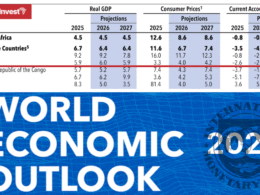
The World Bank currently forecasts an annual GDP growth rate for Tanzania of 7.1% for 2017, 2018 and 2019.
However, in its ninth edition of the Tanzania Economic Update of April 2017, the Bank reminds that the economic performances and growth could be affected by wrong policies.
This is why WB suggests the government of Tanzania to ensure effective implementation of public investments and supportive policies to promote private sector investment and growth.
Want to know more about the Economy in Tanzania? Our free overview of the Tanzania Business and Investment Guide 2026 covers the Economy, plus key sectors and investment opportunities. The complete 141-page edition includes policies, taxation, key regulations, full macroeconomic data, and sources, and is also available at no cost upon completion of a short form.
Download Free OverviewGet the Full Edition for Free