


Tanzania and Rwanda have signed a bilateral energy cooperation agreement covering cross-border electricity trade, joint power infrastructure projects, oil and gas exploration, LNG opportunities, and artificial intelligence applications in the energy sector.
The agreement was signed on 19 May 2026 in Kigali by Tanzania’s Minister of Energy Deogratius Ndejembi and Rwanda’s Minister of Infrastructure Dr. Jimmy Gasore, witnessed by President Samia Suluhu Hassan and President Paul Kagame.
The signing took place at the Kigali Convention Center on the sidelines of the second Nuclear Energy Innovation Summit for Africa (NEISA 2026), held from 18 to 21 May 2026 under the theme “Powering Africa’s Future: Turning Nuclear Energy Ambition into Investable Reality.”

The agreement covers the exchange of electricity between Tanzania and Rwanda to strengthen energy security, joint implementation of electricity infrastructure projects, and the development of cross-border power trade between the two countries.
Additional cooperation areas include oil and natural gas exploration and development, petroleum products distribution, LNG project opportunities, and the deployment of modern technologies including artificial intelligence in the energy sector.
The Tanzanian delegation that attended the signing included Minister of Foreign Affairs and East African Cooperation Ambassador Mahmoud Thabit Kombo, Minister of Finance Ambassador Khamis Omar, Zanzibar Deputy Minister for Water, Energy and Minerals Dr. Seif Pandu, and Permanent Secretary for Electricity and Renewable Energy at the Ministry of Energy Felchesmi Mramba, alongside technical experts from both governments.
NEISA 2026 was hosted by President Kagame and organized in collaboration with the International Atomic Energy Agency (IAEA), the United Nations Economic Commission for Africa (UNECA), the OECD Nuclear Energy Agency, the World Nuclear Association, and the World Nuclear Exhibition.
The Tanzania-Rwanda agreement builds on existing physical infrastructure linking the two grids. In March 2024, the power grids of Burundi, Rwanda, and Tanzania were fully interconnected and synchronized through the 80 MW Regional Rusumo Falls Hydroelectric Project, creating a unified power pool across the three countries.

The Rusumo network comprises 372 km of 220 kV overhead transmission lines, with the Tanzanian segment running 94 km from Rusumo to Nyakanazi. TANESCO signed its Power Purchase Agreement with Rusumo Power Company Limited on 30 September 2023.
Tanzania’s strategic location at the boundary of the Eastern Africa Power Pool (EAPP) and the Southern African Power Pool (SAPP) positions it as a corridor for cross-border electricity trade.
Interconnections with Kenya, Rwanda, and Burundi have been commissioned, while interconnections with Zambia and Uganda are advancing.
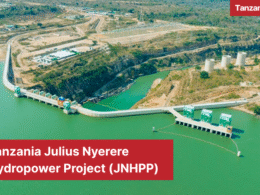
Domestically, TANESCO is targeting a generation capacity of 5,000 MW following the commissioning of the 2,115 MW Julius Nyerere Hydropower Project and expanded gas-fired generation. Tanzania’s electricity demand is growing at 10–15% per year.
Want to know more about Energy in Tanzania? Our free overview of the Tanzania Business and Investment Guide 2026 covers Energy, plus key sectors and investment opportunities. The complete 141-page edition includes policies, taxation, key regulations, full macroeconomic data, and sources, and is also available at no cost upon completion of a short form.
Download Free OverviewGet the Full Edition for Free