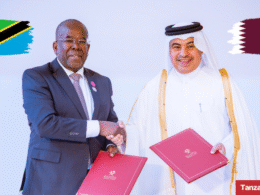



During a recent parliamentary session, the Tanzanian government passed the proposed changes to the Public-Private Partnership (PPP) Act of 2023.
The amendments address various challenges encountered in the implementation of Public-Private Partnerships in Tanzania under the legal framework of the current Act.
According to the Minister of Finance and Planning of Tanzania Mwigulu Nchemba, among the shortcomings of the current Act is the lack of provisions for private sector partners to bring disputes before international courts for resolution, and the lack of details about the types of financial assistance (public funding) approved under the Loan, Guarantee, and Grant Act.

Also, the Act does not permit direct procurement of private sector partners by government authorities for the execution of projects initiated by those authorities.
The bill now requires the signature of the President of Tanzania, Dr Samia Suluhu Hassan, to be enacted.
On 14th June 2023, David Kafulila, Commissioner for PPPs within the Ministry of Finance and Planning issued an important update on the new PPP framework and how it is expected to revolutionize Tanzania’s investment landscape.
“The amendments will empower investors, streamline processes, and ensure comprehensive oversight, ushering us into a new era of infrastructure development and investment potential for Tanzania,” Kafulila explains. Below are the details of the amendments:
Investor Empowerment: Investors now have the freedom and right to negotiate with the government, providing them with a platform to resolve investment-related disputes arising from PPPs in a manner and at a venue of their choice.

Incentives: These include tax benefits, government guarantees, and assistance securing capital through the Viability Gap Funding (VGF) framework.
Streamlined Processes: Government authorities will benefit from reduced project preparation time, enabling streamlined processes and faster implementation.
Accelerated Procurement: Contracting Authorities (CAs) can procure partners directly, eliminating unnecessary delays and bureaucracy.
Cost Reduction: The amendments eliminated the previously imposed fees, resulting in significant cost reductions.
Comprehensive Oversight: The new PPP Act holds overarching authority over all PPP matters.
Enhancing User Experience: The amendments allow for consequential adjustments to other regulations, enhancing the user experience and addressing any challenges.
“I firmly believe that these groundbreaking changes mark the beginning of an exciting new phase for investments in Tanzania. The amendments to the PPP Act create numerous opportunities for developing infrastructure and attracting investments in our country. As we continue our journey to strengthen our economy by utilizing private funds to improve public services and benefit the people of Tanzania, we invite local and international investors to explore the vast prospects that await them in Tanzania,” Kafulila explains.
About PPPs in Tanzania
Public-Private Partnerships (PPPs) are instruments for attracting investments and addressing constraints of financing, management and maintenance of public goods and services.
The concept of PPP entails an arrangement between the public and private sector entities whereby the private entity renovates, constructs, operates, maintains, and/or manages a facility in whole or in part, and assumes the associated risks for a significant period of time. In return, it receives benefits and financial remuneration.
The World Bank (WB) explains that PPPs have been implemented successfully in Tanzania in the education, health, and water sectors for many years.
However, in the case of other sectors, the performance has been mixed largely due to the complexity of such projects and the lack of clear guidelines.
Want to know more about the Economy in Tanzania? Our free overview of the Tanzania Business and Investment Guide 2026 covers the Economy, plus key sectors and investment opportunities. The complete 141-page edition includes policies, taxation, key regulations, full macroeconomic data, and sources, and is also available at no cost upon completion of a short form.
Download Free OverviewGet the Full Edition for Free