

TIC Holds Meeting at Kariakoo Market to Promote Local Investments

On 16th May 2024, the Tanzania Investment Centre (TIC) held an investment meeting in Kariakoo market to educate local businesses on registration, available support services, and investment opportunities. The meeting aimed to shift their focus from selling imported goods to investing in local manufacturing industries.
Tanzania Kariakoo Market

On 16th May 2024, the Tanzania Investment Centre (TIC) held a meeting with Kariakoo businesses in Dar es Salaam to raise awareness on available investment opportunities and promote a transition from import-based trading to local manufacturing investments.

More than 100 traders participated in the meeting and had the opportunity to share their issues and challenges with TIC.

The meeting is part of TIC’s ongoing program to promote domestic investment and encourage broader private sector participation in Tanzania.

Tanzania Investment Guide 2026 Free Edition

Speaking at the meeting, TIC’s Executive Director, Gilead Teri, stated: “The objective is to transition traders from being importers to becoming producers of the same goods locally, using the market access they already have.”

“We are seeing more foreign investors than Tanzanians benefiting from our services, yet these services are free and available to all,” added Teri.

He also highlighted that the revised investment law lowers the minimum capital requirement for Tanzanian investors from TZS 1 billion to TZS 100 million, allowing more local businesses to qualify for investment status and related incentives.

He added that local investors registered with TIC enjoy benefits such as 100% import duty exemptions on hotel equipment, industrial machinery, and transport vehicles used for investment projects.

On his part, TIC’s Director of Investment Facilitation James Mazuki, emphasized the importance of Kariakoo to the Tanzanian economy and called for greater engagement between the center and the traders.

TanzaniaInvest Capital Markets Report Banner

He stated: “TIC is here to simplify business operations, reduce bureaucracy, and provide support that goes beyond tax incentives.”

Mazuki explained that TIC’s presence at the meeting was a deliberate effort to close the communication gap and encourage local businesses to utilize TIC’s facilitation services.

On his part, the Chairperson of the Kariakoo Business Community stated: “This meeting is a step in the right direction. Kariakoo is the engine of the national economy, and we must not be left behind in matters of investment facilitation and policy implementation.”

Tanzania’s Kariakoo Market

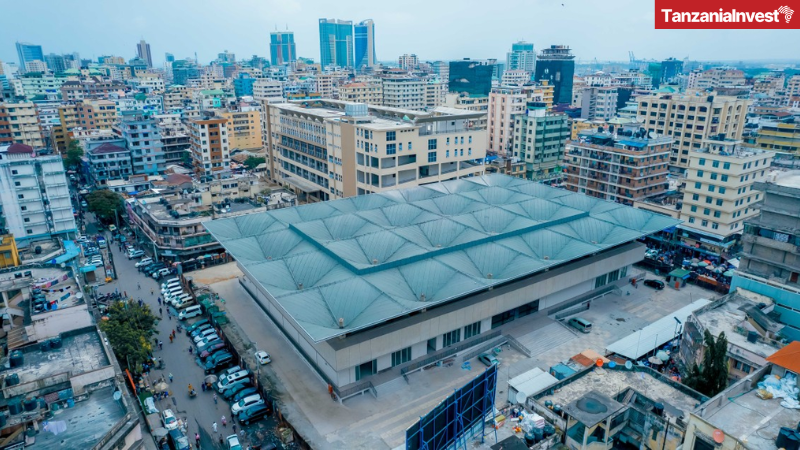
Operated by the government of Tanzania, Tanzania’s Kariakoo Market is situated in the Ilala District of Dar es Salaam and is one of the largest commercial zones in East Africa.

Over 70% of Dar es Salaam’s traded goods pass through the market, which began 24-hour operations in early 2025.

It handles a substantial volume of the country’s consumer goods, serving as the main distribution hub for products imported into Dar es Salaam Port before being redistributed across the country and into neighboring markets.

Want to know more about Trade in Tanzania? Our free overview of the Tanzania Business and Investment Guide 2026 covers Trade, plus key sectors and investment opportunities. The complete 141-page edition includes policies, taxation, key regulations, full macroeconomic data, and sources, and is also available at no cost upon completion of a short form.

Download Free OverviewGet the Full Edition for Free

Related Posts
Tanzania BOT economic update for the year ending August 2026, showing gold exports rising to USD 5.63 billion.
Read More

Tanzania Exports Grow 16.4% to USD 20.2 Billion in Year Ending August 2026, Led by Gold (+30%) and Manufactured Goods (+44%), Supported by Iron and Steel Products and Glassware

Tanzania’s exports of goods and services rose 16.4% to USD 20,216.2 million in the year ending August 2026, led by gold exports (+30.2%) and manufactured goods (+44.3%), including iron and steel products and glassware. Transport receipts rose 26.4%, while travel receipts increased 1.7% to USD 4,389.7 million.
EU-Tanzania Investment & Business Forum 2026-2027 Helsinki day 1
Read More

EU–Tanzania Roadshow Opens in Helsinki With Mineral and Digital Investment Pitches

At the EU-Tanzania roadshow in Helsinki, the EU and Finland said they want to invest in Tanzania's critical minerals and digital economy, backed by a new EUR 156 million EU package and by Finnish financiers Finnvera and Finnfund, which confirmed they are open to Tanzanian deals. Tanzania offered European companies entry into graphite, nickel and rare earths processing, including at a former gold mine converted into a mineral processing zone, as well as into data centres, submarine cables and broadband, backed by TZS 7 trillion in planned public spending.
TANZANIA ECONOMIC EXPORTS UPDATE YE JULY 2026
Read More

Tanzania Exports Grow 16.5% to USD 20 Billion in Year Ending July 2026, Led by Gold (+47%) and Manufactured Goods (+46%), Supported by Iron and Steel, Glassware, and Textiles

Tanzania's exports of goods and services grew 16.5% to USD 19,985.8 million in the year ending July 2026, led by gold exports of USD 5,670.7 million and manufactured goods, supported by iron and steel products, glassware, and textiles. Traditional exports rose 14.9%, while travel receipts rose 1.6% to USD 4,292.8 million.
Tanzania-Malawi Trade Investment Forum 2026 September TanTrade
Read More

Tanzania and Malawi Target Value Addition and Regional Supply Chains to Expand Bilateral Trade, Starting With Soy

Tanzania and Malawi are targeting value addition and regional supply chains to expand bilateral trade, with each country's investment authority opening projects to the other's investors at the 3rd Malawi-Tanzania Investment and Trade Forum in Dar es Salaam. Tanzania exports USD 89.46 million to Malawi against USD 15.169 million in imports, with USD 6 million of immediate export openings identified, 31% of bilateral export potential untapped, and Malawian soy processed by Tanzanian industry cited as the model value chain.