





PwC recently released its 29th Annual Global CEO Survey-Tanzania Perspective, highlighting Tanzanian CEOs’ robust optimism about economic growth, whilst acknowledging significant transformation challenges.
The survey, which gathered insights from 60 respondents from Tanzania, reveals a paradox: 65% of Tanzanian CEOs project strong revenue growth over three years, yet 50% worry they are not transforming fast enough to keep pace with technological change.
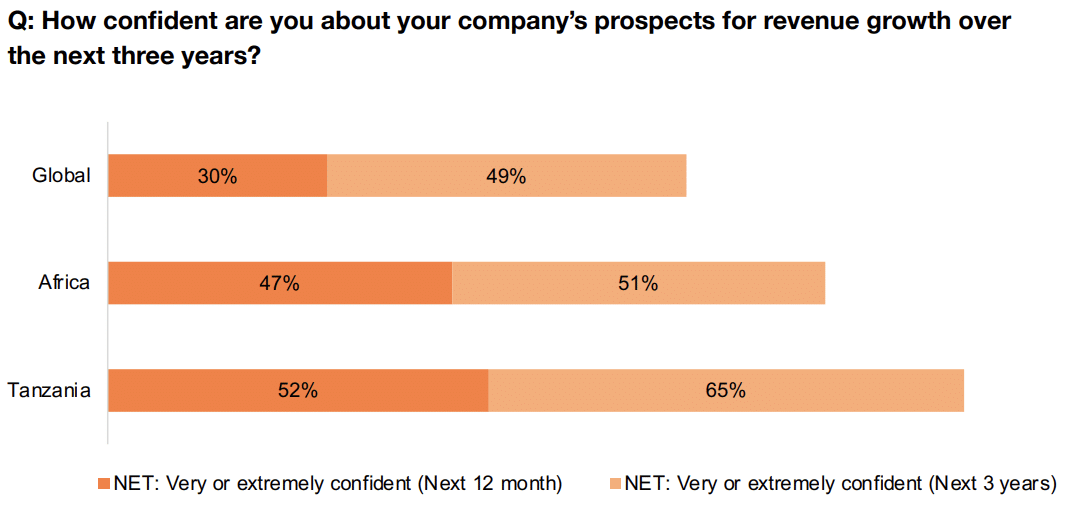
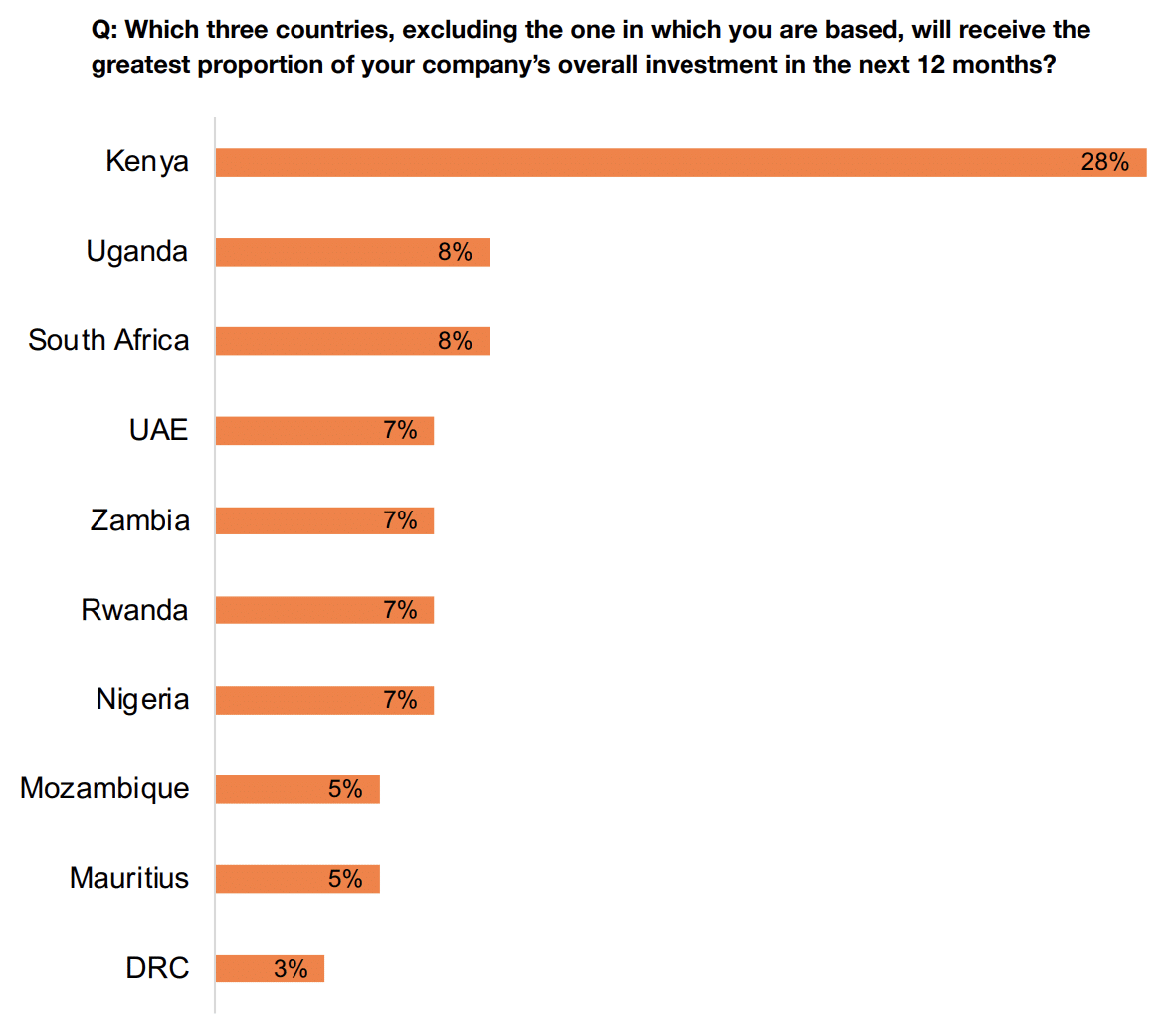
This confidence trajectory outpaces both African and Global peers, positioning Tanzania as a region of sustained economic opportunity, with 46% of the CEOs exploring new geographical markets, with Kenya and Uganda remaining top investment destinations as intra-Africa trade gains momentum.

In terms of worries, skills availability (27%) has overtaken cyber risk as the primary concern, with AI adoption, despite its promise, revealing significant strategy and implementation gaps.
Seventy percent of CEOs report readiness for AI adoption, yet only 36% have clear AI strategies, and just 19% consider that their investment levels are sufficient.
Furthermore, 38% of CEOs foresees a decrease in junior roles like analysts and associates over the next three years as AI adoption speeds up, while 25% plans technology partnerships over the next three years, with 40% planning major acquisitions worth over 10% of the company assets.
Geopolitical conflict (22%) and macroeconomic volatility (20%) complete the top three threats.
Geopolitical uncertainty presents multifaceted challenges, with 25% of Tanzanian CEOs reporting direct impact through decreased large-scale investments.

The implications extend beyond immediate revenue, affecting donor-funded contracts, supply chain efficiency, including ports, and creating fiscal pressures that increase compliance burdens.
Given geopolitical uncertainties, only 7% were prepared to make substantial investments
Zainab Salome Msimbe, Country Senior Partner for PwC Tanzania, emphasized that to stay competitive, businesses must accelerate capability building and strengthen future readiness.
You can access the full Survey here: https://www.pwc.co.tz/publications/tanzania-ceo-survey.html
Want to know more about the Economy in Tanzania? Our free overview of the Tanzania Business and Investment Guide 2026 covers the Economy, plus key sectors and investment opportunities. The complete 141-page edition includes policies, taxation, key regulations, full macroeconomic data, and sources, and is also available at no cost upon completion of a short form.
Download Free OverviewGet the Full Edition for Free


