

The construction and buildings sector is one of the strategic sectors that will drive implementation of Tanzania Development Vision 2050 and the goal of building a national economy worth USD 1 trillion by 2050.
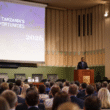
The Minister for Lands, Housing and Human Settlements Development, Dr. Leonard Akwilapo, made the remarks while officially opening the 27th BuildExpo Tanzania International Trade Exhibition on Building and Construction in Dar es Salaam.
Akwilapo said Tanzania has formally begun implementing Vision 2050, which aims to build a prosperous, inclusive and self-reliant nation with emphasis on citizens’ welfare, productive and inclusive economic growth, sustainable development, modern infrastructure and improved living conditions.

He noted that achieving these goals requires the construction sector to be viewed more broadly, rather than being treated solely as the activity of building houses and structures.
Akwilapo explained that the sector has a strategic role in creating conditions that enable economic growth, access to quality housing, infrastructure development and improved essential services for citizens.
“The construction and buildings sector should not be seen only as a sector that builds houses and structures, but as a strategic sector in achieving our national development aspirations,” he said.
He added that various reforms are being undertaken to improve the business environment, with cooperation between the Government and the private sector through Public-Private Partnerships (PPPs) given an important role.
Akwilapo stated that PPPs are among the strategies that can help address the growing demand for construction and infrastructure.

He noted that the Government continues to promote such cooperation through the legal frameworks established under the Public-Private Partnership Act No. 19 of 2010.
Akwilapo said the debate on the sector’s development should not focus on whether Tanzania will build, but rather on the type of technologies used to create environments that meet the needs of future generations.
He explained that Tanzania needs well-planned, inclusive, affordable and economically productive housing that is environmentally conscious and resilient to the effects of climate change.
Akwilapo said BuildExpo offers stakeholders a platform to showcase new technologies, materials and methods that can be applied in developing the sector.
He urged construction-related groups and institutions to use the exhibition to find suppliers, partners, materials and technologies suited to their needs.
Akwilapo added that the participation of professionals, investors, manufacturers, contractors and various institutions is important in building a shared understanding of the sector’s direction and Tanzania’s needs in implementing Vision 2050.
Tanzania Development Vision 2050
Tanzania Development Vision 2050 (Dira 2050) is the country’s long-term national development blueprint intended to guide Tanzania toward upper-middle-income status.
Under the vision, Tanzania aims to reach a gross domestic product of USD 1 trillion, per capita income exceeding USD 7,000 and the eradication of poverty by 2050.
The country has begun implementing the Fourth Five-Year National Development Plan (FYDP IV) for 2026/27 to 2030/31, the first medium-term plan under Vision 2050.
The Public-Private Partnership Act of 2010 established a Co-ordination Unit within the national investment agency to promote and coordinate PPP projects across sectors including infrastructure, industry and manufacturing, alongside a national PPP Steering Committee chaired by the Permanent Secretary of the Ministry and including private-sector nominees.
Want to know more about Construction in Tanzania? Our free overview of the Tanzania Business and Investment Guide 2026 covers Construction, plus key sectors and investment opportunities. The complete 141-page edition includes policies, taxation, key regulations, full macroeconomic data, and sources, and is also available at no cost upon completion of a short form.
Download Free OverviewGet the Full Edition for Free