
The Monetary Policy Committee (MPC) of the Bank of Tanzania (BOT) met on 15th November 2021, noting that the conduct of monetary policy in September and October 2021 continued to maintain liquidity in banks at the required levels.
This also led to the stability of short-term interest rates at low levels.
Private sector credit growth improved to 4.6% in September 2021, up from 3.2% in August 2021.

The MPC was confident of further improvement of credit growth due to the ongoing normalization of the global economy and policy measures adopted by the Bank to promote credit intermediation.
Foreign exchange reserves remained adequate, amounting to USD 6.7 billion at the end of October 2021, sufficient to cover about seven months of projected imports, consistent with the country and regional benchmarks.
Regarding the global economy, the MPC observed that the pace of growth has been slightly lower than projected due to the resurgence of the COVID-19 pandemic in some countries and rising energy prices, but still supports Tanzania’s growth prospects.
Mainland Tanzania Economy H1 2021
Regarding the recent performance of the domestic economy, the MPC observed that growth in mainland Tanzania continued to progressively improve, reaching 4.7% in the first half of 2021.
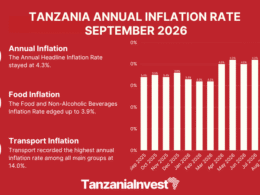
Inflation remained within the target of 3-5% and in line with EAC and SADC convergence criteria, despite slowly edging up since June 2021, and is expected to remain consistent with the targets.

Revenue performed satisfactorily, with tax revenue at more than 90% of the target.
Zanzibar Economy Q2 2021
In Zanzibar, growth was 6.5% in the second quarter compared to negative 1.4% in the corresponding quarter in 2020.
Inflation remained low and consistent with the target of below 5% and revenue performance was 73.6% of the target.
The external sector is improving from the negative effects of the pandemic, sustaining a low current account deficit, as export proceeds of minerals, cash crops, and tourism started to flow in.
Based on the recent performance of the domestic and global economies, coupled with the inflation outlook remaining within the target, the MPC agreed the Bank of Tanzania maintains an accommodative monetary stance in November and December 2021 to facilitate the recovery of the economy.
Want to know more about the Economy in Tanzania? Our free overview of the Tanzania Business and Investment Guide 2026 covers the Economy, plus key sectors and investment opportunities. The complete 141-page edition includes policies, taxation, key regulations, full macroeconomic data, and sources, and is also available at no cost upon completion of a short form.
Download Free OverviewGet the Full Edition for Free