

Following an official one-day tour of Tanzania earlier this week, the Belgian Development Cooperation Minister, Charles Michel, said that the current global financial crisis will not affect his country’s plans to stimulate the Tanzania economy with a development package.
“I would like to assure Tanzania about the continued smooth flow of Belgian official development assistance,” he said at a press conference in Dar es Salaam, “The ongoing financial meltdown has nothing to do with our commitment on development assistance to your country because we know that the root cause of the problem lies in financial institutions in Western countries, most of which have no direct link to those operating here.”
Over the last four years, Belgium has contributed over Tshs 60 billion to the Tanzania economy in order to help improve the infrastructure, communication and transport sectors in the country.
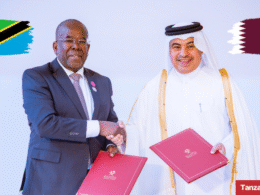
During latest his visit, the Belgian Minister and the Tanzanian Finance and Economic Affairs Minister, Mustafa Mkulo, signed a new Indicative Development Cooperation Program (IDCP), which take effect this year and remain active until 2013, focusing mainly on communication and transport within the country as well as local government reform.

According to Minister Michel, the decision to sign the new IDCP is in keeping with the current Joint Assistance Strategy for Tanzania (JAST), which is an initiative that is managed by representative from the government as well as from development partners.
After the discussions between the two governments concerning bilateral cooperation have been completed, Mr. Mkulo said that the exact amount of funding that was invested in Tanzania could be increased.
Minister Mkulo went on to say that the support from the Belgians would not only help to boost his country’s economy, but would also help to raise the overall standard of living for Tanzanians.
“Our country has for the past decade had a strong, stable and growing economy, thanks to prudent macroeconomic policies and sustained structural reforms,” said Minister Mkulo, “The support of Belgium and our other development partners has enabled us to improve macroeconomic and fiscal performance, with significant progress made on poverty reduction despite the adverse effects of exogenous shocks like worsening terms of trade, recurring droughts and increasing food and oil prices.”
With this in mind, Minister Mkulo requested that the Belgian government look ahead to the possible expansion of the cooperation between the two countries in order to include the sectors of trade, investment and tourism.

“We believe there is potential that can be exploited in these areas,” he said, “What is needed is for our two governments to provide necessary encouragement and support for our people to take up that challenge.”
Want to know more about the Economy in Tanzania? Our free overview of the Tanzania Business and Investment Guide 2026 covers the Economy, plus key sectors and investment opportunities. The complete 141-page edition includes policies, taxation, key regulations, full macroeconomic data, and sources, and is also available at no cost upon completion of a short form.
Download Free OverviewGet the Full Edition for Free