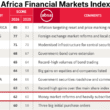


According to the report titled Where to Invest in Africa – 2012 Edition recently released by Rand Merchant Bank, Tanzania is the 10th most attractive destination for investment among 53 African countries.
The ranking is based on three factors: the market size, as measured by GDP at purchasing power parity for 2012, the market growth rate, as reflected by compound annual real GDP growth rates between 2011 and 2017, and an operating environment index, which captures the business environment.
This index comprises four indicators: economic freedom, corruption, efficiency and business friendliness.

Tanzania also ranks 12th among the largest economies in Africa, 10th among the world’s top ten fastest growing economies for the IMF’s forecast period 2012 to 2016, and is included among the top reforming countries of the African continent.
According to the report East Africa is bursting with growth-laden economies and each of the members of the East African Community is expected to experience rapid growth.
Tanzania, Uganda and Kenya’s prospects are bolstered by the discovery of oil and gas. This is reiterated by Ernst & Young’s statement included in the report by which the recent and large discoveries in the east that will boost the African oil and gas industry, especially the deep-water gas prospects off Tanzania and Mozambique’s coasts.
When it comes to the security of investments Tanzania, together with Botswana and Namibia have the most transparent, fair and efficient legal systems.
In relation to infrastructure Tanzania still lacks behind for the quality of overall infrastructure; not surprisingly the reports highlights that Tanzania stand out among the countries that should provide most of the opportunities for infrastructure construction businesses.

Access to financing also remains Tanzania’s most problematic factor for doing business in the country.
Finally Tanzania ranks 5th among the countries providing a favorable macroeconomic backdrop for consumption growth.
Click here to get access to RMB report:
http://www.rmb.co.za/GlobalMarkets/pdf/whereToInvestInAfrica/RMB_wtia.pdf
Want to know more about the Economy in Tanzania? Our free overview of the Tanzania Business and Investment Guide 2026 covers the Economy, plus key sectors and investment opportunities. The complete 141-page edition includes policies, taxation, key regulations, full macroeconomic data, and sources, and is also available at no cost upon completion of a short form.
Download Free OverviewGet the Full Edition for Free